
Today’s consumers increasingly are waking up to the importance of a good night’s sleep, and foam manufacturers are responding. Industry insiders hope that the match between consumer awareness and sophisticated technology attracts buyers ready to invest in the ideal mattress.
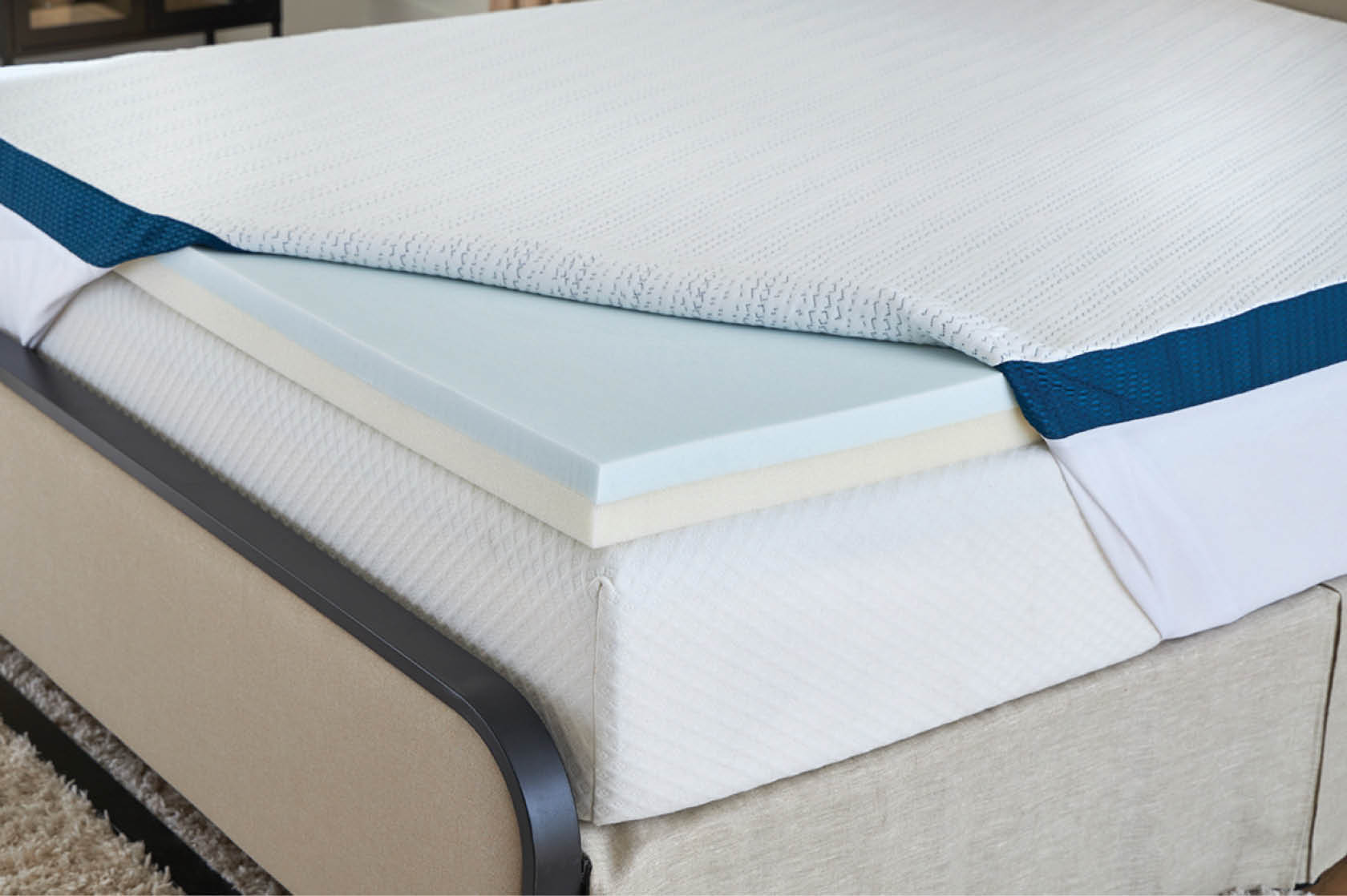
“I constantly tell people when they find out I’m in the mattress business that there isn’t a piece of furniture in your house that’s more important than your mattress,” says 3Z Brands CEO John Merwin. “Your sleep and your recovery are the most important thing to living a healthy lifestyle.”
Challenges remain, though, as foam makers and mattress manufacturers wrestle with supply shortages, sustainability goals, and inflation that’s eating into consumers’ buying power. Through it all, industry leaders say, innovation in foams remains the key to driving growth, sales, and better sleep for everyone.
‘Big bang’ breakthroughs and ‘quiet innovation’
At Carpenter Co., the “big bang” breakthroughs matter, but the “quiet innovation” happening in the background is equally important, says National Sales Manager Adam Lopez. Through long-standing relationships with customers—the mattress makers intricately connected to consumers and their needs—Carpenter mines insights into emerging trends and market sentiment that drive its research and development.
Those partnerships help Carpenter interpret demand and unmet needs, allowing it to respond to current market requirements and identify directions for the next generation of foam performance, features, and benefits. This continuous-improvement approach has driven the evolution of Carpenter’s foam lines, including the breathable Tranquility® and Tranquil®; Hybrid Bliss®, which is less temperature sensitive than typical memory foam; and the antimicrobial Hybrid TheraGel™, Lopez says.
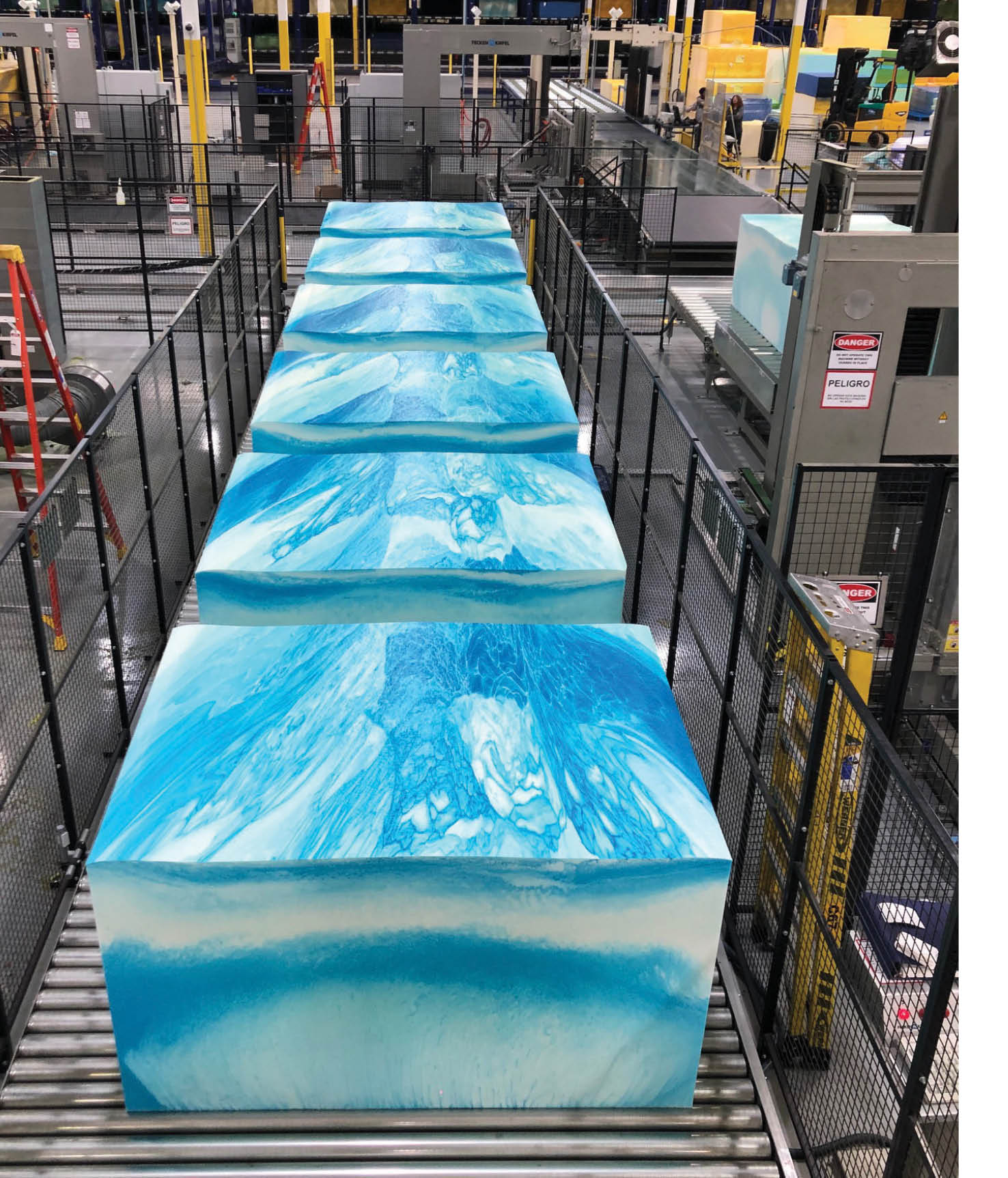
Intentionally designed iterations improve performance and value across the key performance metrics of comfort response, durability, thermal characteristics, and manufacturability while simultaneously improving sustainability. “We regularly identify new processes, formulations, or additive strategies that incrementally improve product performance, efficiency, or environmental impact, and we implement those improvements seamlessly,” Lopez says. “Often, our customers are simply experiencing a better product today than yesterday, without needing to change how they build or sell.”
During its product development, Future Foam focuses on body support, pressure relief, motion transfer, and cooling—the four major sleep disruptors it can control, says Mike Urquhart, national accounts manager.
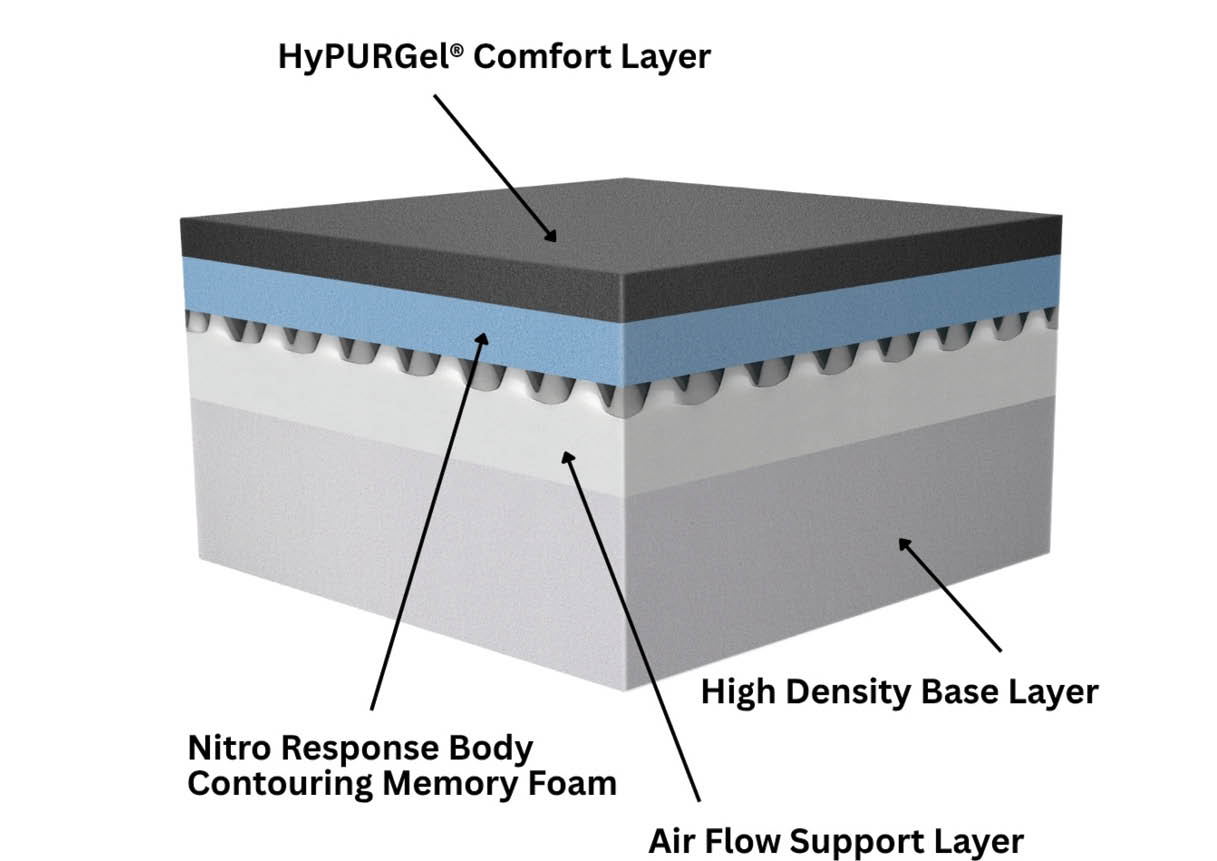
Future Foam addresses all four disruptors with its HyPURGel™ and Allay layered on top of Nitro Response™, its newest product. Nitro Response is a 2.5- and 2.6-pound-density memory foam infused with nitrogen—think sneakers—making it lighter and more responsive. Nitro Response has been used as a micro coil replacement, offering simultaneous support and pressure relief without bottoming out, Urquhart says.
HyPURGel, introduced around 2018, is also growing in popularity as mattress makers and buyers discover its comfort and cooling properties. It offers latex-like support paired with gel infusion and twice the airflow of traditional memory foam for cooling, says Urquhart.
Meanwhile, 3Z Brands’ evolution into a vertically integrated mattress manufacturer, with investments in a foam line that conducted its first pour in 2022, has led to development of higher-density specialty foams for placement closer to the sleeping surface, says Merwin.
In-house pouring capabilities amplify 3Z’s powers of self-determination, as the company develops and refines its foam lines to enhance value and respond to consumer preferences. “The success that you’ve seen with Helix, Brooklyn Bedding, and almost all of our brands in the portfolio is because we’ve really upped our game on the components that we’re using, and that’s resonating with the consumer and then, ultimately, with all the retailers that are carrying our product,” Merwin says.
Cooling remains a focus of 3Z’s innovation, delivered through additives such as copper, titanium, and graphite. With custom-made machinery, 3Z is now manufacturing its luxury, cooling ThermoBalance line, which infuses its ThermoPhase foam with phase change material—responsive to changing body temperatures—featuring a ThermoCool cover and a 360-degree airflow design.
Initial testing of ThermoBalance returned with such “phenomenal” results, in Merwin’s words, that the company sent it out for retesting, which confirmed that the foam lowers surface temperatures throughout the night. The technology is incorporated into 3Z’s Helix and Brooklyn Bedding lines and is slated for broader rollout.
Another innovation is the recent launch of 3Z’s VX Responsive Foam. As the name implies, responsive foams up the ante on memory foams with their springier recovery. Buyers looking for zoned pressure response, adaptability to movement, and motion isolation can sleep easier. “On a memory foam bed, you kind of sleep in the bed or in the foam,” says Merwin. “With responsive foam, you’re sleeping more on top of the mattress. It creates a different feel for different people.”
At Sinomax USA, close attention to consumer sentiment, through research and analysis of reviews, drives sleep solutions that build on the advantages of memory foam to continue meeting—and cultivating—market demand, says CEO Frank Chen.
With the popularity of bed-in-a-box options, Sinomax USA is improving memory foam compression rates and recovery. Through a partnership with one customer, Sinomax USA is now packing and shipping products compressed by 90%, up from the standard 75%. “It was a project that we started with a customer about five years ago, and it has been quite successful,” says Chen.
Now that foam producers have achieved and continue improving cooling qualities, Sinomax USA is adding other sought-after qualities to its portfolio. Those include a high-resiliency foam that balances a plush feel with support, enhanced breathability for wash-and-dry pillows and toppers, and contouring—all used in a patent-pending pillow with “just the right amount of lift for side sleepers so they don’t need to use their hand to prop up their pillow,” Chen says.
The 100% vertically integrated Zinus has been “selling on Amazon as long as anyone, and with the focus that we’ve put on the importance of reviews to e-commerce, this is where we mine for consumer data,” says Zinus Vice President, Brand Management, Andrew Long.
While the market emphasizes eco-friendliness, health, comfort, and design, questions remain about what truly defines comfort, and whether products are genuinely engineered with health and sustainability in mind, says Long.
From that perspective, Zinus is addressing multiple projects, including “fundamentally more comfortable foams and hybrid concepts that combine the strengths of different foam types,” he says. One cooling solution being pursued doesn’t rely on additives but addresses the “sleep warm” drawback of memory foam by improving the foam cell structure itself to mitigate heat buildup during sleep.
Market share and price pressures
The U.S. polyurethane foam market, including soft and rigid foam, is expected to grow by 8% between 2025 and 2032, according to P&S Intelligence, a market research firm. Furniture and bedding hold the largest market share because of foam’s comfort and durability in mattresses, pillows, and furniture. In addition, the surging healthcare sector—and the fact that 15% of Americans suffer from chronic musculoskeletal pain—are driving demand for orthopedic support in pillows and mattresses.
That’s the good news, but as stated at the beginning, challenges loom. As Sinomax’s Chen notes, foam makers have been confronted since March 2026 with simultaneous outliers affecting price and supply—such as the war in Iran cutting off petroleum supplies and the fire earlier in 2026 that suspended chemical shipments from LyondellBasell’s Houston-area facility.
Sinomax USA’s four- to six-week reserve of raw materials helped mitigate the shortage, Chen says. The company deals with other ripple effects case by case—buying supplies from Asia or partnering with customers to soften the impact of increased costs. “We are doing everything we can to navigate the issue and try not to disrupt the supply,” he says.
Similarly, as a practice, Future Foam often stores up to a 60-day supply of chemicals at its tank farms. The firm can’t accept new customers amid shortages, but with its inventory buffer, “We’re able to supply our customers 100% of the foam they need at this time,” Urquhart says.
Competition for the consumer dollar, however, is more concerning. “Mattresses are already expensive,” he says. “They’re going to get more expensive. As gas prices go up, groceries are going to go up, and everything’s going to go up.”
The goal is continuing to be profitable while keeping prices affordable for customers, but elevating foam properties without sending costs soaring is a challenge, Urquhart says. “We have our most success when we work with manufacturers who want to work together to value-engineer,” he says. That means striving for changes that add desirable properties to foam while also tweaking costs—for example, improving durability at a lighter density.
Cost is “the most visible and immediate consideration” for many customers, says Lopez, but Carpenter factors in cost as just one leg of a four-legged stool of value. The other legs are consistent, high quality that diminishes product returns and promotes productivity, innovation that delivers new and improved technologies to market, and—perhaps most critical—service that delivers products exactly when and where needed. “Execution matters,” says Lopez.
Carpenter’s technical teams have built agility into R&D through disciplined project management and portfolio governance, keeping innovation on track despite supply constraints. While a variety of factors can affect manufacturing, R&D priorities continue to advance based on strategic impact, customer needs, and resource readiness.
“Together, strong customer input and disciplined project prioritization allow us to stay ahead of market needs while maintaining focus, consistency, and executional excellence across our innovation pipeline,” says Lopez.
In the U.S. market, achieving ultra-lightweight construction, high durability, strong comfort performance, and compliance with flame-retardant standards “is highly challenging,” says Long.
“Our approach is to fundamentally redesign foam structures, including the application of eco-friendly flame-retardant solutions, to deliver next-generation foam that is comfortable, durable, and safe,” he says.
The foam and bedding industry can manage the ups and downs of pricing, adds 3Z’s Merwin, but allocation restrictions are pushing the company to “make sure that we have enough chemicals to pour the foam to make our mattresses.”
Substantial investments in advanced machinery equip 3Z to drive efficiencies and control prices. “We’re paying attention to everything that we’re doing,” he says. “We’re trying to become as efficient as possible. We feel like we’re in a really good place right now, but it can change overnight.”
Still, cutting waste doesn’t mean cutting quality. “The thing we will never do is degrade our product or deliver an inferior product to our customer in trying to lower our costs,” Merwin says. “Ultimately, the consumer and the product that we put out there are going to determine how successful we are.”
Sustainability’s role in new products
Sinomax USA has carved out a leadership role in sustainability through a comprehensive approach. For example, it has developed a plant-based memory foam, Biossentials™, from renewable, plant-based materials. Product packaging also contains recycled materials, and the company emphasizes waste reduction, energy conservation, and recycling in production. For instance, it recently upgraded operations with an all-electric forklift fleet and recyclable pallets.
—John Merwin, CEO, 3Z Brands
“We’re paying attention to everything that we’re doing. We’re trying to become as efficient as possible. We feel like we’re in a really good place right now.”
Mitigating the higher costs of sustainable products is a challenge, but Sinomax USA is making progress in educating consumers about the advantages of such products, Chen says. The company also tries to close the price gap by analyzing pricing in total and making innovative material adjustments to offset the higher costs of bio-based foam without hurting quality.
Around mid-2026, 3Z expects to launch its GreenFlex BioFoam in most of its Leesa mattresses. The open-cell, next-generation foam delivers the Leesa experience of coolness, comfort, responsiveness, and durability but is made with plant-based polyols. These are derived from plants that are grown on marginal land that doesn’t compete with food agriculture or drive deforestation. “For the consumer, it’s not going to feel any different,” Merwin says. “We’re just using a different polyol.”
Zinus actively invests in sustainable solutions under its SMART initiative, for Sustainable Material and Renewable Technology. The company is developing a D4R, or Design for Recyclability, approach that integrates recyclability from the initial design stage.“Our goal is to incorporate recycled raw materials to create true differentiation, with current efforts focused on post-industrial recycled foam applications,” Long says.
For bio-based products, he adds, Zinus is overcoming historic limitations of durability and odor issues through technology and moving toward higher bio-content applications.
With the growth of e-commerce and DIY trends, lightweight products are increasingly important for consumer convenience, Long notes. Zinus is developing solutions to address durability and comfort challenges associated with weight reduction, leveraging them to create ultra lightweight, eco-friendly products.
While the foam world has long rebonded its scraps for reuse in carpet and other sectors, Future Foam is now working with New Wind, its Italian partners, to research the recyclability of polyol itself, breaking down foam to its chemical basis. Even that effort, Urquhart notes, must be balanced with the substantial energy and water usage needed to deconstruct a polyol, which can subtract points from its sustainability.
Meanwhile, on the company’s production floors, advanced foam machines and fabrication equipment are creating efficiencies, sustainability, and cost savings, while also delivering automation that helps address the endemic labor shortage, he adds.
Carpenter likewise pursues sustainability—a longtime priority—in four quadrants: raw materials, manufacturing practices, use, and end of life, says Lopez. Production encompasses waste reduction, improving process efficiency, and optimizing material usage—for example, using fall-off from foam manufacturing to create the company’s carpet underlay products.
“While this is a robust operation, smaller—yet equally as important—changes we’ve made are making an impact, such as converting the lighting in our facilities to LED to reduce energy usage within our day-to-day operations,” Lopez says. “These efforts not only reduce environmental impact but also improve consistency and resource efficiency across our facilities.”
Nonstop innovation
While foam production has changed little over the past decades, R&D is constantly in motion, testing different types of foams and creating new feels. For example, at 3Z Brands, its crack chemist leads a rapid-response R&D loop in which the sales and foam teams submit their ideas, and the pour team creates samples for evaluation.
“He’s constantly pouring new foams, and he’ll come in and say, ‘Feel this. What do you think of this?’ ” Merwin says. “And then we get to go build beds and test it.”
Many consumers can’t name the brand of mattress they sleep on, he adds, but the industry will keep educating buyers on the life-changing difference that quality foams
can make.
“I love my mattress,” he says. “I love my pillows, and I love my sheets. I love the whole experience. I look forward to jumping into bed at night because I know I’m going to be really, really comfortable and sleep well and wake up ready to make more mattresses.”
The CertiPUR-US Difference
Since 2008, CertiPUR-US has certified foams made without substances known to be harmful to human health.
Guided by science and its Technical Advisory Group, CertiPUR-US is constantly evaluating the substances for which it should test. For example, limited testing conducted by CertiPUR-US has not found quantifiable levels of PFAS—the per- and polyfluoroalkyl substances shown to harm health—in foam, even when made with municipal water supplies that contained detectable levels of PFAS, says Executive Director Dan Dobratz.
But consumers still ask whether PFAS is in the foam used in their homes, so CertiPUR-US is considering asking foam producers to stipulate that they don’t intentionally add PFAS. Another option would be offering a standalone test, Dobratz says.
CertiPUR-US works with 120 participating producers worldwide and keeps pace with foam innovations.
“Every foam producer is looking for the next innovative thing, but they all have our guidelines, and they know what they can’t use, so that’s their starting point,” says Dobratz.