The sleep industry has always been defined by its most human proposition: that a good night’s rest changes everything. But the tools used to deliver on that promise are undergoing a profound transformation. Artificial intelligence—once the exclusive domain of Silicon Valley giants and global tech firms—has arrived in full force across the sleep products landscape, from mattress design to retailer engagement.
What makes this moment especially significant is the breadth of AI’s footprint. This is not a story about one department adopting a new software tool. AI is reshaping product development cycles, creative teams, manufacturing processes, retail floor experiences, and customer service operations simultaneously—and industry leaders who have leaned in early are already reporting measurable results.
The design studio gets a digital partner
For Kingsdown, one of the industry’s most storied mattress brands, the AI journey began in the creative department—as it has in most industries—but its use has moved beyond simple copywriting tasks or editing. Gary Towning, Kingsdown’s chief marketing officer, describes a marketing team that has effectively become its own in-house agency, powered by AI tools that have dramatically multiplied its output.
“AI has tripled the creative horsepower and output of our small creative team, covering point of sale, video for in-store and connected TV advertising, and multi-language voice-over explainer videos for product training,” says Towning.
Since 2024, Kingsdown has used AI across all creative output for video, print, and digital advertising and even for mattress design prototyping. The results have been striking. What once required large agency retainers and extended timelines can now be accomplished in-house, on brand, and on demand. For a midsized manufacturer competing in a crowded market, that kind of agility is a genuine competitive advantage.
The creative work is led by Tim McCracken, who has built what Towning describes as a sophisticated AI tool knowledge base—including custom prompting skills and a proprietary library of AI assets and agents unique to the Kingsdown brand. It’s a reminder that behind every effective AI deployment is a skilled human operator. McCracken is an experienced designer first and an AI practitioner second, a distinction Kingsdown considers essential.
The brand’s AI-assisted creative work has already moved into tangible retail environments. In 2023, Kingsdown used AI to conceive and develop the mall window takeover installations for Sleep Country Canada—highly stylized, impactful displays that were rendered into high-resolution, production-ready files using AI upscalers (tools that can sharpen images). That early experiment opened the door to further applications at trade shows and in-store brand environments.
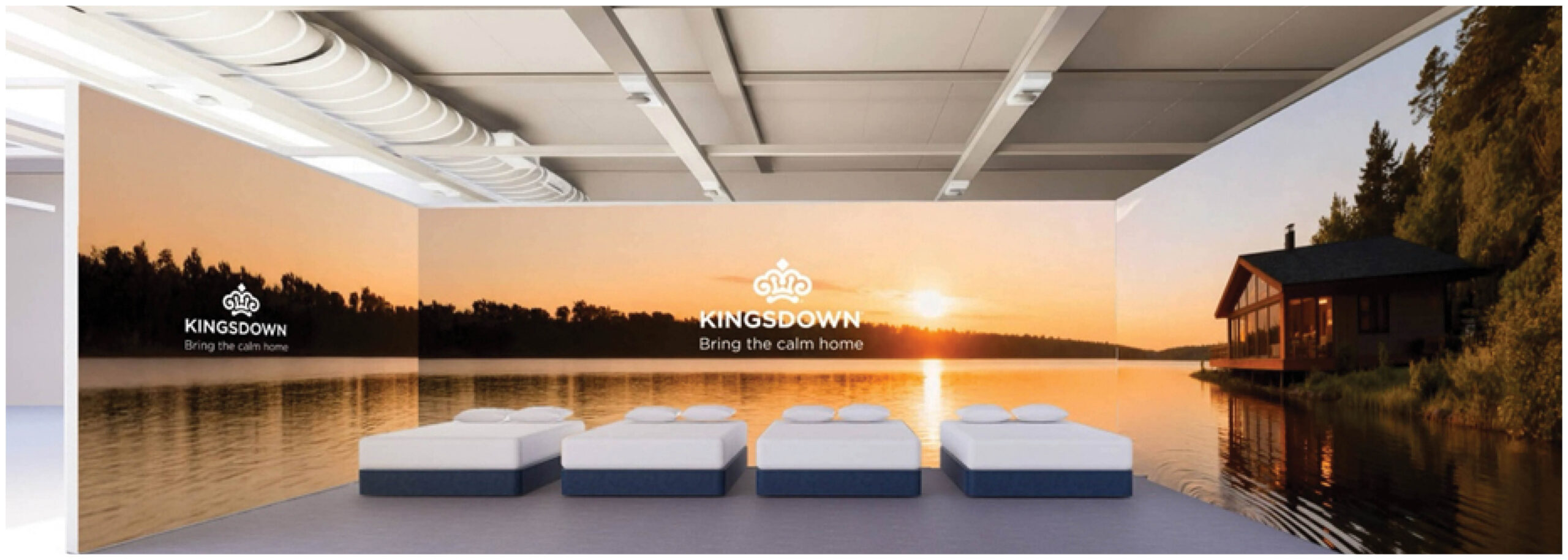
One of the most recent compelling examples is a localized brand campaign developed for HOM Furniture, built around Kingsdown’s Vintage collection. The campaign, “Bring the Calm Home,” centers on an aspirational AI-generated landscape: a perfect Minnesota lake house at dusk, rendered into large-format SEG (silicone edge graphic) installations that transformed sections of HOM’s showroom into an immersive, calming environment for consumers and retail sales associates. The concept was then extended into video and digital materials, giving the campaign consistent presence across multiple touch points—all from a single, AI-assisted creative origin point.
According to International Sleep Products Association data cited by Towning, more than 60% of retailers lean favorably toward vendors who can deliver in-store experiences. AI-enabled creative development also allows brands to generate multiple concepts for review before committing to production—significantly reducing risk while expanding creative ambition.
Product development: Data-driven from the start
Beyond marketing, AI is increasingly being embedded in the earliest stages of sleep product development. At Spring Air International, President and CEO Nick Bates describes how AI reorganizes the way the company processes information and supports its team—with direct implications for product quality.
“AI allows us to be much more efficient in terms of organizing and analyzing data, while also helping with administrative work, effectively opening up our team to work on more meaningful operations,” says Bates.
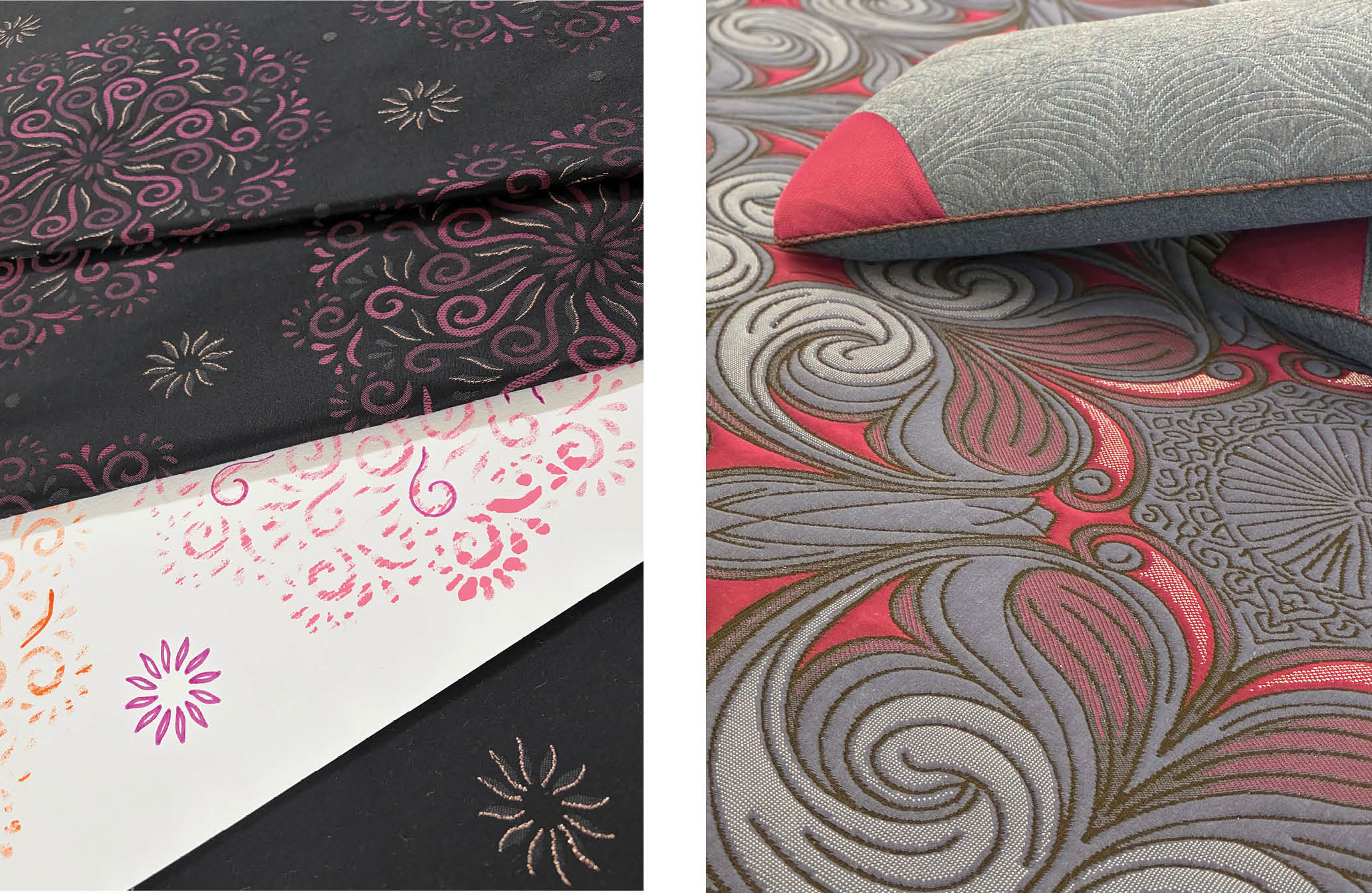
The fabric and materials side of the sleep industry is undergoing a parallel transformation. At BekaertDeslee, Director of Design and Marketing Charlene Vaz describes AI as fundamental to how the company translates consumer insight into product. AI enables the combination of data, material innovation, and consumer behavior analysis so the company’s team can design with greater precision and speed.
Vaz also offers a nuanced counterpoint that speaks to the industry’s evolving relationship with technology. For the company’s latest WOW! Collection, the design team intentionally stepped away from digital tools for a full day, instead exploring hand-drawn expressions, textures, and ideas that can get filtered out by fast, automated workflows.
“The opportunity is not choosing between AI and human creativity, but ensuring both work together to elevate the experience,” says Vaz.
The result was a more human, tactile, and emotionally rich design language—one that Vaz believes resonates with a consumer moment defined by an appetite for authenticity. Looking ahead, she sees consumers gravitating toward bold, expressive design as a form of creative resistance, with handcrafted details and imperfect textures imparting a sense of comfort that feels increasingly valuable.
Manufacturing intelligence: Precision in the plant
On the manufacturing floor, a new generation of AI tools is extending well beyond the creative and commercial sides of the business, addressing the economics of production itself.
One notable example is NestiGo, an AI-powered cutting system developed by software firm ArtFlex. NestiGo is a combined software and hardware solution designed to optimize cutting workflows on semi-automatic vertical cutting machines, with a strong focus on foam processing. It combines machine-learning-based 3D nesting, machine-learning-based computer vision for material block identification, and guided execution. The system is designed as a machine-agnostic, non-invasive add-on that can be deployed on both existing and new vertical cutting machines.
According to the company, NestiGo closes a critical gap in 3D nested cutting workflows, where optimized digital nesting plans must be manually interpreted, validated, and executed by machine operators, which can result in inefficiencies.
“We’ve found that a lot of mattress producers still use older machines that are not very material or time efficient,” says Halgard Stolte, managing partner at ArtFlex Software. “Many of these companies rely on technical staff—many of whom are nearing retirement—to run them. Our software helps any inexperienced user operate existing machines by adding our retrofitting app.”
While NestiGo is still in development, a working prototype confirms that the 3D nesting functionality is operational. ArtFlex draws on in-house AI expertise and collaborates with the AI research department at University of Applied Sciences Hof in Germany. The company is currently seeking strategic partnerships with cutting machine manufacturers and foam processors interested in co-developing the solution.
As input costs remain volatile and labor markets continue to shift, operational efficiency tools like NestiGo represent an increasingly compelling category of AI investment.
The retail floor: Where AI meets the shopper
Perhaps nowhere is AI’s impact on the sleep industry more immediately consequential than at the point of sale. Mattresses are still, overwhelmingly, a hands-on purchase. Better Sleep Council research summarized by BedTimes found that 87% of consumers would consider buying a mattress from a retail store, and furniture stores remain one of the top purchase channels.
At the same time, shoppers increasingly begin their research journey online, often outside of traditional business hours, and arrive in a store with expectations shaped by the Amazon experience: fast answers, personalized recommendations, and seamless service.
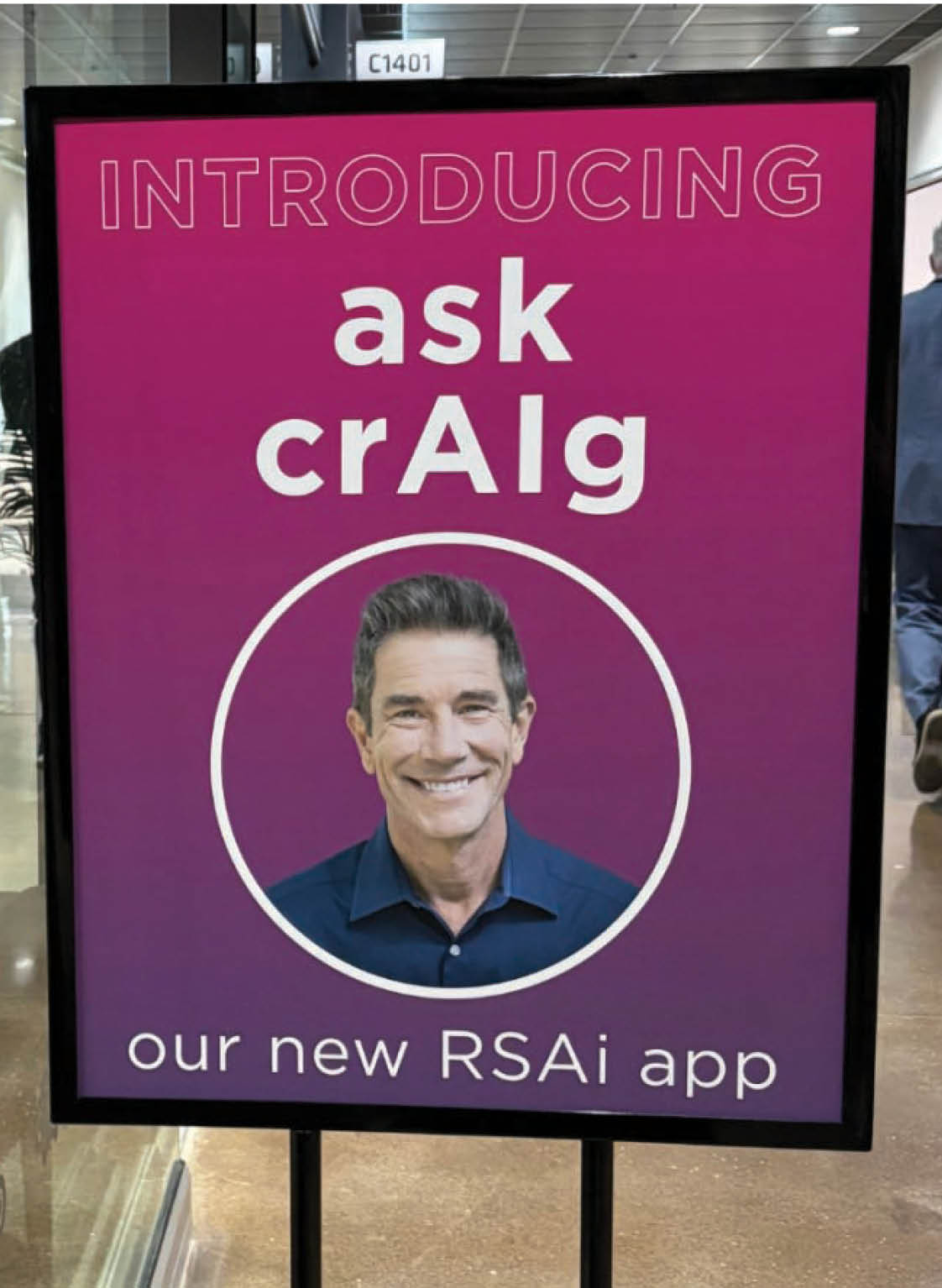
On the retail side, Kingsdown is equipping retail sales associates with deep, brand-controlled product knowledge through its RSAi tools, accessible at Kingsdown.ai. At the core is the crAIg app—named for Craig Wilson, Kingsdown’s vice president of sales training and education. When consumers have product questions, the app gives RSAs immediate access to AI-generated guidance and product insights, drawn from Wilson’s deep knowledge of sleep sales and consumer psychology. Kingsdown is now expanding crAIg to offer retailer-specific versions, giving individual retail partners access to a version of the tool tailored to their unique product lineup. Kingsdown is also integrating AI-agent capabilities into its bedMATCH system, which guides both RSAs and consumers toward the right mattress selection.
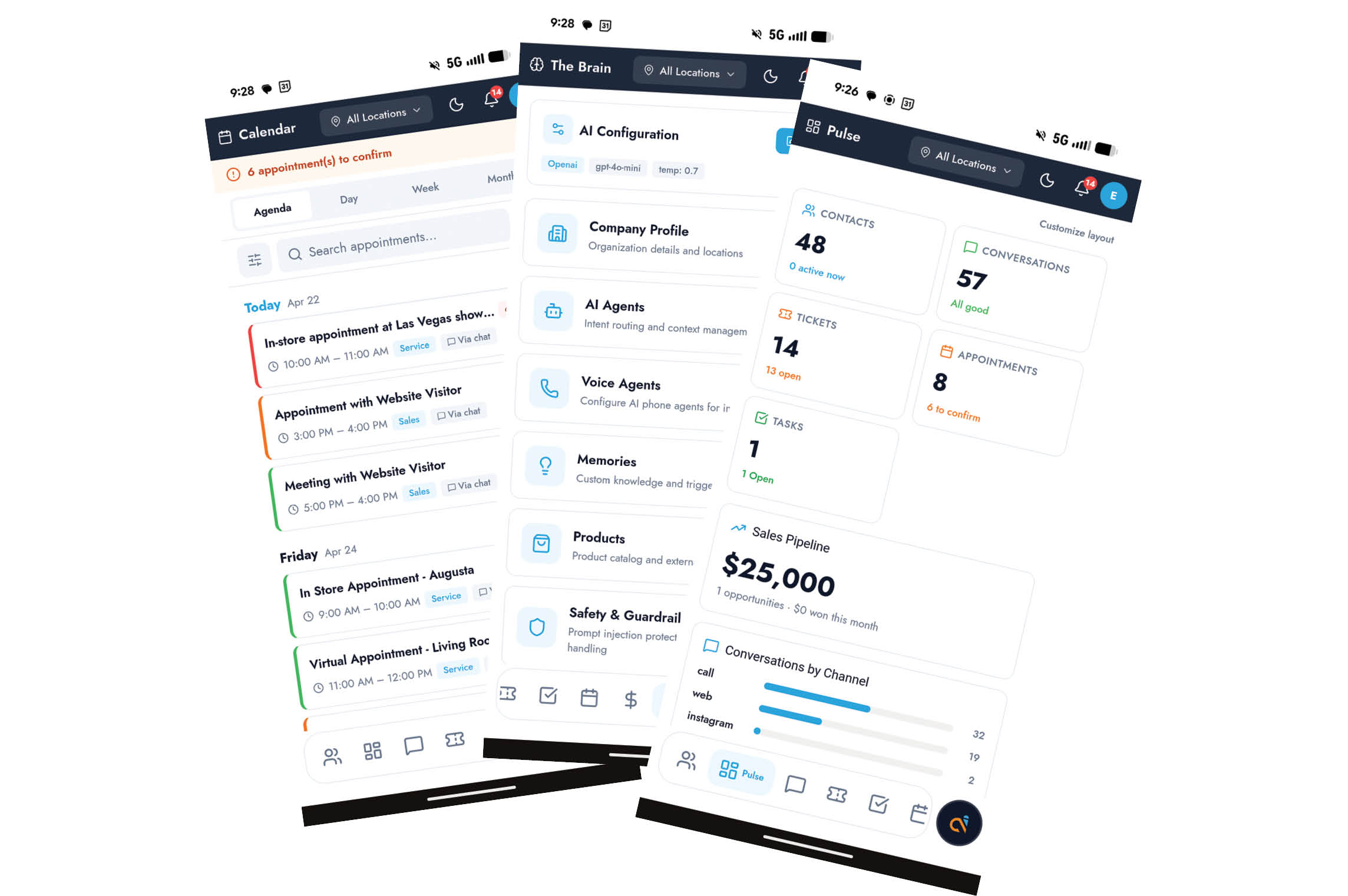
AiPRL is a retail application that creates unified customer profiles across channels.
For independent and regional retailers, the challenge is different in scale but no less urgent. AiPRL Assist—short for AI Personal Retail Liaison, co-founded by JD Camden and Derek Dicks—is purpose-built to help local and regional furniture and mattress retailers who don’t have the enterprise budgets of national chains but still want to deliver an Amazon-like customer experience.
The platform’s core insight is that independent retailers don’t lose customers because they lack showrooms or product knowledge. They lose customers because of responsiveness gaps: leads that go cold after hours, customer context that gets lost between conversations, and service interactions that force shoppers to start over every time they make contact. AiPRL addresses each of these friction points directly.
The platform creates a unified customer profile that consolidates every text, email, chat, voice, social media, and in-store interaction with each shopper. It uses that profile, combined with real-time local inventory data, to answer questions intelligently and make personalized product recommendations that reflect actual store availability. It detects customer sentiment in real time and escalates to a live associate when frustration arises, ensuring that shoppers are never trapped in a chatbot loop. It also books appointments and handles routine service tasks, freeing staff to focus on higher-value interactions.
Evan Kubicek, AiPRL Assist’s chief revenue officer, frames the value proposition in terms of three foundational capabilities: an always-on customer experience layer that prevents leads from going cold; persistent omnichannel memory that carries context from digital to showroom; and personalization grounded in real inventory and store-specific details rather than generic responses.
A real-world scenario illustrates the impact clearly: At home, a shopper goes online to research a new mattress after dinner. AiPRL engages immediately, answering questions about comfort levels, sizing, and delivery, capturing preferences and recommending in-stock products. When the shopper arrives in-store the next day, they’re already informed and confident. The sales associate doesn’t begin from zero; they pick up the conversation where it left off. The result is a faster, higher-confidence purchase experience for both the customer and the retailer.
AiPRL’s approach has received third-party validation, including a $50,000 Amazon Web Services Partner Award recognizing its ability to help mid-market retailers compete more effectively with larger players. Retailers including Gavigan’s Furniture have described the platform as technology that helps smaller businesses punch above their weight.
The data imperative: Measurement and trust
A theme that runs through every AI application already discussed—from design to manufacturing to retail—is the centrality of data. AI systems are only as useful as the data they’re trained on and the metrics they generate. This creates both an opportunity and a responsibility.
For retail applications like AiPRL, closed-loop measurement is built into the platform’s architecture. Because AiPRL creates unified customer profiles across channels, retailers can connect digital interactions to in-store outcomes and track return on investment across revenue growth, operational efficiency, and training effectiveness. Core key performance indicators include AI resolution rate, time saved per interaction, conversion rate, upsell rate, and customer satisfaction scores. The platform also generates real-time sentiment, marketing, and lead scores, giving retailers a continuous view of where each customer stands in their purchasing journey.
For design-oriented AI applications, measurement looks different but remains essential. Kingsdown’s ability to trace its AI-assisted creative work back to specific retail installs and campaign performance gives the marketing team data it can learn from and act on.
Vaz points to personalization ROI—increased conversion rates, higher basket sizes, and stronger brand relationships—as the commercial argument for consumer-facing AI investment.
But data also raises expectations. Vaz is candid about the responsibilities that come with increasingly sophisticated use of consumer data: Consumers want transparency, control, and authenticity in how their information is handled. Brands that balance personalization with empathy and clear boundaries will build long-term loyalty, she argues. Those that don’t will face a growing trust deficit, particularly as consumers become more discerning about AI-generated content and more attuned to the differences between genuine engagement and algorithmic automation.
What next?
The arc of AI adoption in the sleep industry is still in its early chapters. The applications described here—AI-assisted creative design, RSA support tools, manufacturing optimization, and retail customer experience platforms—are leading-edge deployments that will become standard practice over the next several years. Salesforce data cited by AiPRL notes that 75% of retailers already believe AI agents will be essential to compete, while 39% of shoppers are using AI tools for product discovery.
While most mattress sales still occur through physical stores, mattress e-commerce penetration is higher than the 16.6% of total retail sales reported by the U.S. Census Bureau in the fourth quarter of 2025, says Mary Thorpe, ISPA/MRC manager of industry research and analytics. This means the category is more online influenced than the data might imply. The strategic opportunity for sleep industry players is to use AI to make every touch point that leads to the showroom more informed, efficient, and human.
The companies getting this right share a common philosophy: AI is a force multiplier, not a replacement. It multiplies the creative output of skilled designers, the reach of expert sales trainers, and the responsiveness of local retailers. It reduces waste, accelerates decisions, and surfaces insights that would otherwise remain buried in data. But in each case, the human judgment, expertise, and relationship at the center of the sleep business remain essential.
The brands that will lead the next chapter of the sleep industry are those learning that lesson now—not waiting for AI to become table stakes but building fluency with it while there are still competitive advantages to be gained.