


When Standard Fiber made the decision to add domestic pillow and pet bed production capacities in 2021, it had no way to know that a “tariff tornado” was looming on the horizon.
At that time, the company had a single warehouse in Henderson, Nevada. “It was being used mostly as a hub for direct-to-consumer shipments and other fulfillment,” says Chad Altbaier, co-CEO of the Henderson-based producer and global source of bedding products, including mattress textiles and covers; basic bedding like sheets and pillows; fashion and decorative bedding; pet beds; and components for other bedding manufacturers.
Knowing that production capacity in the United States would strengthen its ability to serve customers, Standard Fiber opened its first pillow assembly plant in Henderson in 2022. The 130,000-square-foot facility focuses on filling and distributing higher-end blown and garneted pet beds, sleep pillows and specialty shaped pillows. Equipped with machinery sourced from Spain, the plant has high-speed, digitally controlled blending capabilities that allow it to mix as many as three fiber types — from polyester and wool to latex and silk — into a single pillow.
The facility is strategically located to serve the nearby Las Vegas hospitality market and West Coast customers, who benefit from local production and speedy delivery.
Building on U.S. Success with New Atlanta Facility
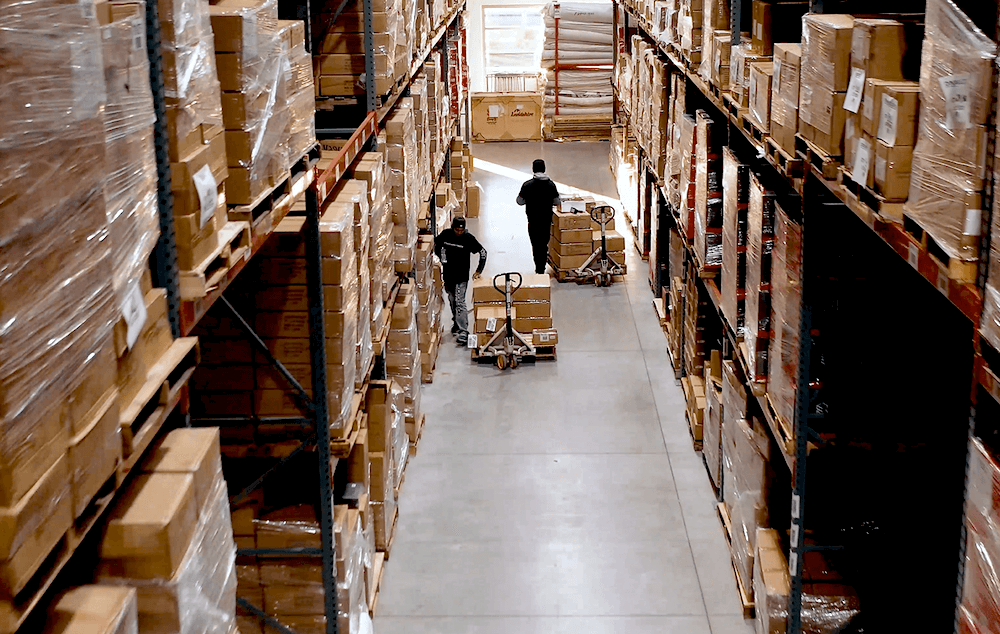
Building on the success of the Nevada plant, Standard Fiber added a similarly configured but larger production and distribution center in Atlanta in July 2024. The 180,000-square-foot location enables Standard Fiber to improve service and reduce shipping costs for customers throughout the eastern United States.
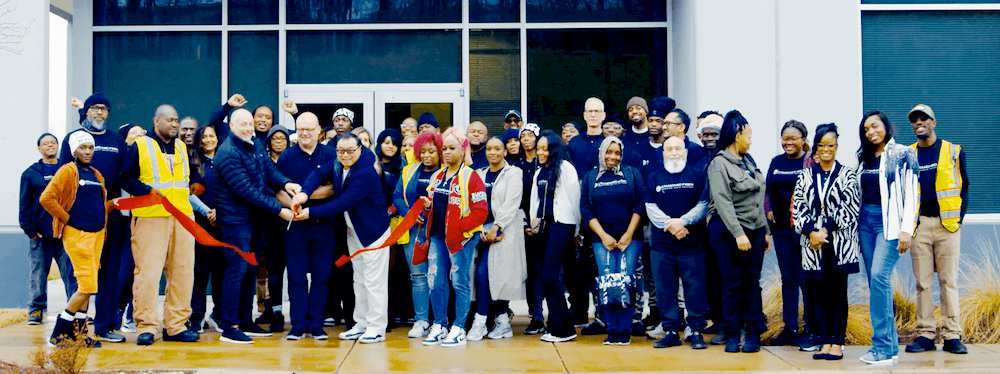
“Our two U.S. facilities are assembly operations for utility pillows designed for sleep and body, and specialty pillows and pet beds,” Altbaier says. “We bring in the empty pillow and pet bed shells from Asia and fill them here. Bed pillows are the biggest segment of our business, so having our own assembly operation in the States enables us to be much more responsive to our customers’ needs.”
After just one year in operation, the new Atlanta facility has already proven to be profitable, Altbaier adds.
“We moved a portion of our Nevada production to Atlanta for those customers who wanted to fulfill East Coast orders from there, and we’ve picked up new incremental business, as well,” he says. “Atlanta turns out to be a fantastic location, since it’s just four hours from the Port of Savannah (in Georgia) and has great access to the entire Eastern Seaboard. And it also has a deep pool of labor.”
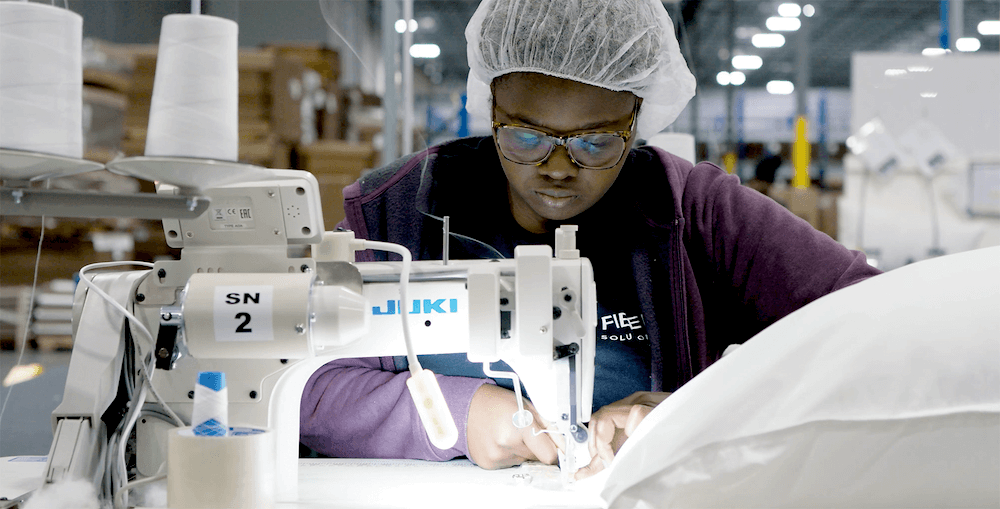
In the past few months, Standard Fiber also started producing down alternative comforters and blankets at its Georgia and Nevada facilities, using single-needle quilting machines brought in from its recently closed facility in Mexico. The two U.S. sites also provide fulfillment services.
“We’re bringing in products from Asia, such as mattress toppers, sheets and fashion bedding items and stocking them domestically at our two U.S. sites,” Altbaier says. From there, Standard Fiber either ships the products to retailers’ distribution centers or drop-ships them directly to consumers, depending on what the customer prefers.
To keep up with demand, Standard Fiber recently leased an additional 42,000-square-foot warehouse next door to its facility in Henderson.
“Our business model requires strategically located, multisite capabilities,” Altbaier says. “We work hard to make sure the products we build and deliver have a consistently high level of quality and that they all get to each individual customer as quickly and efficiently as possible.”
Strategic Adaptation: Standard Fiber Navigates Tariffs and Global Trade
This spring, that mission became even more challenging as President Donald Trump’s tariff increases upended global trading patterns and introduced a high level of uncertainty into business planning and sourcing decisions.
Standard Fiber opted to open both of its U.S. facilities long before the 2024 election. Even though it had no way to foresee the dramatic trade policy changes the new president would put into motion, the company recognized that relying too heavily on a single source nation, such as China, could put it at risk in an increasingly volatile global economy.
“Having our own pillow-filling capacity in the U.S. lessened our dependence on offshore sources and put us in a better position to serve our customers,” Altbaier says. “As it turns out, expanding here at the time we did was a case of smart planning combined with good luck.”
But Standard Fiber has not escaped the challenges that have come with the new administration’s shifting tariff policies. The company still sources a wide range of raw materials and products offshore. It also sells an increasing volume of products in other countries, some of which have implemented their own tariff increases in response to Trump’s moves.
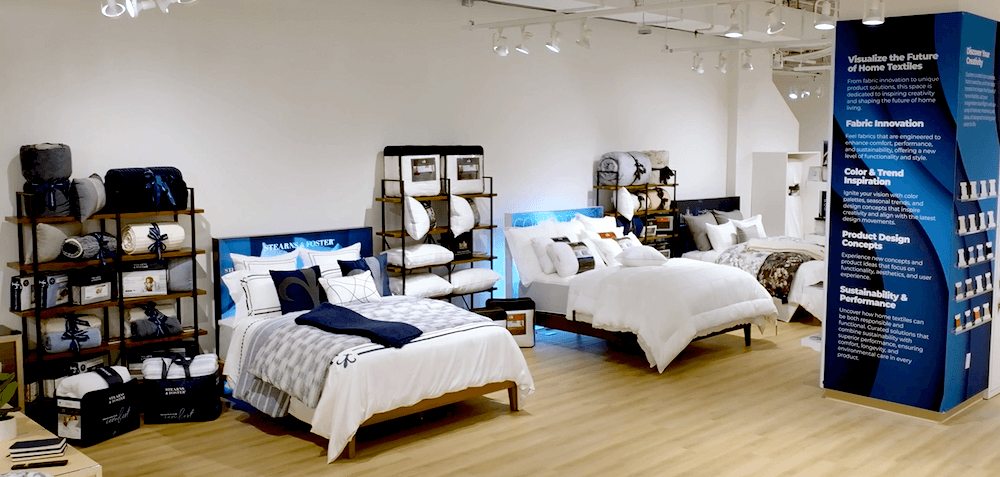
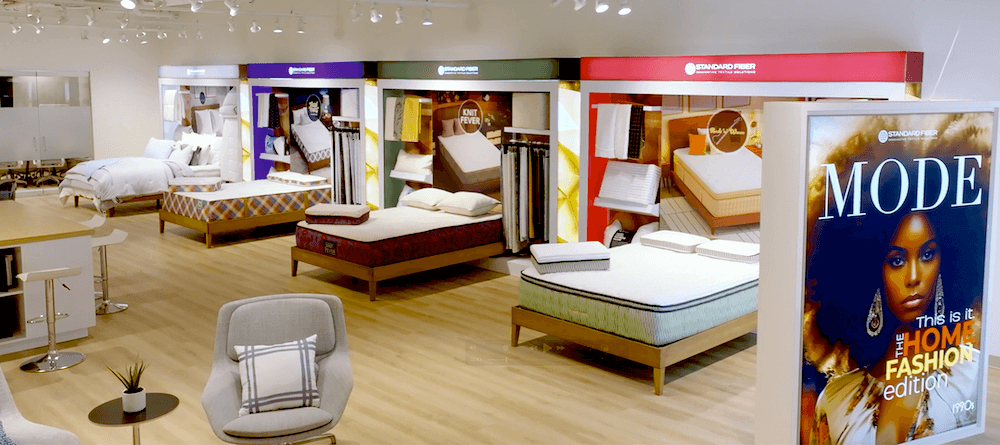
the future (left) and past of bedding textile design.
At the time of this BedTimes interview in May, Altbaier and his team were focused on reducing Standard Fiber’s production in China. To fill gaps, the company has been bolstering sourcing from India and Pakistan, “where we already are very strong,” Altbaier says, and adding new capacity in Cambodia, Malaysia, Thailand and Vietnam.
“We’ve opened our own office in Vietnam because we are doing more and more manufacturing there,” he says. “It’s important that we have boots on the ground, including our own quality assurance people.”
Standard Fiber is planning to open a similar office in Thailand later this year. The company also has quality assurance teams that work closely with major factory partners in each of its other source countries.
“We’re fortunate that we had already begun taking steps to dial back China before the ‘tariff tornado’ hit because the tariff hikes are forcing everyone to rethink their sourcing,” Altbaier says. “An outmigration from China is underway across a range of industries, and everyone is scrambling for new partners.”
Minimizing Tariff Impact on Customers
When the first 10% tariff increase on Chinese exports was implemented on Feb. 1, Standard Fiber worked to absorb some of the extra cost rather than passing it along to its customers, Altbaier says. As trade tensions worsened, the U.S. tariff rate on Chinese products climbed briefly to 145% and China hiked its rates on U.S. goods to 125%.
In May, to reduce tensions, the U.S. dropped its tariff rate on Chinese products to 30% for the next 90 days. At that point, Standard Fiber continued to absorb part of the increase but then had to pass the bulk of the additional tariff amount to customers.
“We’re doing everything we can to keep the pass-along to a minimum,” Altbaier says. “And we’re only passing along the literal extra cost associated with the tariff — we’re not taking any profit margin on top of it.”
On June 26, President Trump announced that the framework for an agreement had been reached with China that would establish a blanket tariff rate of 30% for Chinese imports.
“We’d rather not have a 30% tariff, but even that is a lot more tolerable than the 145% tariff that was briefly in place before the 90-day reprieve,” Altbaier says. “These tariff changes are really challenging because manufacturers and retailers are all in the same boat and working on razor-thin margins. The situation is creating a lot of whiplash and uncertainty for everybody.”
Building a Powerful Brand Portfolio and New Partnerships

product designer, talk in the design center of Standard Fiber’s Las Vegas showroom.
Despite the global economic ups and downs, Standard Fiber continues to generate solid growth. Known as a go-to source for a range of high-profile consumer brands, Standard Fiber added a new partner to its mix — Dr. Scholl’s — in mid-2024 that has sparked a wave of new business with omnichannel retailers. Introduced at the New York Home Fashions Market in September, the Dr. Scholl’s bedding line features functional sleep products sourced and produced by Standard Fiber, including bed pillows, specialty support pillows, mattress pads and toppers.
“Dr. Scholl’s has made a big splash in the marketplace,” Altbaier says. “It’s the most successful utility bedding license launch I’ve ever done in my 25-year career in the pillow and textile industry.”
Collaborating with the Dr. Scholl’s Wellness team, Standard Fiber developed three product tiers — Core, Adapt and Evolve — inspired by the brand’s proprietary comfort and support technologies. Each tier has distinct features and pricing, offering a good-better-best product range for consumers already well acquainted with Dr. Scholl’s lines of foot and skin care products.
“The translation of the brand has been excellent with ‘support and comfort’ solutions and great leveraging of technologies and trademarked names,” Altbaier says.
Standard Fiber’s strategy includes licensed brands (Tempur-Pedic and Sealy in the pet bed category); private-label brands developed for retailers; and its own in-house brands, such as Well Aware, PureComfort and Purene. In 2023, Standard Fiber signed a licensing deal with Highclere Castle that gave the company the rights to develop and distribute an assortment of bed, bath and pet products inspired by the famous English estate, which is recognized worldwide as the location of the award-winning “Downton Abbey” TV series and movies.
With a third “Downton Abbey” movie set for release on Sept. 12, Altbaier expects that consumer interest in the brand will rise even further.
“We have a couple of retailers that are specifically timing their launch of the line with the movie’s release since there’s going to be so much publicity around it,” Altbaier says.
Marketing & Creative: Standard Fiber’s Full-Service Approach
Recognizing the growth potential in its brand portfolio, Standard Fiber created a new position in 2023, appointing Trina Solomon vice president of marketing and brands. In this role, Solomon is responsible for private-label and in-house brands, as well as the company’s portfolio of licensed brands.
“Trina’s background and passions are perfectly suited to support the growth of our valued bedding accessory and mattress brand customers,” Altbaier says, adding that her responsibilities include product development, packaging, consumer surveys and marketing strategies.
“In bringing a brand to market, our team works closely with our partners on every aspect of the program, from how a product will look to all of the packaging and messaging,” he adds.
To support that effort, Standard Fiber has a full-scale marketing and creative team, with resources in the United States and Asia. In the past year, the team has begun using artificial intelligence to enhance efficiency and expand its creativity.
As part of brand development work, Standard Fiber does its own consumer research.
“This data helps to inform our product and package development, product storytelling and go-to market strategies,” Altbaier says.
The Evolution from Components to Finished Bedding
Founded in 1998, Standard Fiber’s evolution from a bedding components supplier into a full-fledged bedding accessory manufacturer started around 2010. That’s when several of the company’s major customers decided to go direct to China rather than continue sourcing components from Standard.
“We needed to replace that business, so we opted to become a finished bedding accessory producer as a complement to our OEM business. By 2018, finished mattress textiles and covers had become a major part of our sales.”
Today, finished bedding products sold through omnichannel, e-commerce and D2C retailers account for about half of Standard Fiber’s total sales. Bedding textiles and components sold to mattress manufacturers and other customers account for the other half.
Standard Fiber’s original equipment manufacturer segment, led by Brandon Wells, executive vice president and general manager, continues to look for new opportunities to deepen business with mattress producers around the world. The company’s product portfolio in this arena includes zippered covers, protectors, pillows, pads and toppers.
In 2019, Standard Fiber acquired the U.S. mattress ticking business of Elfa International. Standard Fiber is in the process of refocusing this part of its business to concentrate on larger customers who need direct container shipments.
Harnessing Synergies: Integrating Design and Technology
Standard Fiber’s presence across a range of distribution channels and customer bases gives it a dynamic platform for the cross-fertilization of ideas and capabilities.
“From a design perspective, we’re able to cross-merchandise between mattress textiles and utility bedding,” Altbaier says. “We’ve leveraged a variety of technologies, including permanent antimicrobial treatments, cooling solutions and printing techniques, from our textile business, for example, that have added a new dimension to our OEM products.”
In 2023, Standard Fiber signed an exclusive agreement with Noble Biomaterials to bring Ionic+ antimicrobial technology to the home textile market. The active ingredient in Ionic+ is silver, which is permanently bound within polymer fibers and will not wash out, according to Noble.
Performance improvements continue to resonate with the consumer, Altbaier adds. Cooling and thermoregulation are still “hot,” and, he adds, “Standard Fiber is continually seeking out innovative performance technologies outside of the home textiles market to develop advanced sleep and home good products for our consumers.”
A Strong Leadership Team and Winning Culture
Altbaier joined Standard Fiber as chief commercial officer in 2022 after 25 years as an executive in the home textiles and apparel industries, most recently at Allied Feather + Down. In 2023, he was named co-CEO with David Wang, a longtime Standard Fiber executive. Wang has responsibility for the company’s global supply chain, splitting his time between the company’s offices in Shanghai and its 35-person office in Foster City, California.
Altbaier, based in Foster City, oversees the commercial side of the business, including sales, marketing and product development. The two executives are part of an 11-member leadership team that includes executives responsible for wholesale sales, retail sales, marketing and creative, the Shanghai office, the India office, U.S. operations, information technology/environmental, social and governance functions, and product development and merchandising.
“Many on the team have been hired or added to the senior leadership team since David and I took on our co-CEO roles,” Altbaier says.
Altbaier describes Standard Fiber as having a “work hard, play hard” culture built on a foundation of teamwork, empowerment and mutual respect. “We are fast paced and customer-centric, with a high level of accountability, clear expectations for performance and a strong desire to win,” he says.
Core to Standard Fiber’s mission is its commitment to ESG principles. The company has a robust ESG function, including a carbon-offset program for all cargo containers that it imports from Asia. The company’s material responsibility effort includes organic cotton with Global Organic Textile Standard or Organic Content Standard certifications, recycled fibers with Global Recycled Standard or Recycled Claim Standard certifications, bio-based foams with U.S. Department of Agriculture BioPreferred certification and down with Responsible Down Standard certification. It also offers Oeko-Tex certified products and packaging made with recycled materials.
The ESG program is led by Kevin Dixon, vice president of innovation and business development, who joined Standard Fiber in 2015 after gaining experience in the footwear and apparel industries.
While most of Standard Fiber’s business comes from North America — and 80% of the total is in the United States — the company distributes to customers in Asia (China and Japan), Australia, Europe and South America. The company is also pursuing strategic growth in Europe.
“We had a decent year in 2024, but 2025 is proving to be very challenging, given all of the global economic headwinds with tariffs,” Altbaier says. “Supply chains also have been disrupted, and competitors are looking to ‘buy’ business with subpar offerings.”
Retailers are also facing pressures on margins, he adds, which has strained longtime vendor-retailer relationships.
“With our new U.S. facilities, we’re better positioned to adapt to the current environment, which is filled with uncertainty,” Altbaier says. “Regardless of what’s to come, we’ll continue to focus on being as strong a partner as we can for all our customers.”