
Some days, artificial intelligence scares me. I recently completed the International Sleep Products Association’s yearly cybersecurity training and was surprised to learn about phishing attacks via voicemail. With the advent of AI, cybercriminals can create recordings that sound like someone you know, such as your supervisor or a colleague. Yikes. It’s not enough to be alert to potential email threats — now you have to be on the lookout for deepfakes in audio and video.
And yet, AI also holds potential for good. A friend told me she uses it to plan meals based on what’s already in her fridge. Genius. My husband has used it to map a cross-country route for a trip he hopes to make with his parents.
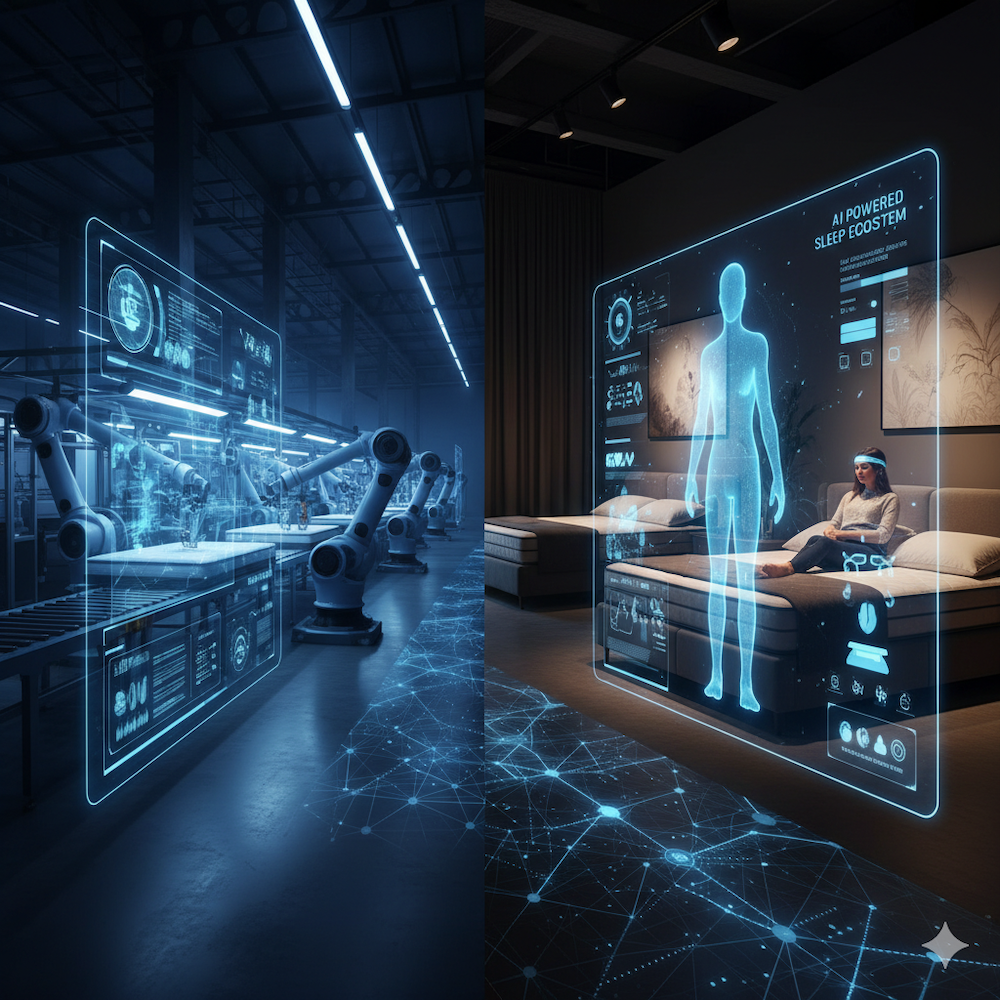
This month, Kathryn Greene explored AI as it relates to the bedding industry. There are intriguing possibilities for ways it can be used and, in some cases, already is in use. For example, AI can create digital prototypes that reduce the need for physical sampling. Textile designers at BekaertDeslee U.S. have been using 3D simulation software for just that purpose, as have other ticking designers. Smart mattresses, such as Sleep Number’s smart beds, already detect respiration, heart rate, motion and sleep trends in sleepers thanks to AI.
Last month, Greene wrote about ways machinery makers are keeping mattresses moving, whether through automation on the floor or roll-packing for delivery. Using automation and AI addresses some of those needs, leading to smoother, faster production.
In the article, Paul Block, president of sales at Gribetz, said: “Artificial intelligence offers so many amazing new ways to approach machine design and support. We are extremely excited for the future.”
As AI evolves, other applications will emerge, maybe making it easier to create more biodegradable products, greener foams and recyclable textiles. However, it seems a bit disingenuous to talk about how AI can help make greener products without mentioning that it currently uses quite a lot of electricity and water. Karen Weise, a tech reporter for The New York Times, recently wrote in a newsletter: “AI needs a lot of power. There’s not enough electricity to meet that demand, so U.S. energy consumption will rise. Some could come from growing renewable sources and a potential revival of nuclear power, but for now much is coming from natural gas.”
It will be interesting to see where we are a year from now. For better or worse, AI is here, and it’s up to us to learn how to use it to its best advantage.