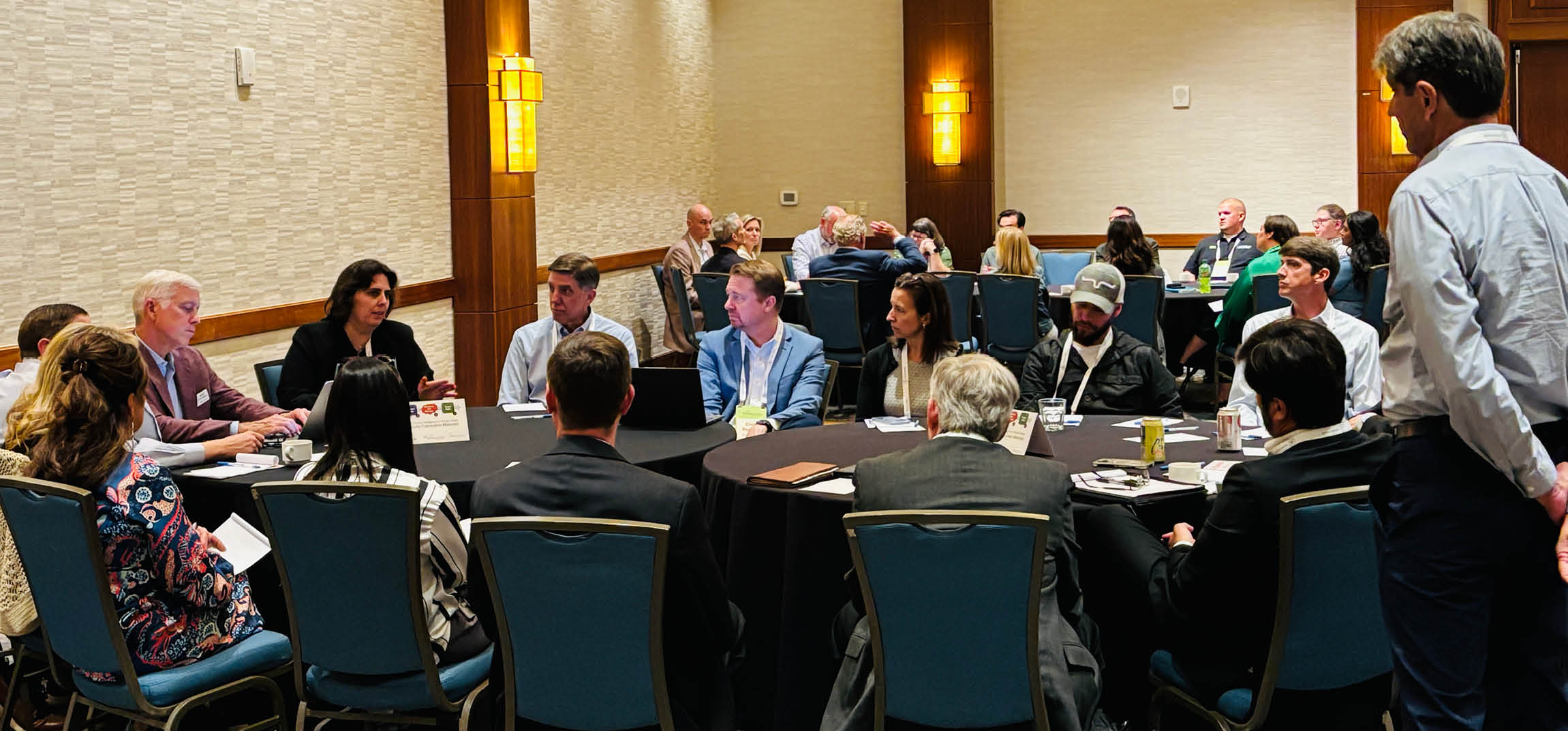
Five years from the very first Mattress Recycling Council Industry Workgroup on Circular Design, innovative products that started out as workgroup breakout discussions are now featured at markets across the United States.
That’s the magic of this workgroup—which welcomes mattress recyclers, product designers, foam suppliers, mattress manufacturers, and all members of the value chain from 1:30–4:30 p.m. Sept. 23, during the International Sleep Products Association Sustainability Conference—working together to bring information from across the value chain so that mattresses can have a lower environmental impact and a higher recyclability.
“It’s frank discussions about what works, what doesn’t, and what the future holds,” says Ryan McMullan, principal consultant at sustainability consultancy Lean Green Way and workgroup facilitator. “What we have observed since 2022 is that the conversations that start in the room continue after the conference. Then the collaboration can turn to fruitful competition as suppliers, designers, and manufacturers form teams to try to improve the circularity of their products. It’s been so gratifying to see the seed planted in our meeting mature into a product on the showroom floor.”
Previous meetings have drawn more than 100 attendees, and you can be a part of the conversation. This group was formed by MRC to:
- Bring information from supplier innovations, manufacturing techniques, and recycler challenges back to the mattress design process to reduce environmental impact across a mattress’s life cycle.
- Explore methods to improve circularity in the mattress industry through the integration of recycled content and renewable feedstocks into material selection and fabrication processes.
- Discuss the potential for material labeling and digital traceability to solve multiple challenges across the mattress value chain, from consumer engagement to recycler material sorting.
- Identify opportunities for reducing the environmental impact
of packaging throughout production, distribution, and
retail operations.
Attendees will also be a part of one of four breakout sessions facilitated by McMullan along with Kate Caddy, director of sustainability for ISPA:
- Design for Disassembly: Explore how design choices can result in easier mattress disassembly and recycling. This session will focus on identifying practical adjustments to product design and assembly that minimize cross-
material contamination, reduce manufacturing waste, and maximize recovery of valuable materials at end of use. - Circular Fabrication Materials: How can innovative materials drive circularity in mattress manufacturing? This session will explore current and emerging options—including recycled content and renewable feedstocks—and identify opportunities for integration into products or processes that reduce environmental impact and maintain high performance.
- Material Labeling and Digital Traceability: What approaches and technologies can provide clear information to retailers, consumers, and recyclers about a mattress’s material composition while protecting trade secrets? What other benefits can be generated from effective labeling or traceability?
- Packaging Across the Value Chain: From production to distribution centers to retail operations, where are the greatest opportunities to reduce the impact of packaging? This session invites participants to share and develop strategies such as lightweighting, durable shipping containers, and return shipments to improve waste reduction across the value chain and meet emerging regulatory requirements.
The meeting is three hours, and every minute is maximized. “We provide the forum, share antitrust rules, give a short introduction, and then reserve most of the session for the participants to talk to each other,” says McMullan. “They are the stars of the show, and our role is just to give them a fruitful venue focused on specific opportunities.”
Another bonus: Participants have found that the circularity workshop is a great way to kick off their ISPA Sustainability Conference experience. “We’ve heard from attendees that the conversations started during the workgroup meeting primed them to get the most out of the next day of the conference, getting their creativity flowing and continuing conversations over breaks and lunch,” adds McMullan. “The two days really complement each other.”