
At a Glance
Company Woolgatherer Carding Mill
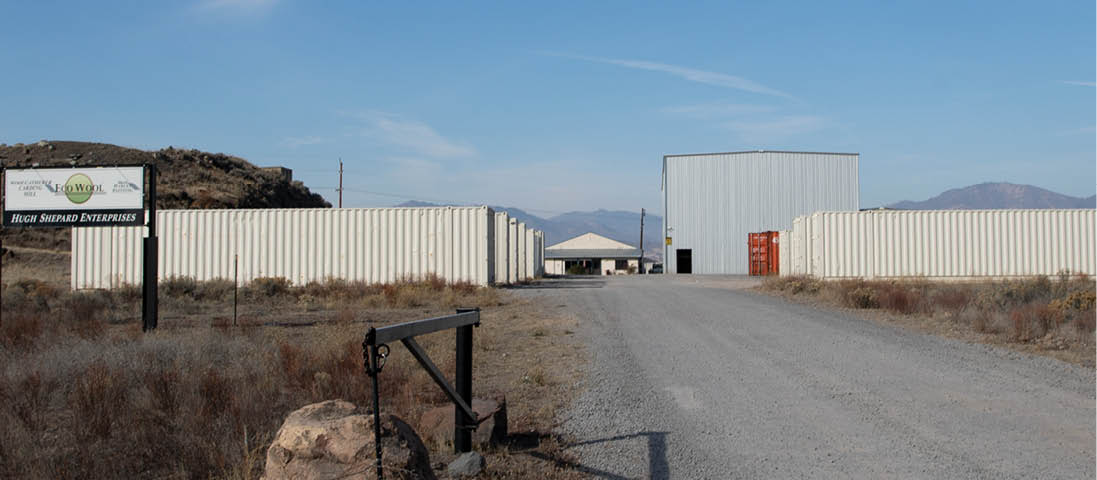
Headquarters Montague, California, where it operates about 40,000 square feet of facilities
Specialty Fibers, textiles, and batting from organic wool and exotic materials including mohair, alpaca, and silk, for use in the mattress industry
History Founded in 1999; current ownership took over in 2018
Ownership Privately held
Learn more thewoolgatherer.com
Over the past quarter-century, Woolgatherer Carding Mill has forged a distinctive path in raw material production for mattresses—crafting materials that not only meet increasingly rigorous fire=resistance standards but also anticipate a broader shift in the bedding industry and beyond, toward greater environmental responsibility.
Founded in 1999 and nestled in Montague, California—a small community in the scenic Shasta Valley, roughly 30 miles south of the Oregon border—Woolgatherer supplies mattress manufacturers with a diverse range of fibers, textiles, and batting. Driven by a mission to steer the wool and broader fiber market toward greater sustainability, the company deliberately forgoes mass production in favor of a careful, hands-on approach to spinning materials. It also cultivates partnerships with nearby producers who share its commitment to humane animal husbandry.
“[Wool] is one of the original renewable, environmentally beneficial, carbon-sequestering products,” says Hank Kearns, owner and CEO since 2018. “It’s exciting to see how much momentum it’s gained across the industry.
There’s clearly a much greater use of wool and natural fibers in mattresses today compared to when this business first got started. People have really come back around to it. It’s timeless—an ancient material with deep roots. The Romans slept on wool. … Then came the age of plastics and synthetic chemistry, and we largely drifted away from it through much of the [20th] century. But now, we’re finding our way back.”
Founded by a shepherd
Company founder Patrick Holland, who passed away in 2004 after his battle with cancer, established the carding mill after purchasing five sheep dogs, moving to the Shasta Valley, and beginning to raise sheep. He met the founder of a natural bedding company called Shepherd’s Dream around the same time that his sheep began to produce wool, prompting him to obtain a carding machine and start the manufacturing process.
After Holland’s death, family friend Nathon Thill—who had experience with Shepherd’s Dream as the son-in-law of owner Eliana Jantz—purchased Woolgatherer at the request of Holland’s widow. Thill operated the firm for the next 15 years until Kearns, a friend and colleague, took over as owner.
“A niche business like this starts from scratch, and there’s a lot of curves along the way,” Kearns says. “The business started when Patrick realized that there was a need for natural fibers in the mattress and furniture industry. He started out fairly small, like a lot of businesses do, and decided that the best way to differentiate was to bring a high-quality product with custom options. The mill started with a love of animals that grow wool, and the land that they live on, so we’ve tried to make that the foundation of what we do.”
“When the company started, very few carding mills were converting wool into batting, although more firms are taking that approach today,” says Eric Smith, business development manager, who has been with Woolgatherer for 20 years. He notes that wool functions as a natural fire retardant, while flame-retardant chemicals were becoming more strictly regulated in 1999 to guard against off-gassing. “That was a big driver in the beginning,” he says. “That gave us a leg up. It helped us to get a foothold into the industry.”
Another serendipitous moment in the company’s early years was the growing popularity of organic food in the early 2000s, which helped to make consumers more aware of the benefits of organic sourcing in general. “This helped us grow, because we were able to branch off of that [awareness] into the space that you spend one-third of your life—the bed,” Smith says.
Woolgatherer attained organic certification for its products at a time when only about 2% of the overall market for bedding products lay within the organic and natural space. “We’ve since branched out into exotic fiber blends—cashmere, silk, mohair, things like that,” Smith says. “A good part of our core base likes that we do a completely domestic blend, mainly from central Oregon.”
Over time, Woolgatherer developed a strong reputation for helping customers meet 16 CFR 1632 and 1633 standards—about smoldering cigarettes and open flames, respectively—without a need for siliconized rayon or other chemical fire-retardant treatments. “We also have helped to pioneer the certified organic program in the mattress world,” Kearns says. “I think we were one of the very first, if not the first, mill to be certified back in the early 2000s.”
“People come to us for an extra level of quality, comfort, and marketing legitimacy. Things like cashmere and alpaca and mohair and silk help our products stand out from the typical, run-of-the-mill mattress product.” — Hanks Kearns, Woolgatherer
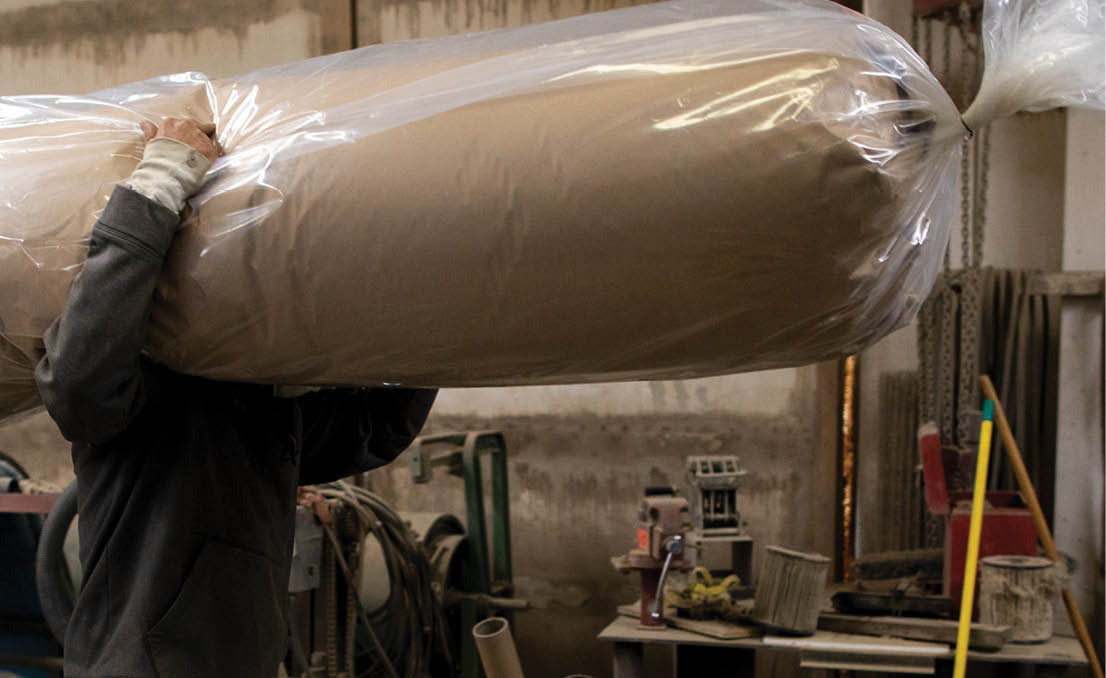
Farm to factory
Woolgatherer’s production process starts with its growers, with whom the company works closely to ensure high standards and humane, sustainable, and chemical-free flock management. The company’s aim is to protect the environment while keeping the quality level high for its wool and cotton batting and textiles and 100% wool insulator barriers. Personal relationships with regional growers have developed in a mutually beneficial way around guidelines that have progressed as needed over time.
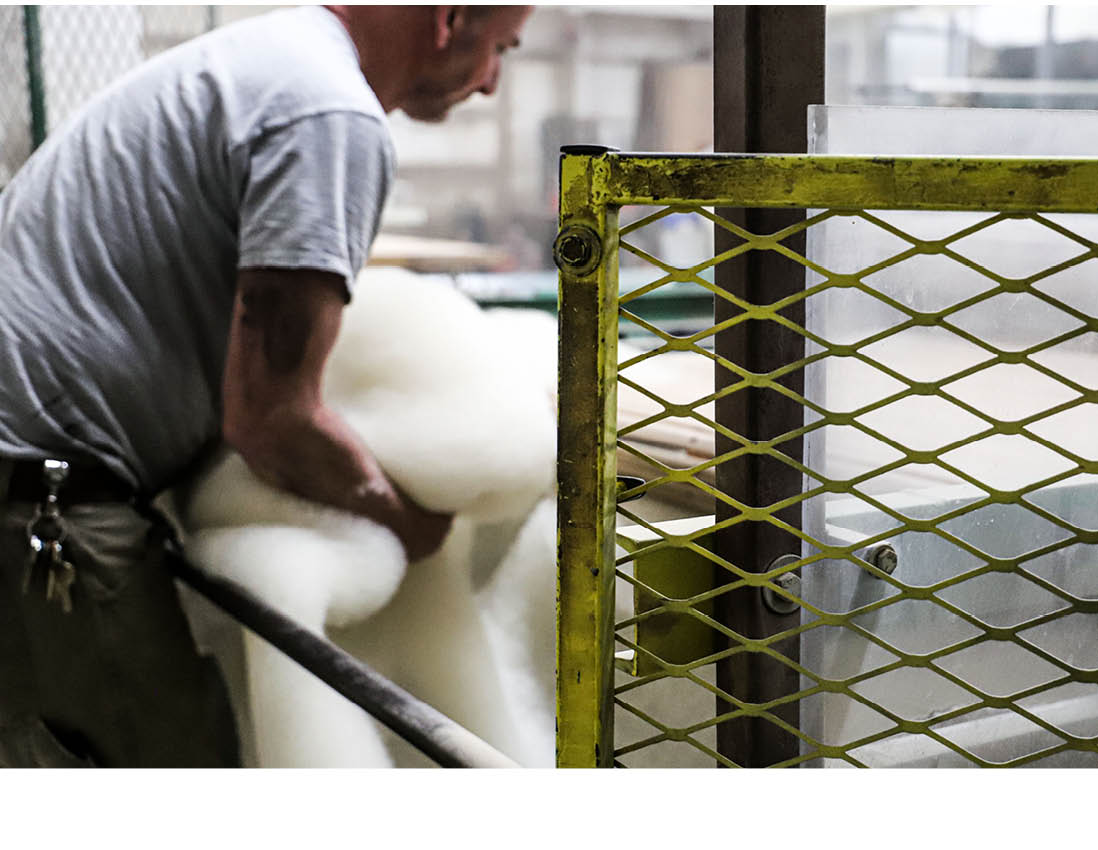
Once it’s ready to be harvested, the wool fleece—a hardened protein—is sheared from the sheep. Next, the wool is skirted to remove less desirable parts of the fleece; graded, meaning sorted by length, quality, and sometimes color; baled, meaning compressed for storage and shipment; and then sent to a scouring facility to be washed. Finally, the wool is shipped back to the carding mill to be made into a finished product. Woolgatherer works with every customer to customize this product to their needs.
The company started with just its premium EcoWool® blend, with a range of micron and staple length that created a buoyant and resilient batting, then branched out into certified organic and needle-punched fabrics, and finally exotic blends that mix basic wool with a percentage of alpaca, silk, and/or mohair for high-end beds.
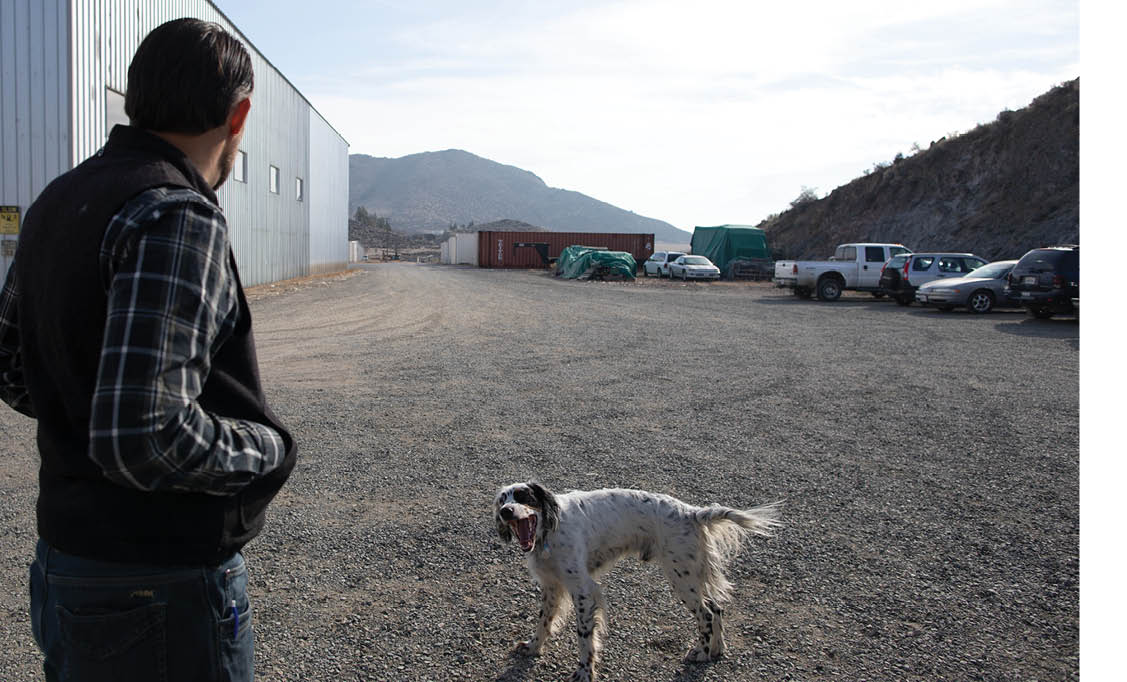
Smith adds that Woolgatherer serves all sizes of companies, from big companies to “ma-and-pa shops,” while distribution has expanded from mostly West Coast accounts along with a few on the East Coast to a fully national presence in the U.S. and across Canada.
In recent years, the company has been honing its focus on the more exotic fibers to help differentiate its offerings. “People come to us for an extra level of quality, comfort, and marketing legitimacy,” Kearns says. “Things like cashmere and alpaca and mohair and silk help our products stand out from the typical, run-of-the-mill mattress product.”
While Woolgatherer has seen increasing interest in exotic fibers and specialty blended materials, the company’s certified organic offerings remain popular. “There’s been a much-renewed focus on our EcoWool product line, which is grown and manufactured in the U.S., all in a relatively small area here in Northern California and Southern Oregon,” Kearns says.
A significant change in the company’s book of business in the 2020s has been an expansion of private-label manufacturing for finished goods. “We’re taking some of these real premium natural fiber materials and batting and actually building them into a ready-to-sell, highly desirable product that retailers and showrooms can design with us, have their label on the product, and create an instant revenue stream,” Kearns says. “That’s been a big thing for us in the past five or six years.”
Building culture and industry ties
Over the quarter-century of its existence, Woolgatherer has attempted to grow a culture that’s as strong as its batting. The company has grown from five employees in its early days to its current roster of 17, many of whom have stayed and worked their way up through the ranks. “The ownership, the people here, we’re all family,” Smith says. “That’s why people stick around.”
“One thing that’s always endeared me to this company is the growth within,” says Kerri Smith, chief operating officer and 12-year veteran of the company (no relation to Eric Smith). “Eric started 20 years ago, pushing a cart in the mill. I started in 2014, in the logistics department. We’ve both grown with the company into our current positions. I’m one of the people who signs up new employees. I always say, ‘Watch out. Once you start here, you’re never going to leave.’ The first employee we ever had is still here.”

She adds that the familial atmosphere extends beyond the workday. “We consider everybody here, the guys in the mill, we consider them our friends. We will go out of our way to help those guys. We’re really close as a group.”
Woolgatherer also has stitched strong ties to the bedding industry. “I really appreciate the camaraderie that ISPA provides, and I’m very happy to see the growing support and education they’re providing for environmentally sustainable programs, whether that’s the Mattress Recycling Council or the Sustainability Conference,” Kearns says. “I think this is all very good work, going in the right direction.”
“It is great to be involved with ISPA and the broader mattress industry,” adds Eric Smith.
“This connection allows us to effectively track market trends and stay informed on the latest innovations.”
Built Strong
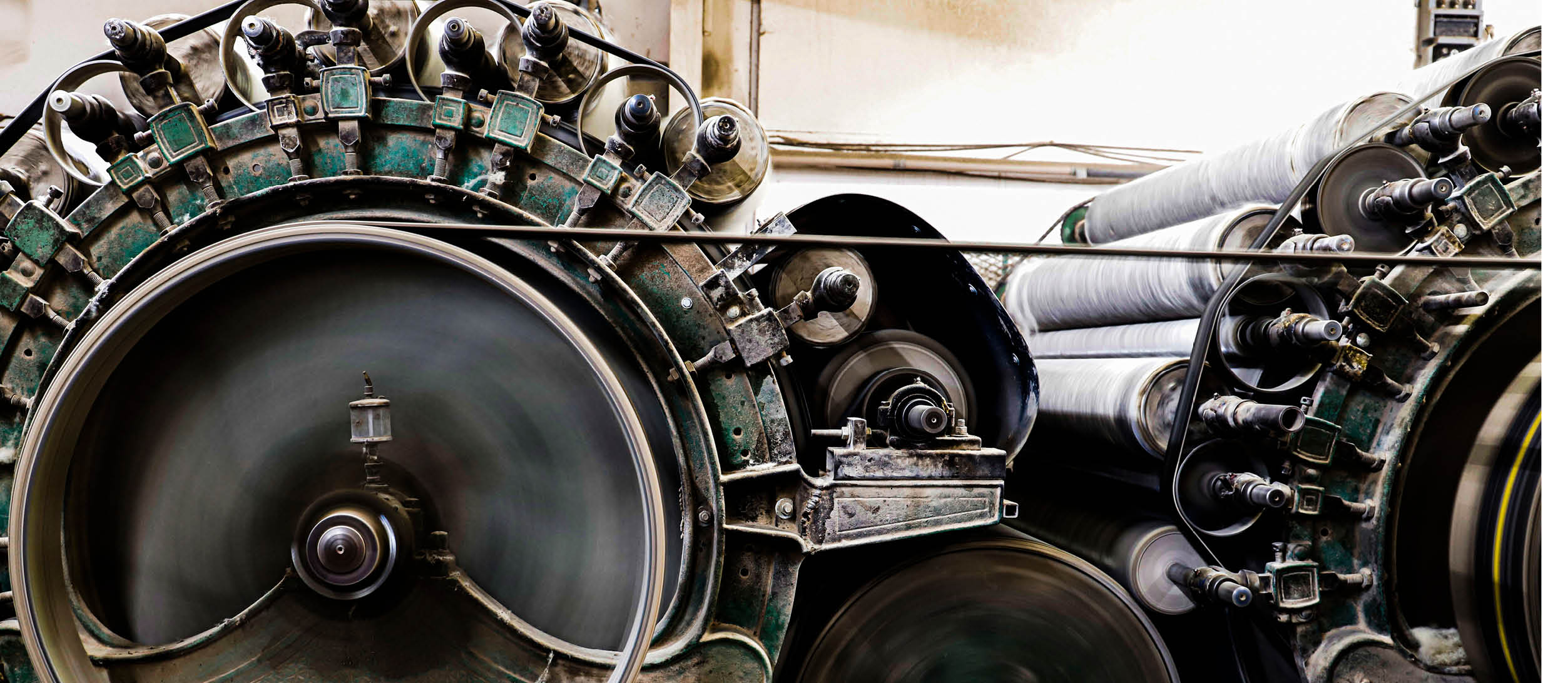
One of Woolgatherer’s primary pieces of equipment is about 80 years older than the company itself.
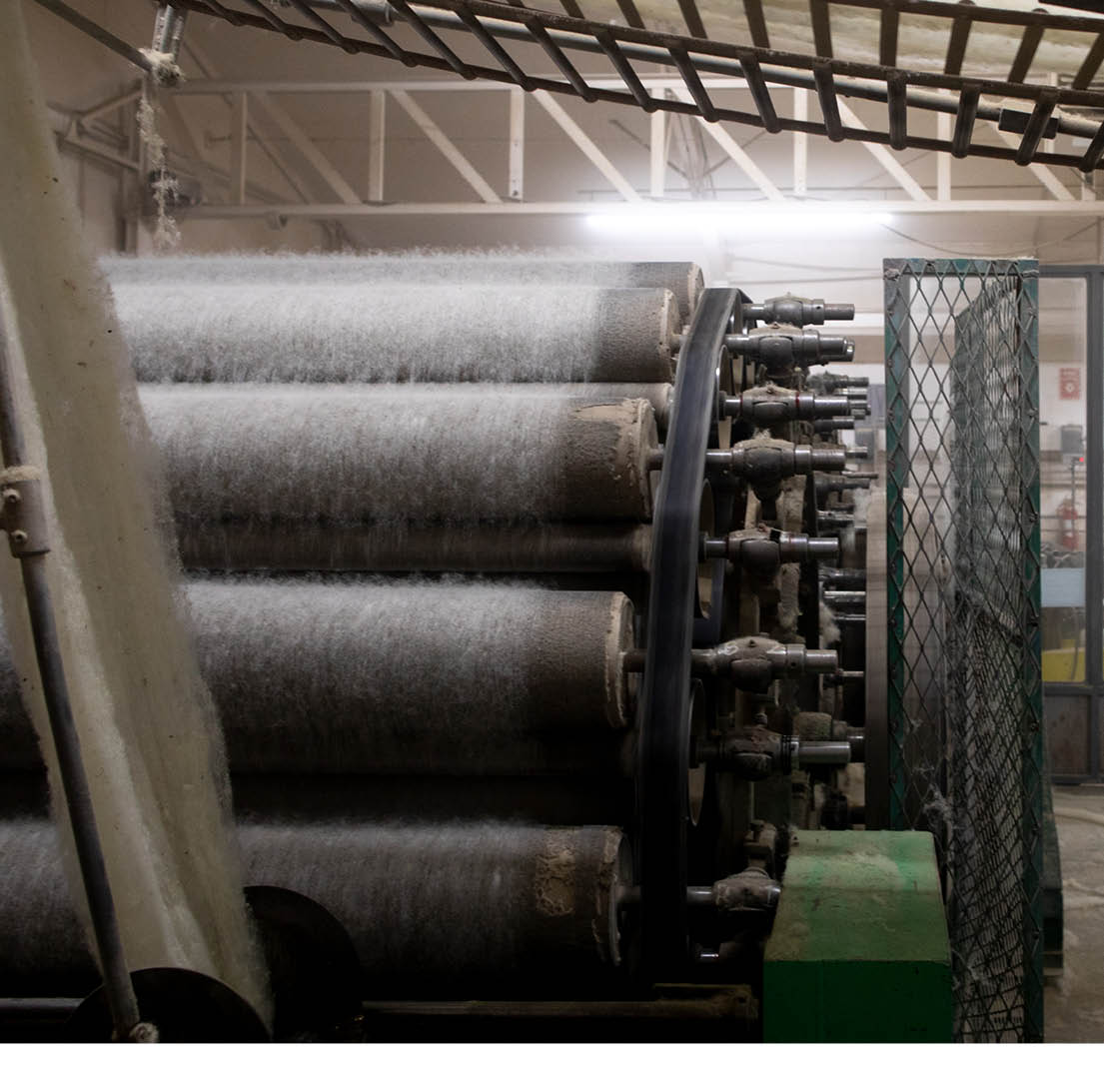
The vintage carding machine shown here—among other models used by the company—was built in 1917. Originally designed to produce wool yarn, from which traces of vegetable matter must be removed before spinning can take place, the carding machine extracts particulates more thoroughly than most batting producers, according to the company, which has updated and optimized the machine.