
Sustainability is an increasingly important topic globally. In 2022, the International Sleep Products Association launched its sustainability initiative to support the bedding industry through advocacy, support, and education. Its first mission was to establish a Sustainability Committee and host a Sustainability Conference.
As within many industries, though, not everyone was quite sure what “sustainability” actually meant.
Today, challenges may still be ongoing in the pursuit of sustainability. But ISPA’s Sustainability Committee Chair Joe Lowery appreciates how much progress has been made in a short amount of time, including defining what sustainability means specifically within the bedding industry. “We’ve come so far in the last four years,” says Lowery, senior director of circularity and sustainability for Carpenter Co.

Baby steps
Lowery and others on the Sustainability Committee began working four years ago to establish a common framework and language for what comprises sustainability in this industry—and to find ways to help companies put sustainability into practice. Speaking to that framework, committee member Allen Platek explained that sustainability can be identified by three areas:
- The environmental impact of one’s business operations, or its carbon footprint.
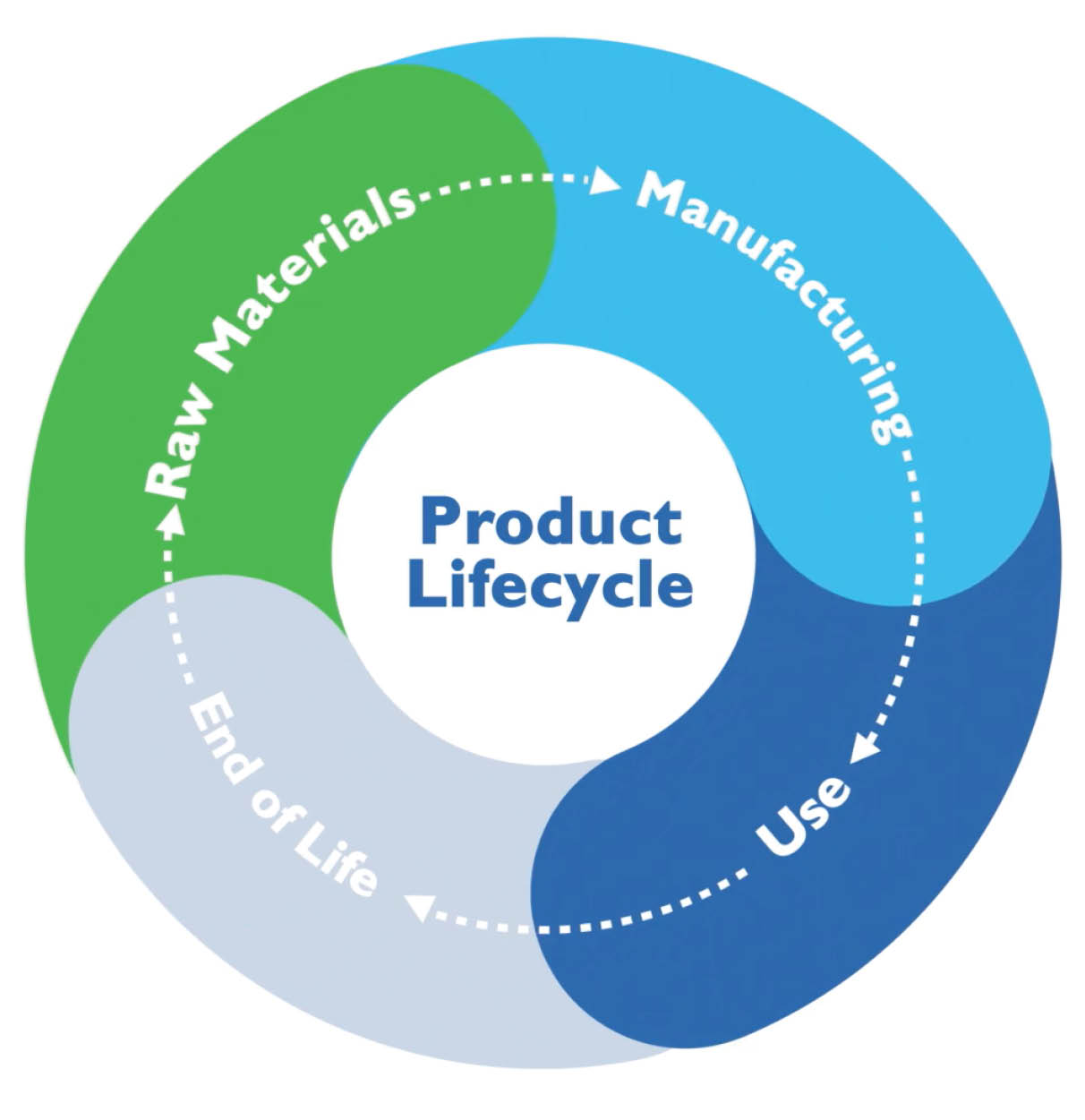
- The environmental impact of a particular product, from how it’s built to how it’s recycled.
- The use of sustainable or natural materials in that product.
“The first two are easy enough [to understand],” says Platek, vice president of new product development at Tempur Sealy International. “Environmental impact from your operations looks at your carbon footprint. The impact from your product encompasses reuse, recycling, and circularity.
“The third one is trickier, because ‘natural’ and ‘sustainable’ are two very different things that, unfortunately, have become somewhat interchangeable in the public’s mind.”
Understanding the language around sustainability—and helping to define it for the rest of us—was among the committee’s first orders of business. The ISPA Glossary of Sustainability Terms (see “Do You Know What It Means?” below), available on ISPA’s website under Sustainability Resources, provides the mattress industry with a common vocabulary—a critical step in working together to solve challenges that encompass and are affected by every sector of the business.
For example, says committee member Emma Reid, “Three years ago, the phrase ‘product passport’ was being bantered about, and very few people knew what it meant. At last year’s Sustainability Conference, we were having meaningful conversations on how to drive the use of product passports in our products. Baby steps, but steps nonetheless!”
Strategies for companies of all sizes
Addressing the three-pronged issue of sustainability—a company’s carbon footprint; the manufacturing, recycling, and circularity of each product; and the use of sustainable materials—has been challenging in different ways for companies of different sizes.
“The large organizations have more resources and are further ahead in their sustainability efforts than many of the smaller companies,” Platek says. “A number of large companies have been publishing [corporate social value reports] for a number of years, but many organizations don’t know where to start.”
Providing resources and guidance to all is among the committee’s objectives. “Each company can have a strategy based on its strengths,” says Lowery.
A company’s sustainability strategies are further defined by its home state and country. Tracking related laws and pending legislation—while advocating for sound government policies—is another focus of the committee’s work. Reid, director of sustainability for Sleep Country Canada, was based in the U.K. and is now in Toronto, giving her the unique vantage point of having seen multiple countries at work on the issue.
“Europe is the most stringent in terms of recycling. And in the U.K., I think there’s a part [of the sustainability effort] that’s made easier because it’s a much smaller country. The recycling infrastructure is really solid,” she says. “In the U.S., it’s more challenging in terms of geography and state legislation.”
Mattress recycling is a big focus right now, Platek adds, with the bulk of research and development efforts being spent to develop methods to ease the process and develop new technologies and markets for the recycled materials. He sees a particular focus on this in the U.S. “Four states have programs that are up and running, nine states have legislation in the works, and another five have expressed interest,” Platek says.
Of course, mattress recycling becomes exponentially easier when the materials used to manufacture the mattress are created with that endgame in mind. Thus, the committee is working to foster greater understanding and collaboration between recyclers and manufacturers. “Foam is really comfortable, and people enjoy sleeping on it,” Reid says. “You want to have the materials that make you sell a great mattress, but how can we continue to evolve and test new materials and make sure they are recyclable?”
To help with this, the committee has been working on a voluntary supplier survey, intentionally designed to gather specific sustainability-related information from their supply chain so manufacturers can collect information about potential suppliers’ greenhouse gas emissions and goals, among other sustainability measures. Having a comprehensive picture about sustainability efforts upstream can help manufacturers make more informed decisions about which suppliers to choose.
While bio-based foams and other more environmentally friendly materials are increasingly being used in mattress production today, the industry also needs to address the end of its manufacturing past. “In the past 10 years, there have been more and more foam-based mattresses manufactured. Those are going to start hitting our landfills at an exponential rate,” Reid says. “We’re going to have so much foam that we don’t know what to do with.”
Richard Skorpenske—who retired in March after a 25-year career with Covestro, most recently as vice president of sustainability and public affairs—was a founding member of the Sustainability Committee. He’s excited about continued innovation in mattress and materials design.
“Design for recycling is a forward-looking perspective for the mattress industry,” Skorpenske says. “Obviously, comfort and durability are key, but we need to be thinking about how we manage these materials after their 10-or-so-year lifetime.”
And, Platek says, that design and those materials can’t put too big a dent in the bottom line. “I think suppliers to the industry are offering a lot of solutions that make recycling our product easier. The issue is cost, though,” Platek says. “Many solutions are more costly than what is being used now, and there is a lot of pushback because of that, particularly when the industry has been trying to dig out of a deep hole for the last four to five years.”
All these challenges are why the committee continues to create and share resources to help companies make smarter, sustainable, and cost-effective choices and facilitate solutions—particularly at the annual ISPA Sustainability Conference, which is touted as one of the committee’s greatest contributions to the sustainability effort.
“I think it’s brilliant [ISPA has] a sustainability conference and loads of manufacturers and retailers and recyclers all attend,” Reid says. “It’s great that they’re really bringing these ideas to the forefront for people. You can see the strength in businesses doing these ideas, how it gives you a competitive edge if you do it the right way.”
Do You Know What It Means
The ISPA Sustainability Committee, together with ISPA staff support, has compiled a comprehensive glossary of terms regarding sustainability, including technical, scientific, regulatory, and cultural terms. Here’s a sampling of terms and their definitions, based on reliable sources. Dozens more can be found on the ISPA website.
Bio-based product: Commercial or industrial product (other than food or feed) composed in whole or in significant part of biological products, forestry materials, or renewable domestic agricultural materials, including plant, animal, or marine materials.
Carbon footprint: The total amount of greenhouse gases emitted into the atmosphere each year by a person, family, building, organization, or company.
Circular economy: An economy that keeps materials, products, and services in circulation for as long as possible, reducing material use; redesigning materials, products, and services to be less resource-intensive; and recapturing “waste” as a resource to manufacture new materials and products.
Greenhouse gas emissions: Any gas that absorbs infrared radiation in the atmosphere, resulting in heat retention on the planet (including carbon dioxide, methane, nitrous oxide, ozone, chlorofluorocarbons, hydrochlorofluorocarbons, hydrofluorocarbons, perfluorocarbons, and sulfur hexafluoride).
Extended producer responsibility, or EPR: An environmental policy approach that gives producers financial or physical responsibility for a product’s entire life cycle, including the management or disposal of post-consumer products.
Environmental social governance, or ESG: A set of factors used to measure the nonfinancial impact of investments and companies. “E” includes energy efficiencies, carbon footprints, greenhouse gas emissions, deforestation, biodiversity, climate change and pollution mitigation, waste management, and water usage. “S” covers labor standards, wages and benefits, workplace and board diversity, racial justice, pay equity, human rights, talent management, community relations, privacy and data protection, health and safety, supply-chain management, and other human capital and social justice issues. “G” refers to the governing of the “E” and “S” categories—corporate board composition and structure, strategic sustainability oversight and compliance, executive compensation, political contributions and lobbying, and bribery and corruption.
Scope 1 emissions: Emissions from operations that are owned or controlled by the reporting company (i.e., emissions from company vehicles and facilities).
Scope 2 emissions: Indirect emissions from the generation of purchased or acquired electricity, steam, heat, or cooling consumed by the reporting company (i.e., electricity purchased from a local electrical grid).

Scope 3 emissions: Indirect emissions (excluding Scope 2) that occur in the value chain of the reporting company (i.e., emissions from purchased goods and services, waste disposal, and employee commuting).
Sustainable manufacturing: The creation of manufactured products through economically sound processes that minimize negative environmental effects while conserving energy and natural resources (also called “sustainable design” or “green design”).
A Blueprint for Sustainable Manufacturing in California
When it comes to building a more sustainable industry, ISPA Sustainability Committee member Allen Platek says that “manufacturing is a great place to start.”
To that end, the Mattress Recycling Council’s Sleep Products Sustainability Program, or SP2, can benefit California-based bedding manufacturers with its no-cost educational platform aimed at helping them learn to lessen environmental impacts, increase efficiency, and lower their operating costs. The program helps manufacturers build a management system for in-depth business analysis that identifies steps to establish best practices and define metrics to track their progress.
“The MRC’s SP2 program is a good blueprint for manufacturers, both big and small, to follow,” Platek says. “Public utilities will help manufacturers audit and sometimes absorb some of the cost of some of the efforts, for instance, replacing incandescent or fluorescent lighting with LED.”
Participants earn an SP2 facility certification, and the program can also serve as a foundation for pursuing an ISO 14001 certification, the international standard for effective environmental management systems.
To learn more, visit mattressrecyclingcouncil.com/sp2.
A Matter of Certification
Doing better begins with knowing better, and when it comes to sustainability in the bedding industry, there are plenty of ways to become more knowledgeable about rules and regulations, emerging technology, and best practices.
ISPA staff and the ISPA Sustainability Committee have compiled an extensive list of relevant sustainability-focused certifications that can be attained in all facets of the industry. With more than 50 options to choose from, manufacturers can start with a certification program designed around one aspect of their business or throw their efforts into a larger, companywide endeavor, such as a certification in one of these categories:
- Companywide certifications
- Facility certifications
- Supply chain certifications
For a more targeted approach, there are several options to choose from in each material-specific category:
- Adhesive-specific certifications
- Finished goods certifications
- Foam-specific certifications
- Metal-specific certifications
- Textile-specific certifications
The list and easy access to each certification are ISPA member benefits. Members can access them by logging into their ISPA account. Companies that would like to have certifications considered for inclusion may contact [email protected].
Your Sustainability Committee at Work
Chair
Joe Lowery, Circulatory Director, Carpenter Co.
Members
Steve Adams, Business Manager, Worthen Industries/UPACO Adhesives Division
Billy Blackburn, CEO, Alexium International
Chris Bradley, Vice President, Carpenter Co.
Eric Delaby, Senior Sales Director, Jones Family of Companies
Abraham Jaar, CEO, JF International
Jason Jewett, Vice President, Product Development–Bedding Group, Leggett & Platt Inc.
Sheri McGuire, Vice President, Advanced Technology,
Serta Simmons Bedding LLC
Gary Melder, Director, Sales, Hickory Springs Manufacturing
Steve Rosenberg, Vice President of Product Development, FXI
Allen Platek, Vice President, New Product Development, Tempur Sealy International
Emma Reid, Director of Sustainability, Simba Sleep
Tim Thiel, Global Circular Economy Manager, Covestro
Tanner Van De Hey, Territory Manager, C3 Corporation
Jason Warner, National Account Manager, BekaertDeslee USA Inc.
Tim Witherell, Corporate Manufacturing and Operations, The Original Mattress Factory Inc.
Matan Wolfson, Vice President, Business Development/Marketing, Texas Pocket Springs Tech.
ISPA Staff
Kate Caddy, Director, Sustainability
Alison Keane, President
Marty Salamone, Manager, Sustainability & Government Policy