Consumers this year are approaching spending with a mix of optimism and caution. Many feel financially stable, yet economic uncertainty and higher living costs are encouraging more deliberate decision-making at the checkout counter.
The latest research from the Better Sleep Council offers a closer look at how consumers are balancing those competing forces—and what that means for retailers selling big-ticket items like mattresses.
Since 1996, BSC has conducted research to track consumer attitudes toward sleep, health, and mattress purchasing decisions. The latest survey, conducted earlier this year among 506 U.S. adults, examines how consumers are thinking about spending in the year ahead, including their priorities, concerns, and willingness to make larger purchases.
The results suggest that while many consumers remain cautious, they are still willing to spend when purchases align with their budgets and improve their quality of life.
A more deliberate consumer
Consumers today are thinking carefully about where their money goes. Nearly one-third of U.S. adults say they worry about being able to afford purchases beyond necessities, according to the BSC survey. At the same time, many consumers report feeling stable overall: 70% say they feel the same or more financially secure heading into 2026 compared with the beginning of 2025.
Still, the economic environment is clearly influencing behavior. Eight in 10 consumers say they plan to shop more consciously in 2026 and avoid nonessential purchases.
This more intentional mindset doesn’t necessarily mean consumers have stopped spending. Instead, it suggests they are placing greater emphasis on value, timing, and financial comfort before making purchases.
Many consumers report following structured spending habits. Nearly 7 in 10 say they stick to a budget, although impulse purchases remain common—47% admit they still tend to buy something on the spot if it sparks interest.
Age also plays a role in spending behavior. Younger consumers are significantly more likely to describe themselves as impulse buyers, with 61% of adults ages 18 to 44 agreeing with that statement, compared with 35% of consumers ages 45 and older.
Consumer priorities
Even with careful spending habits, consumers still have clear priorities for where their money will go in 2026.
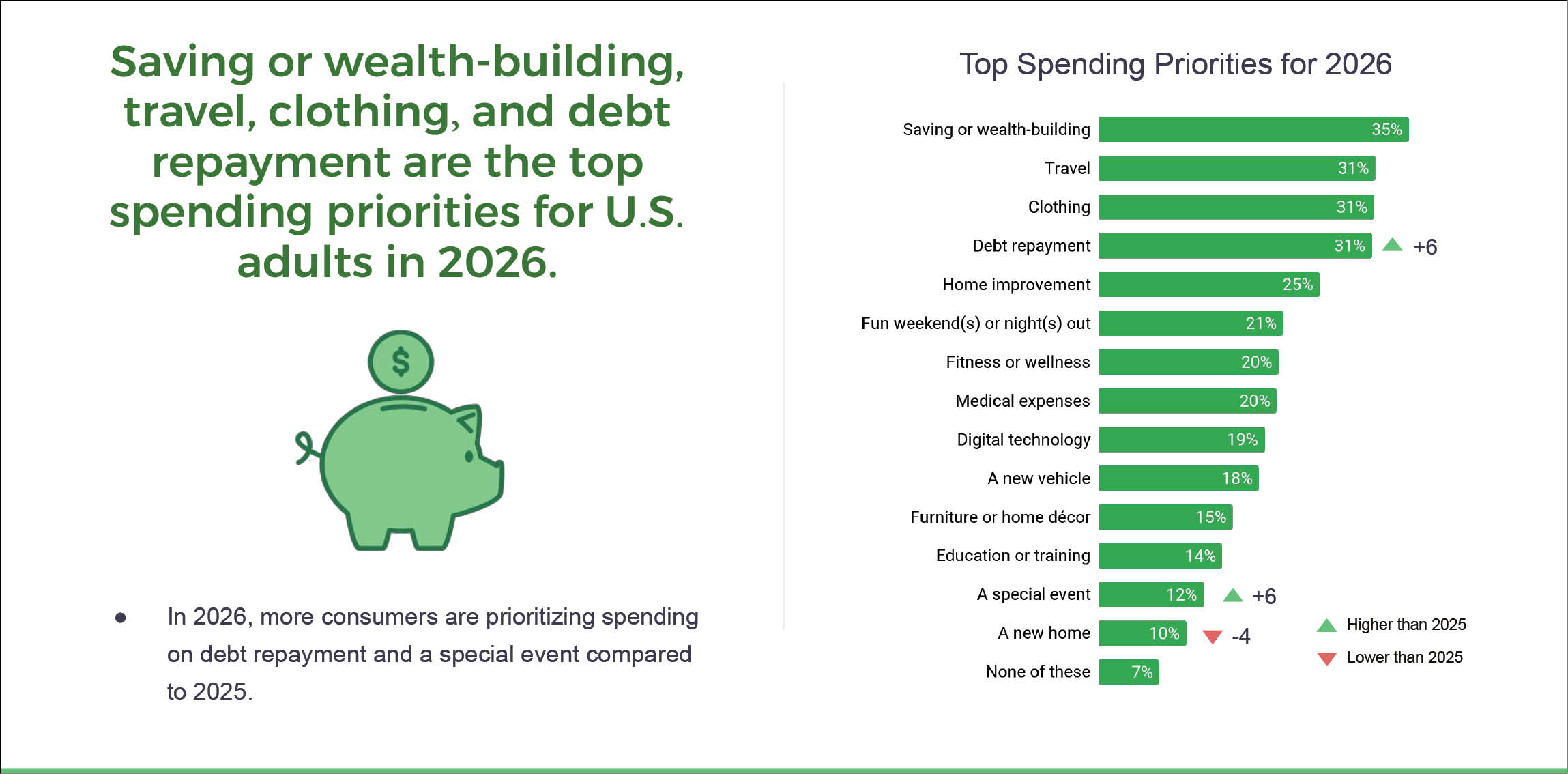
Saving and wealth-building ranks as the top spending priority, followed by travel and clothing purchases. Debt repayment has also grown in importance compared with the previous year, reflecting consumers’ desire to strengthen their financial footing.
The same pattern appears when consumers are asked how they would use extra money. Savings again tops the list, followed by travel, clothing purchases, and debt repayment.
While these priorities reflect financial caution, they also highlight a desire to balance responsibility with experiences and personal spending. Travel and leisure activities remain high on many consumers’ lists, particularly among younger adults.
Spending priorities also vary by financial outlook. Consumers who feel comfortable making large purchases are more likely to prioritize travel and discretionary spending, while those concerned about affording necessities tend to focus on essentials such as savings, clothing, and medical expenses.
Making large purchases
Large purchases are still on consumers’ minds—but many are approaching them cautiously.
Only 30% of U.S. adults say they feel comfortable making or considering a larger household purchase in 2026. For many consumers, financing will play a critical role in those decisions.
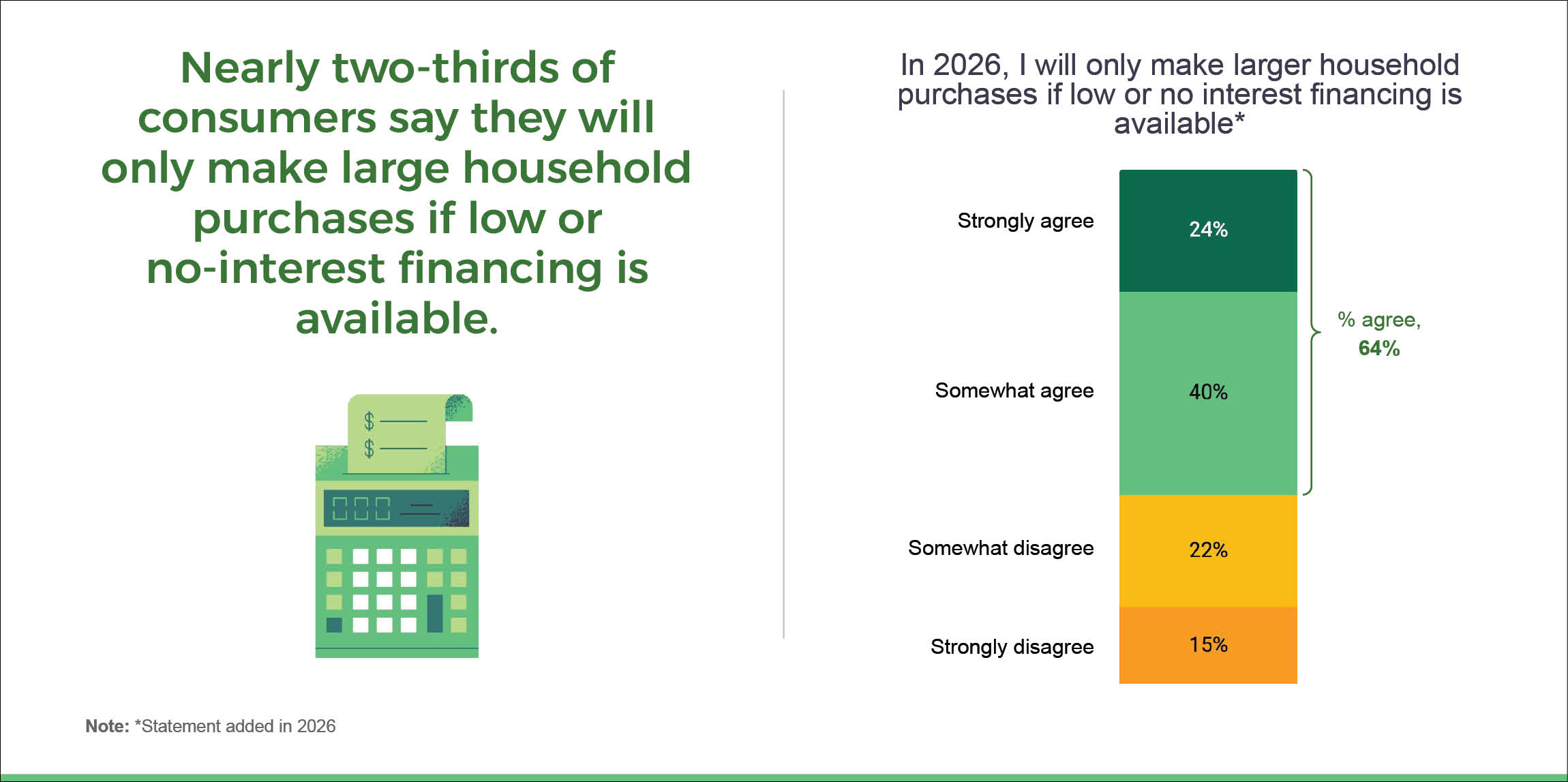
Nearly two-thirds of respondents say they would only consider making a large purchase if low- or no-interest financing is available. That finding underscores how important financing options have become for retailers selling higher-priced goods.
Consumers also report clear criteria for deciding when a purchase is worth the extra expense. More than half say they are willing to spend more only if the purchase fits within their budget, while others say they splurge when a purchase improves their quality of life or represents a long-term investment.
For retailers, those insights reinforce the importance of positioning products not just as purchases, but as meaningful investments that deliver lasting value.
Sleep remains a priority
Despite cautious spending habits, sleep-related purchases remain on consumers’ radar.
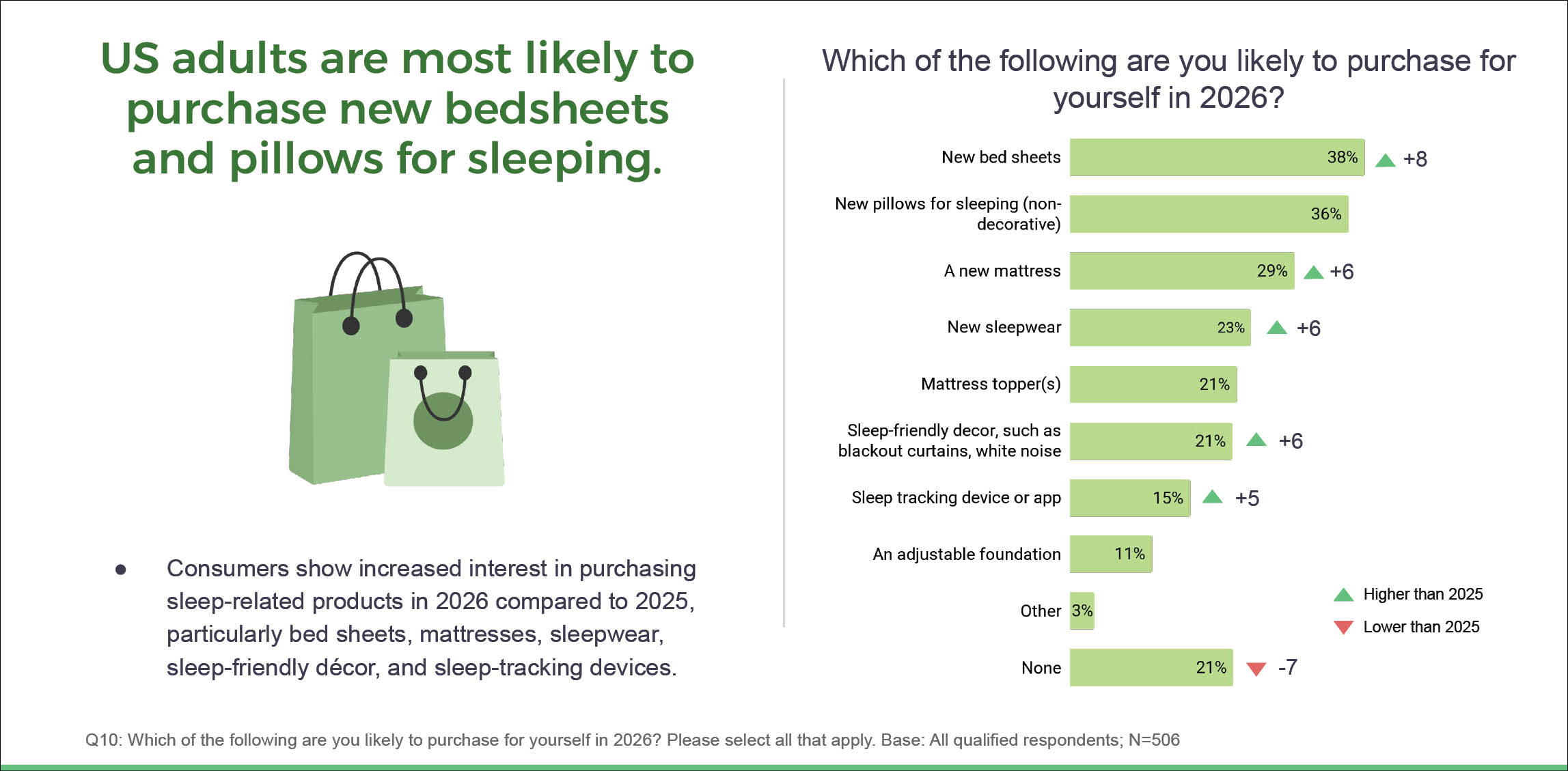
When asked about products they are likely to purchase in 2026, consumers most frequently cited bedsheets and pillows. Nearly 4 in 10 respondents say they plan to purchase new bedsheets this year, while more than a third expect to buy new pillows.
Mattresses also remain part of consumers’ purchase plans, with nearly 3 in 10 adults indicating they are likely to buy one in 2026.
Younger consumers show particularly strong interest in sleep products. Adults under age 45 are significantly more likely than older consumers to plan purchases across multiple sleep-related categories, including pillows, mattresses, sleepwear, and sleep-tracking technology.
At the same time, the motivations behind better sleep remain consistent with previous years. Managing stress or anxiety is the most cited priority for improving sleep, followed by establishing a consistent sleep schedule and creating a relaxing bedtime routine.
Together, these findings suggest that sleep continues to be viewed as an important contributor to overall well-being—a perspective that creates opportunity for the mattress industry.
Opportunity in a cautious market
The BSC research illustrates a consumer landscape shaped by economic awareness but not defined by hesitation.
Consumers are paying closer attention to how and why they spend, weighing purchases more carefully, and prioritizing financial security. Yet they remain willing to invest in products that improve their daily lives.
For mattress retailers and manufacturers, that mindset presents a clear opportunity.
By emphasizing value, durability, and the role of sleep in supporting health and well-being—while also offering flexible financing options—the industry can help consumers feel confident about investing in better sleep.
As spending habits continue to evolve, the research reinforces a simple truth: Even in uncertain times, quality sleep is worth investing in.