
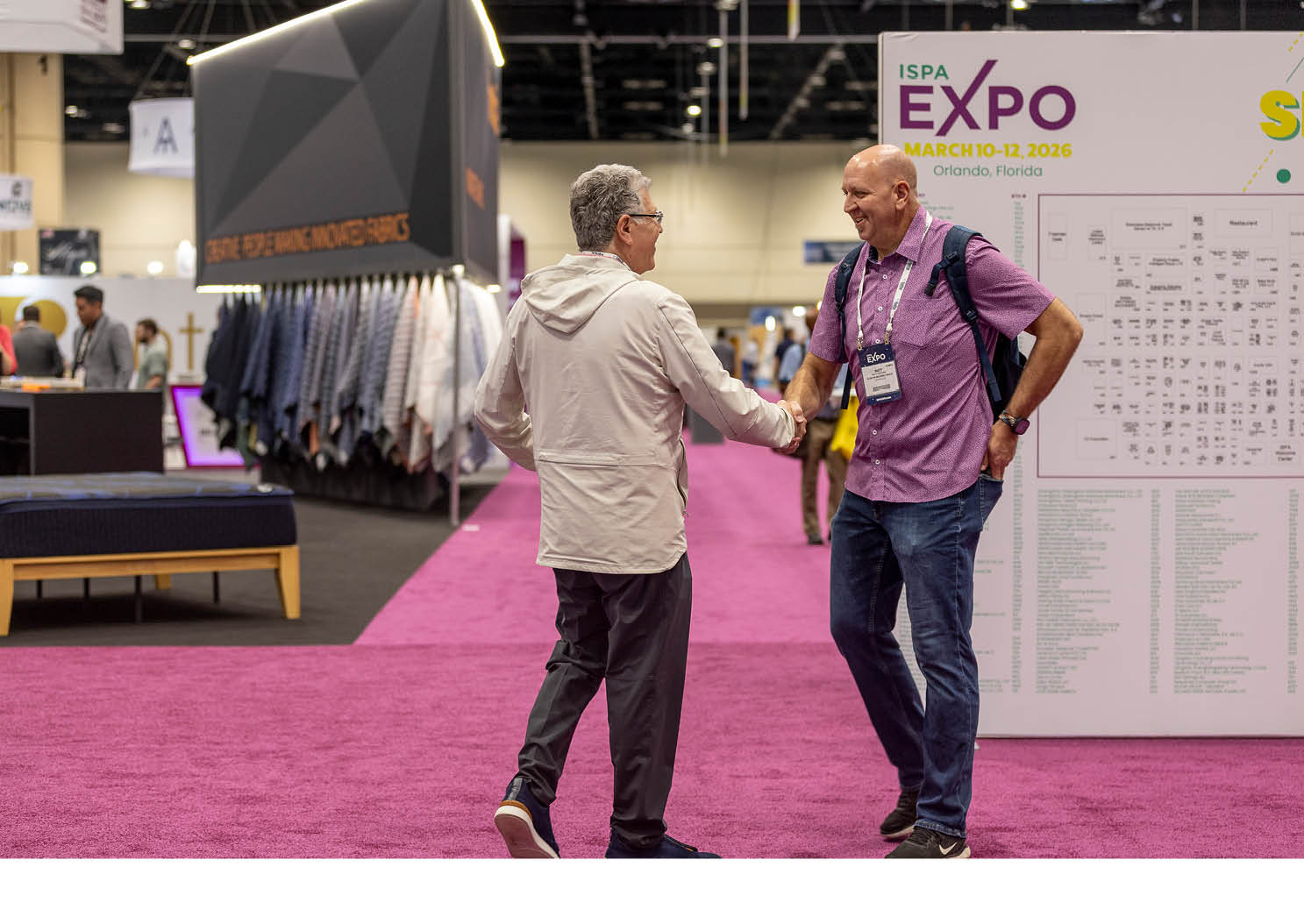
ISPA EXPO 2026 settles into its rhythm quickly.
By the time the exhibit hall opens Tuesday morning, most of the people in it are already engaged, picking up conversations from the night before, continuing discussions that started weeks earlier, or moving directly into technical exchanges that don’t require much preamble. Booths are active early. Machines are running. Demonstrations are underway.
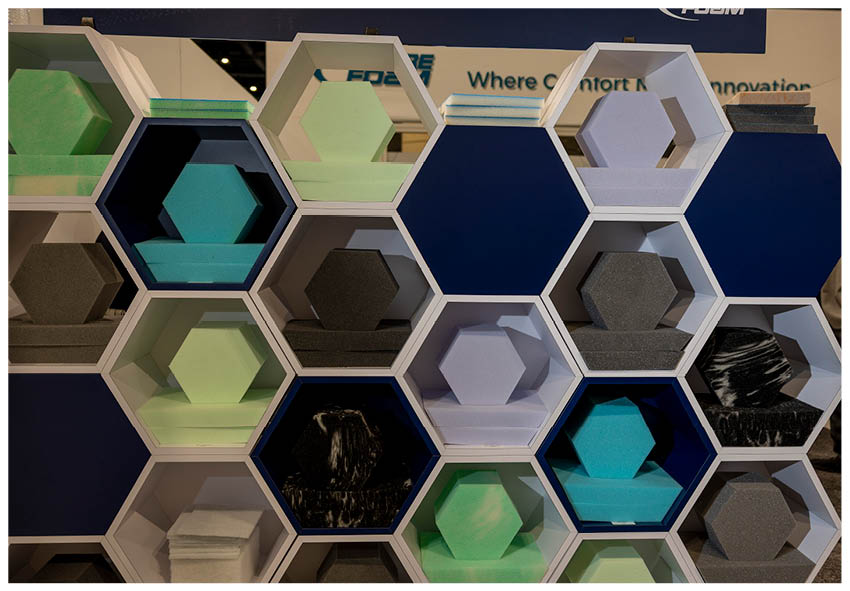
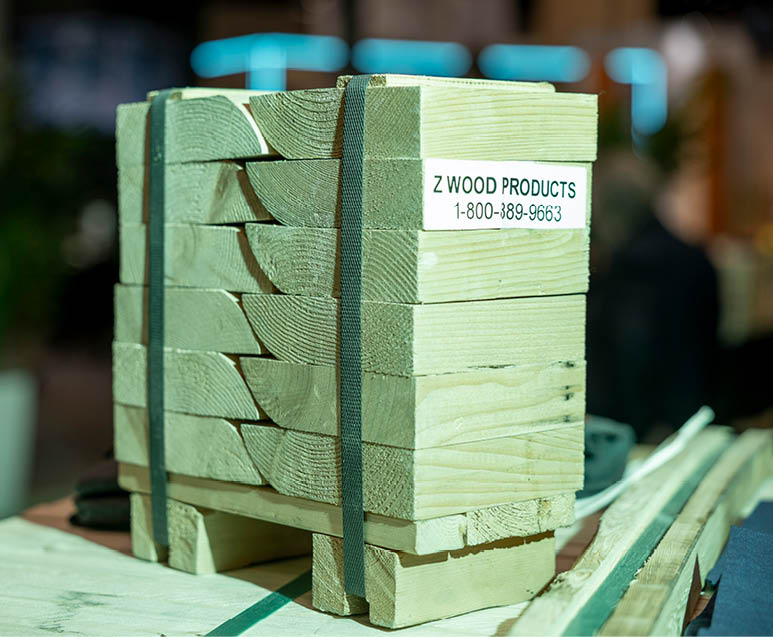
What looks, at a glance, like a series of product displays is, in practice, a live view of the mattress industry’s full ecosystem: materials, construction methods, manufacturing constraints, and downstream implications, all in play at once. The conversations are energetic, highly specific, and not easily replicated anywhere else.
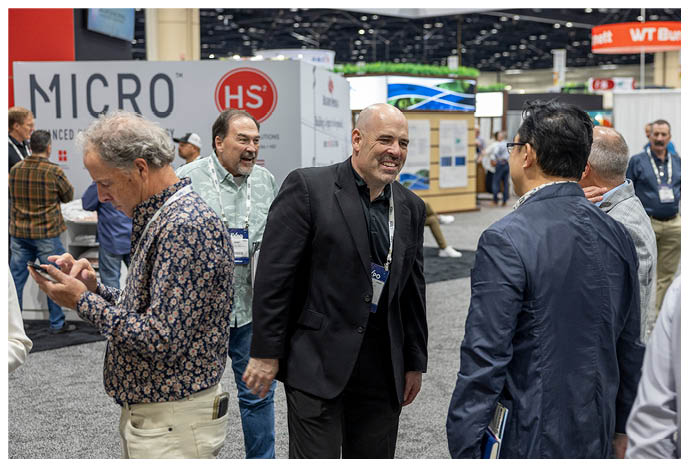
That is part of what gives the show its value. It brings the industry’s moving parts into one place and lets them be considered side by side, where the connections between them are easier to see.
ISPA EXPO has long reflected the industry through its suppliers, manufacturers, machinery companies, and service partners rather than through a polished parade of finished products. What feels more pronounced this year is the many pressures now arriving at once, and how often a decision in one part of the system creates consequences somewhere else.
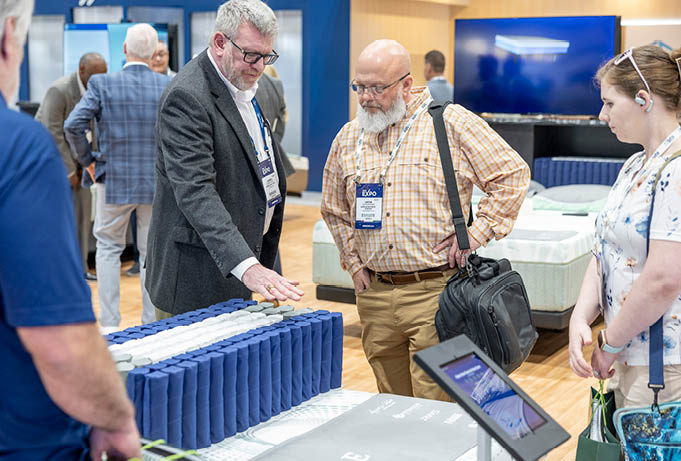
That broader perspective is part of what Adam Lopez, national accounts manager at Carpenter Co., was getting at when he said, “In bedding, what you’re putting into it … that’s probably the smallest portion.”
The comment is a reminder that the product cannot be understood through ingredients alone. On this floor, it is easy to see why. A fabric choice affects heat transfer and surface feel but also merchandising and credibility. A support system shapes comfort and durability but also assembly and margin. An adhesive choice influences performance, production efficiency, and whether the product can be separated later.
The industry has always been interconnected in that sense. What has changed is how central it has become to the way companies think about design, production, and performance.

A Closer Look: How the Mattress Is Changing, Layer by Layer

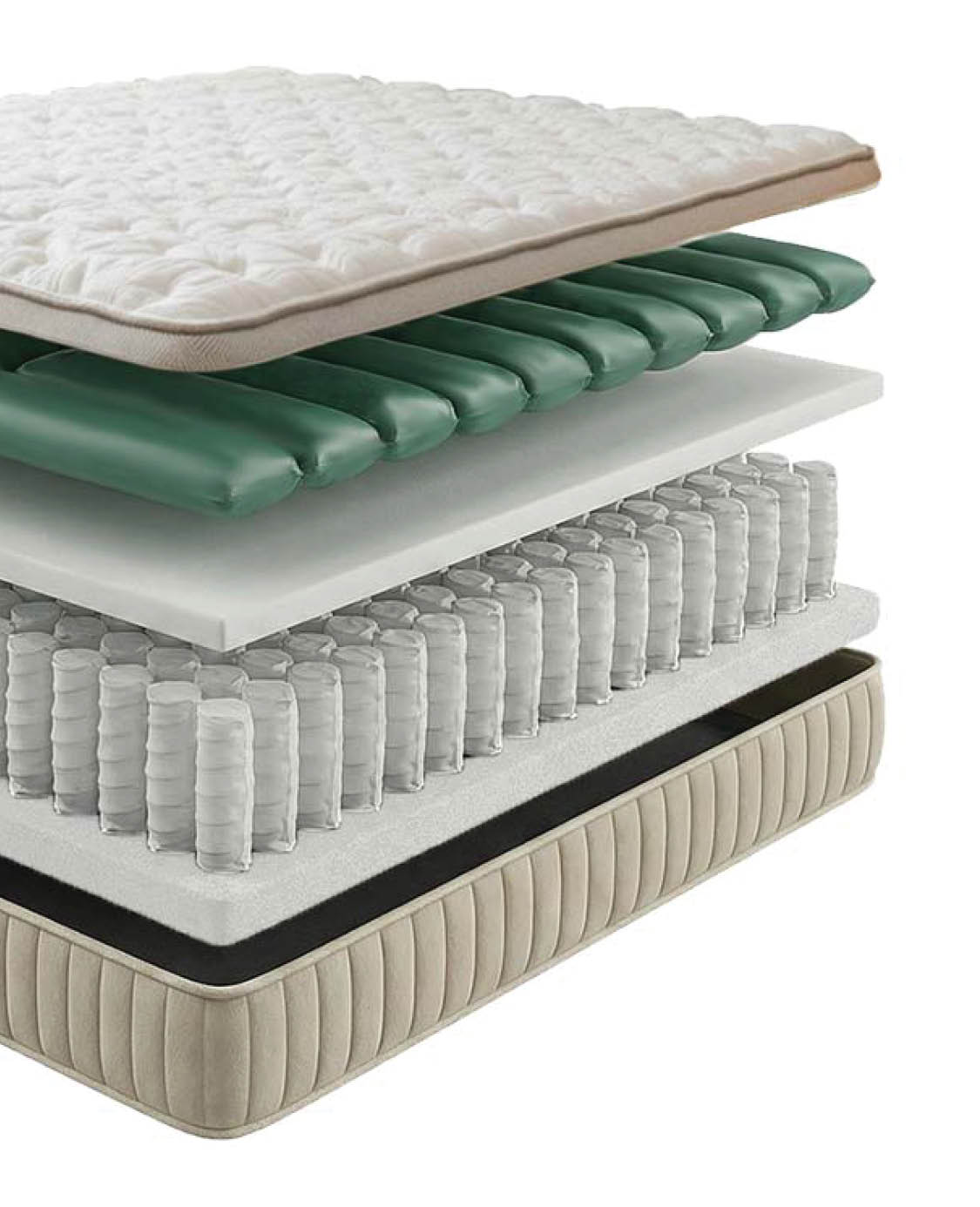
The mattress is still easy to describe at a high level: Cover. Comfort. Support. Core.
What has become harder to describe is what each of those layers is now being asked to do.
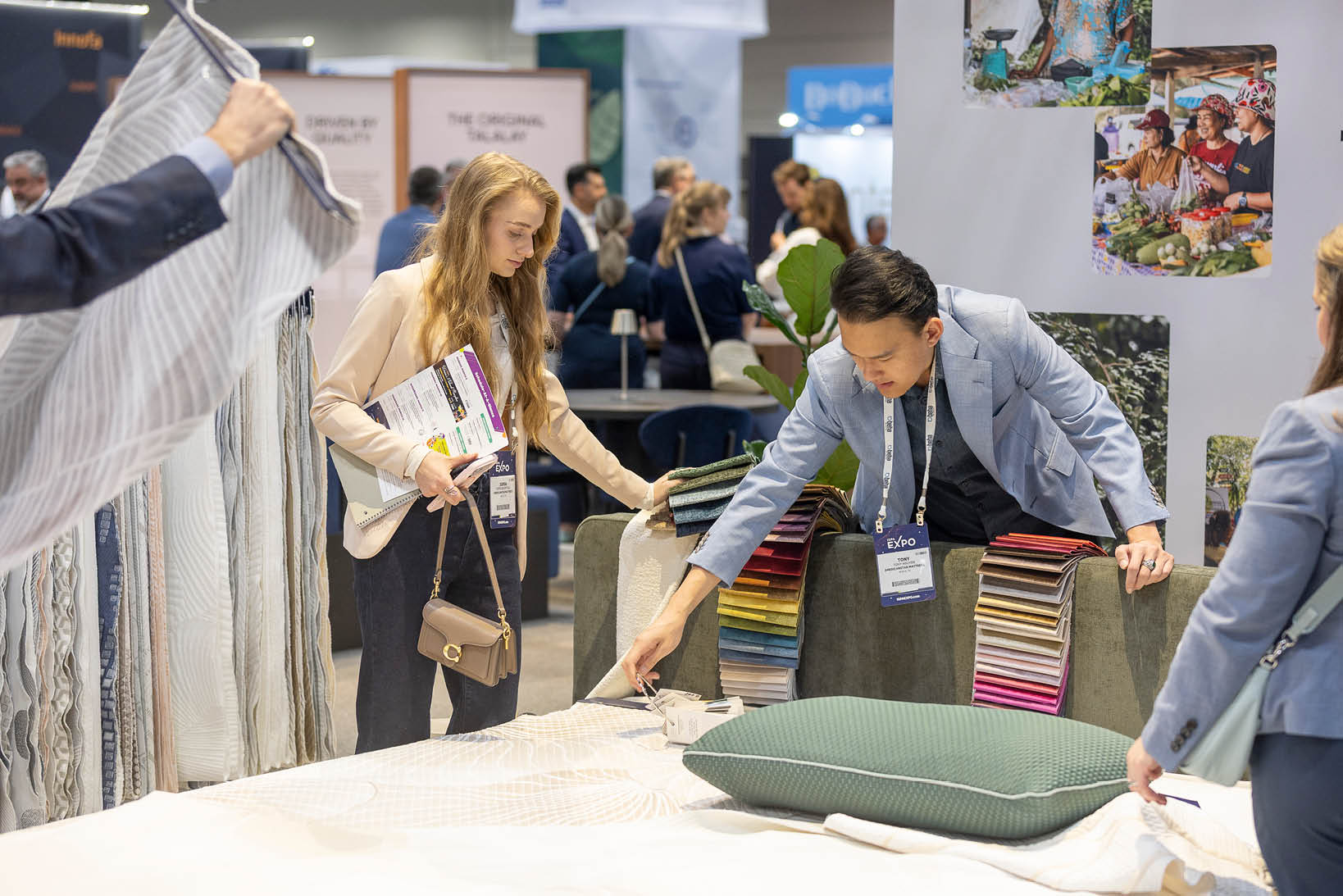
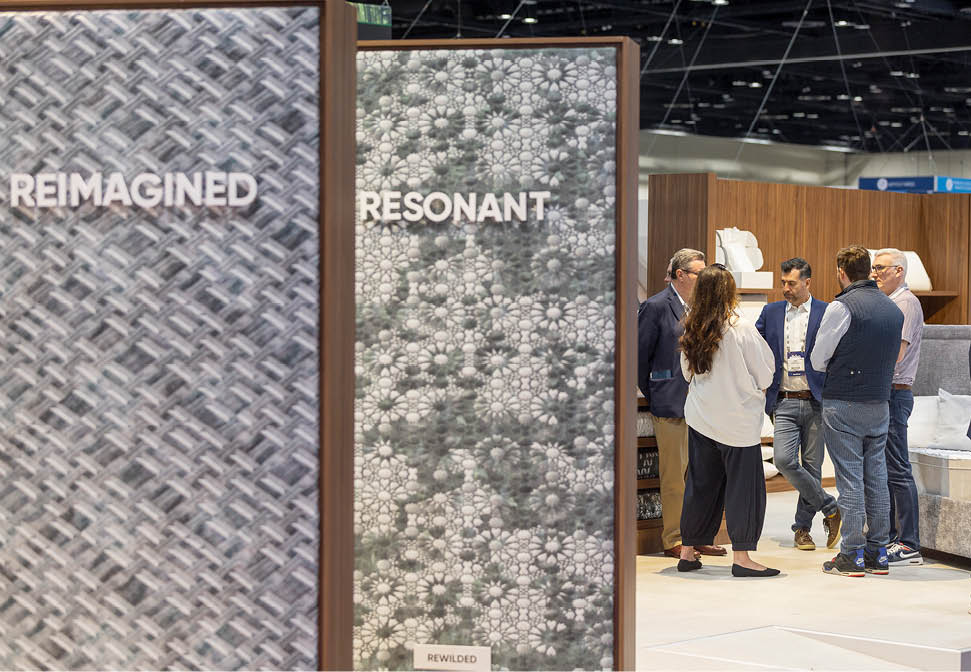
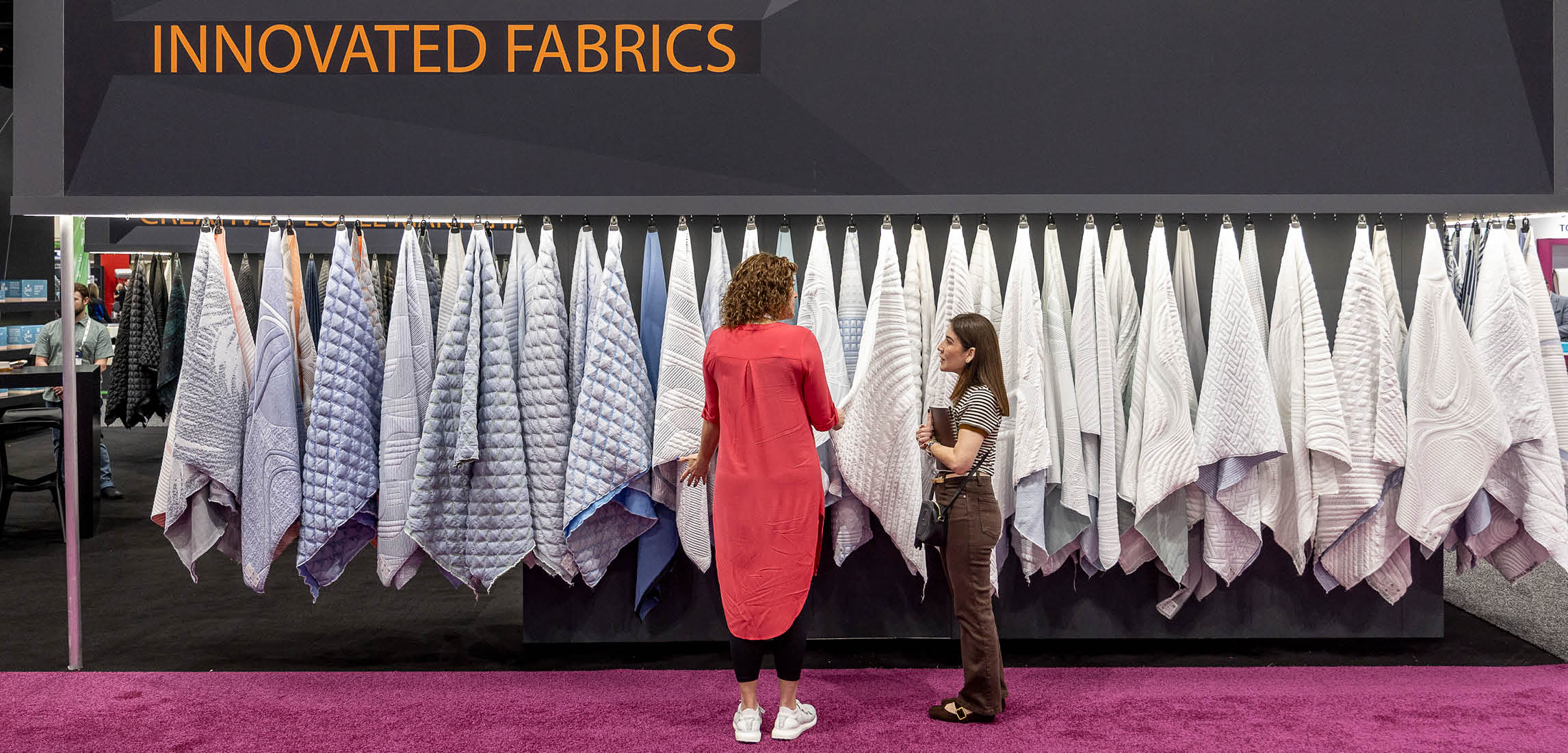
Start at the surface. Ticking is no longer only a finish. Suppliers increasingly talk about it as a functional layer that influences cooling, stretch, durability, and the way the product is perceived before anyone lies on it. That alone changes the role of the cover. It is no longer just aesthetic wrapping; it is part of the product’s promise.
Cooling offers another useful window into how that shift is playing out.
At Innofa, the conversation moves quickly past surface-level claims and into how cooling performs over time. “It’s instant cooling and durational cooling, which is what we’ve been missing,” says Josh Savel, key business development manager at Innofa USA.
That emphasis on duration reflects a more practical framing of the category—not just how a material feels at first touch, but how it behaves across a full night of use.
It also reflects how closely performance and perception are now tied together. Savel adds, “Everybody would talk about PCMs [phase change materials] … and then you talk to [customers] and they’re like, ‘I don’t really believe it.’”
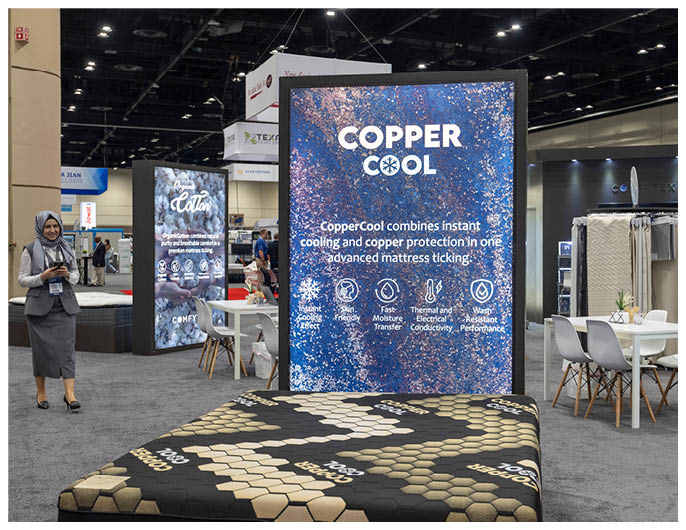
That gap helps explain why some suppliers are thinking more in terms of systems than individual components. The question is not just whether a fabric feels cool in isolation, but whether the full sleep setup supports that experience in the real world. As Innofa CEO Johan Cleyman comments, “All the products are designed to be used as a system … but also stand alone.”
Innovation is everywhere—consensus, less so
Innovation is easy to find at ISPA EXPO. The harder question is whether it all points in the same direction.
Cooling is one of the clearest examples of that complexity. It remains one of the category’s most persistent promises, but the ways companies are working to deliver it continue to expand. Some focus on gel structures, others on airflow, and others on textiles engineered to influence heat transfer at the surface. Each is responding to the same broad consumer demand but through different approaches.
What becomes clear in those conversations is not just how much innovation is happening, but how differently companies define success—whether through immediate effect, sustained performance, or how those claims hold up in real-world use.
The same pattern appears elsewhere on the floor. Some suppliers are refining what already works. Others are trying to solve old problems in less familiar ways. A smaller group is experimenting at the edges, not because they are about to overturn the mass market but because even a mature category has room for someone to ask a different question.
The result is not a single future emerging in plain sight. It is a field of competing and overlapping possibilities, each shaped by its own constraints.
Back in the main flow of the show, that interdependence starts to shape not only how products are built, but how ideas are judged.
A material cannot simply sound promising. It has to work. For example, a sustainability claim cannot simply look good on a sign. It has to survive contact with production realities, performance demands, and, increasingly, recycling systems.
In other words, a product innovation cannot live entirely in the world of marketing language if it requires a factory to behave in a completely different way. That is one reason sustainability becomes much more interesting once you move past the language and into the tradeoffs.
A Closer Look: Materials in Transition — Performance, Sustainability, and Scale

If sustainability sets the direction, materials are where those priorities become practice.
Across the show floor, suppliers are advancing synthetic, recycled, and natural options, often within the same broader conversation about where the category should go next. But those materials do not compete on equal footing. They come with different strengths, different narratives, and different realities around scale.
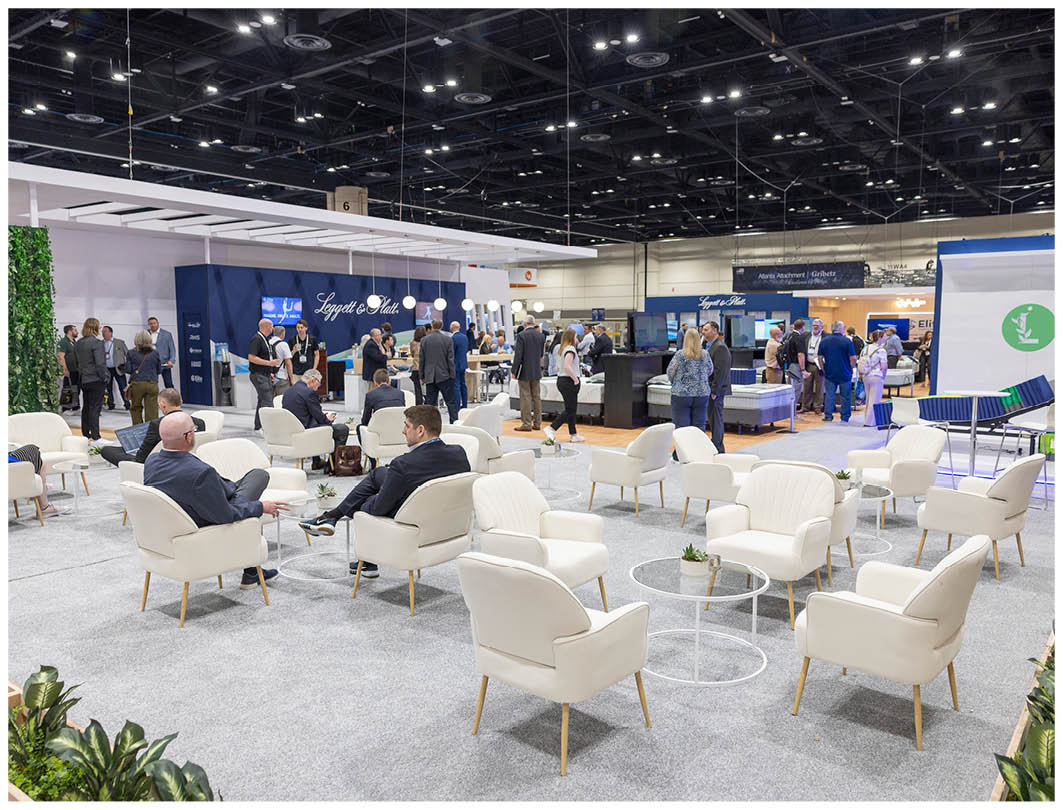
Julia Rosien, vice president of marketing for Leggett & Platt’s bedding division, offers a useful way to frame that complexity. “I actually think there’s three ways to look at it,” she says, describing a view that includes product inputs, circularity and end of life, and corporate behavior more broadly.
That framing resists the urge to reduce sustainability to ingredients alone. It expands the discussion to include how products are made, how long they last, and what happens after they are no longer in use.
Her second observation helps explain why so many companies are addressing the issue even without a clear or uniform path forward. “I don’t think millennials are looking for us to change the world overnight … but they do want to see people making steps toward them.”
At Duvalli Mattress Ticking, the conversation adds another useful dimension. “The industry … lost a little contact with naturals,” says Ligia Martins, pointing to renewed interest in fibers and materials that offer both environmental and functional appeal. But she also pushed back on how narrowly performance is sometimes framed: “If you focus only on cooling, you’re thinking about one season.”
In another line that broadens the discussion, she adds, “It’s not about the weather … it could be your body.”
That shift reframes the conversation away from feature marketing and toward longer-term performance logic.
Lalan Eco Latex approaches the same territory from a different angle. The company’s positioning centers on natural and organic constructions, but also on access and flexibility. “We use only natural … or metal [springs],” says Justin A. Kumar, Lalan Eco Latex CEO. “They don’t need to buy a high MOQ (minimum order quantity).”
That is not just a materials story. It is a supply chain and market-entry story, suggesting that part of the appeal of natural and organic positioning lies in how it enables smaller retailers or niche players to participate. “You can take out the spring and put more latex inside,” Kumar notes, reinforcing the idea that modularity can be both a product advantage and a sustainability argument.
Still, all these material strategies eventually run into the same question: What works at scale?
Some natural materials have compelling narratives and real performance strengths, but they can be harder to source consistently, harder to integrate broadly, and harder to recover economically at end of life. Some synthetic materials may sound less ideal in a sustainability conversation, but they often align more readily with existing manufacturing systems, cost structures, and recycling pathways.
The result is not a single direction. It is a set of tradeoffs, each with its own advantages and constraints.
Sustainability stops being a slogan
Sustainability is everywhere on the show floor, but it does not mean the same thing from one booth to the next.
Sometimes it means recycled inputs, or sometimes it means energy use. It might mean waste reduction in manufacturing or perhaps end-of-life recovery. And sometimes it means a more natural material story. Those categories overlap, but not cleanly, and the strongest conversations at EXPO tend to acknowledge that messiness instead of pretending it doesn’t matter.
What emerges is less a single definition than a set of competing priorities, each pulling in a slightly different direction.
The harder part comes when sustainability runs into market reality. Products still need to perform, scale, and make economic sense.
Jim Turner, CEO of SABA North America, describes a recurring industry challenge: balancing the demand for durable, high-performing bonds with growing interest in more recoverable product design.
In SABA’s case, that challenge has helped drive a productive solution. The company’s latest adhesive system was developed to improve adhesion to difficult foams while reducing material use. It also supports a more recoverable, mono-material design by aligning the chemistry of the adhesive with the foam itself—without requiring manufacturers to change how they evaluate performance or cost.
That sequence is instructive.
Some of the most credible progress on the floor is not being driven by sustainability as a starting point. It is emerging from products designed to solve real manufacturing or performance challenges in ways that also improve downstream outcomes.
The industry is still being asked to build products that last, products that perform, products that scale, and products that can eventually be disassembled or recovered more intelligently. Those goals do not always reinforce one another. But in more cases, they are beginning to align.
This is where the story begins to widen beyond the booth walls, because once you start thinking seriously about recoverability, the downstream system enters the frame whether manufacturers want it to or not. Recycling is no longer a separate issue, something to be handled after the product has done its job. It is increasingly becoming part of how the product itself is judged.
A Closer Look: Recycling Momentum — From Policy to Practice
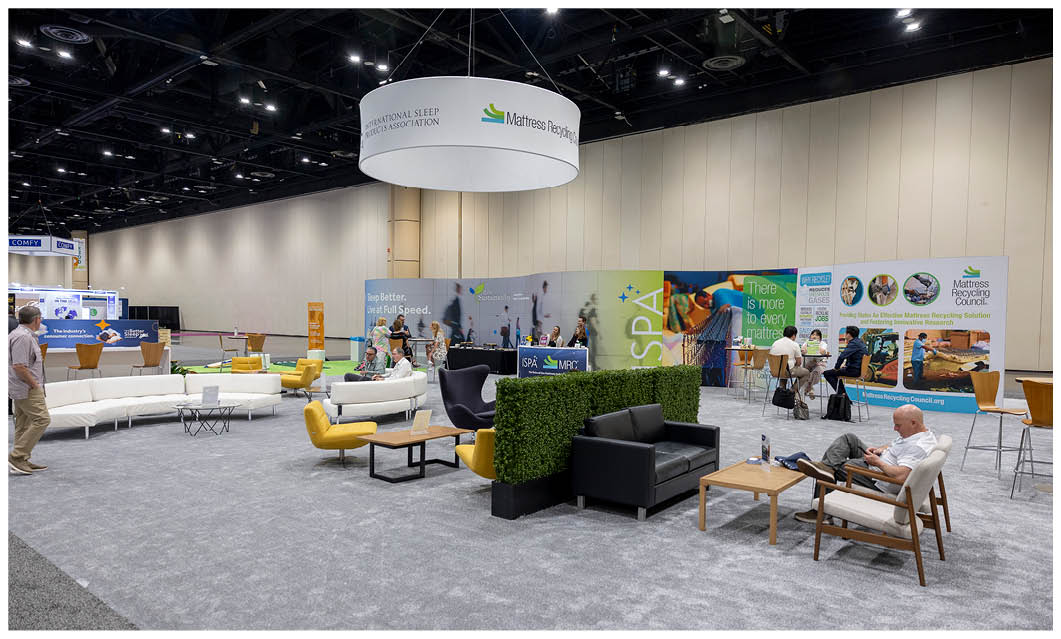
On the show floor, companies are mostly talking about how mattresses are built. In MRC’s orbit, through its presence at the ISPA/MRC booth and on the Innovation Stage, the question is different: What happens after all those decisions have run their course?
The answer is no longer theoretical. More than 17 million mattresses have now been recycled through MRC’s programs, with more than 650 million pounds of material diverted and roughly 75% of the typical mattress recoverable. Those numbers matter because they place recycling firmly in the world of real infrastructure rather than pilot-project rhetoric.
The remaining 25% is where the conversation gets harder. That missing portion is shaped by design decisions—mixed materials, contamination, difficult disassembly, adhesives, and components that do not yet have a viable end market. In other words, the barrier is not just technology. It is product architecture.
That is why the right legislation matters as more programs take hold. Each new law does more than add another state to the map. It increases visibility, builds infrastructure, and sharpens focus on what happens after a mattress is discarded. As that system expands, manufacturers and suppliers must think not only about how materials perform in a mattress, but also about how they will be handled at end of life.
The Innovation Stage pushes that point further. VitriCycle’s presentation, for example, addresses one of the category’s most stubborn recovery problems: thermoset polyurethane foam that cannot simply be melted and reused. The company’s proposed process aims to turn that material into pellets, sheets, and other usable forms rather than consign it to lower-value waste streams. Whether that specific approach scales remains to be seen, but the implication is significant. End-of-life design is no longer just a policy issue. It is becoming an active innovation lane.
Recycling, in that sense, is no longer downstream enough to ignore. It is moving upstream into design.
Why policy matters
Within the International Sleep Products Association/Mattress Recycling Council booth, the conversation reflects a reality the industry cannot ignore: Recycling works at scale only when the policy framework exists to support it.
That work takes time. It requires technical knowledge, political strategy, and sustained coordination across multiple stakeholders.
The stakes are practical. Policy helps determine whether programs can expand, whether infrastructure can grow, and whether manufacturers have greater incentive to think about recoverability earlier in the process.
That matters because it makes one thing clear: Recycling policy is not separate from the product conversation. It helps shape the conditions under which product and material decisions are made.
If sustainability is where the category’s ideals run into their hardest practical questions, manufacturing is where those questions get tested.
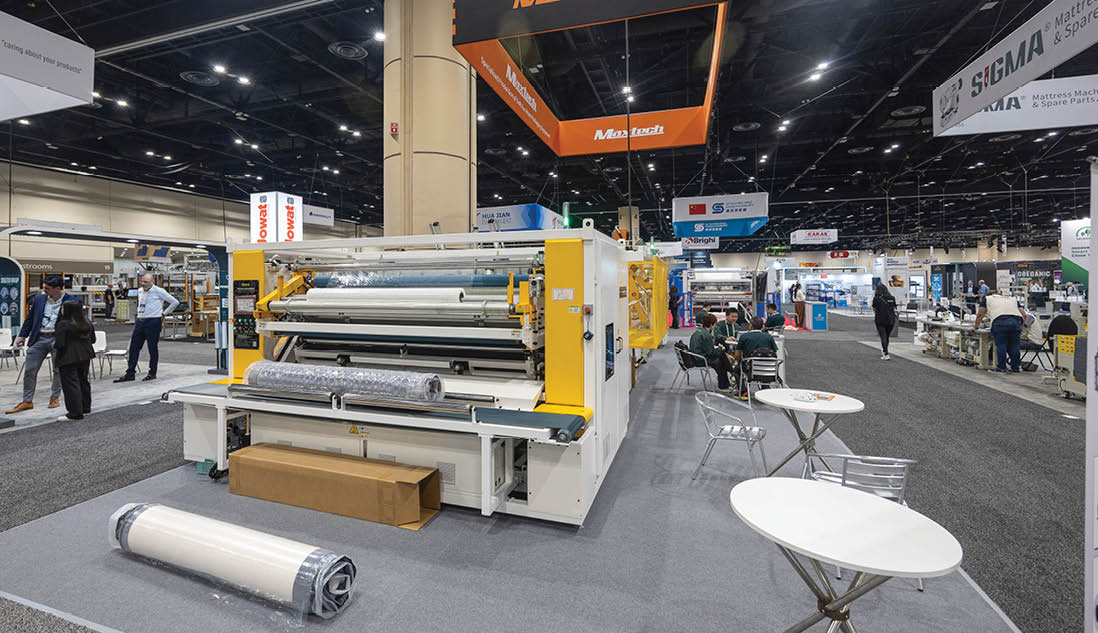
You can feel that pressure at the machinery ends of the hall. The claims are different there. Less conceptual. More physical. The line either runs or it doesn’t. The machine either handles the panel or it doesn’t. The process either stays stable under variation or it doesn’t.
That shift matters because it brings ambition and execution into closer alignment. Materials and product concepts can evolve quickly. Manufacturing tends to move more deliberately.
A Closer Look: Manufacturing Under Pressure — Automation, Efficiency, and Complexity
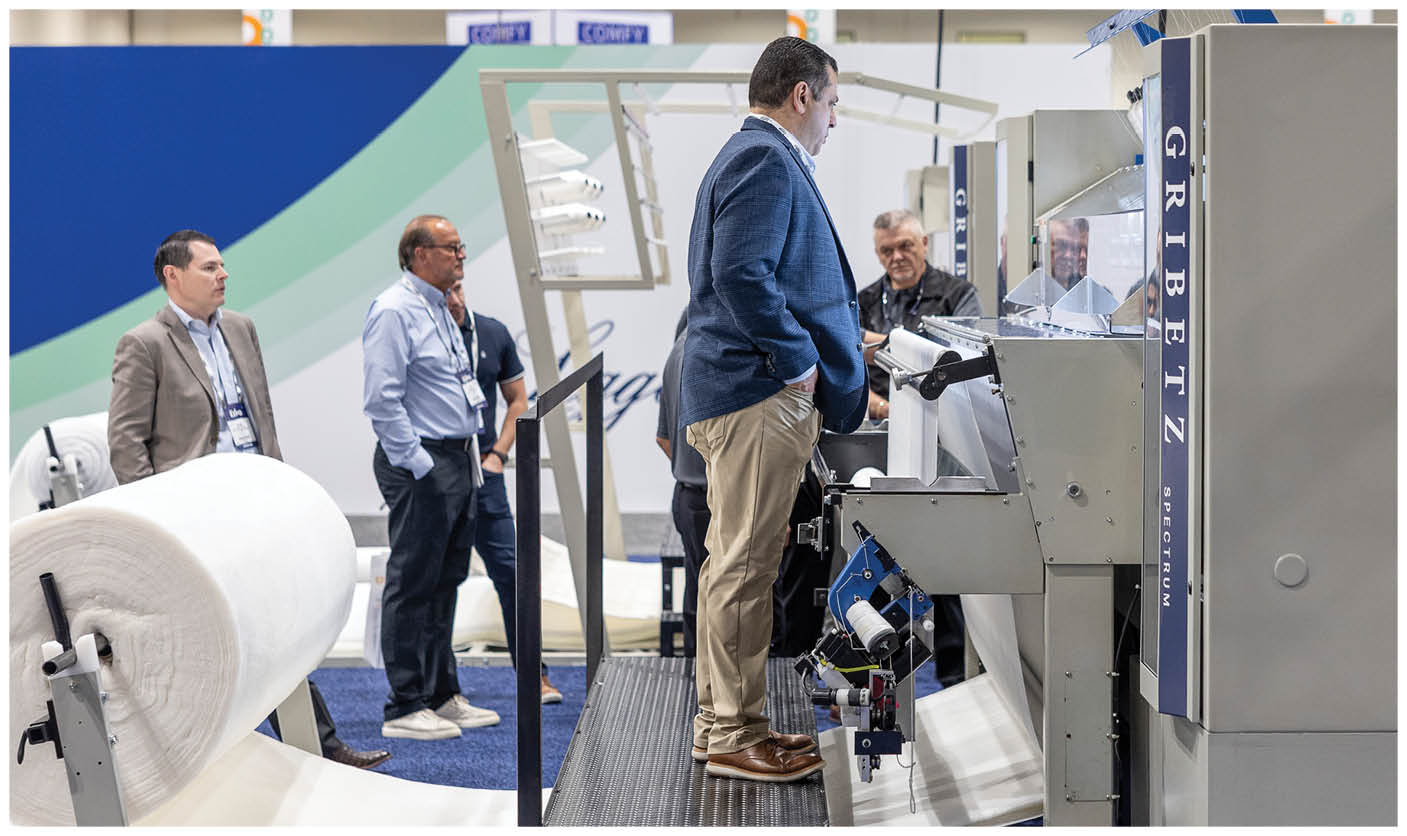
Among the machinery exhibits, the story is not simply automation. It is automation under pressure.
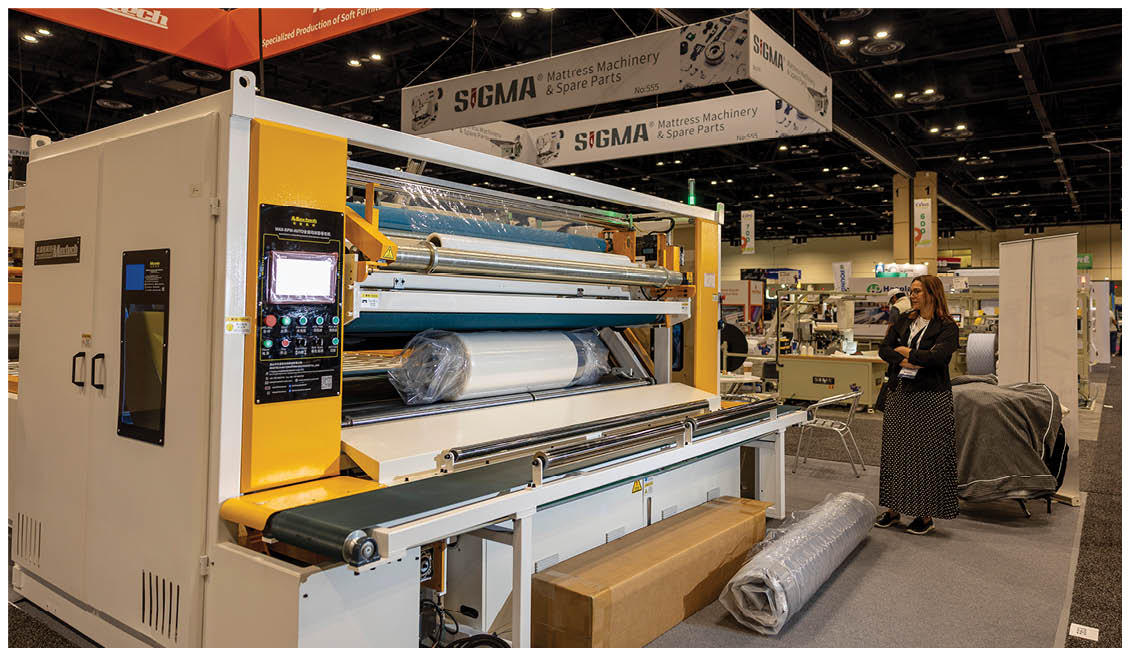
As mattresses become more complex, manufacturing systems are being asked to handle more variation without losing consistency. That pressure shows up in larger equipment, more integrated systems, and a sharper focus on throughput.
At United Mattress Machinery, the ask is straightforward. “Everybody’s panels are just getting thicker and thicker and thicker,” says owner Michael Porter Jr. “They sent them to us [saying], ‘You guys need to make a machine that can handle a thicker panel.’”
That is not innovation language. It is demand translated into equipment.
In conversations across the floor, a consistent theme emerges: the need to produce more output with fewer people. Joe Van De Hey, president and CEO of C3, describes how his company’s equipment is being shaped by that reality, with systems designed to maintain or increase throughput while reducing reliance on labor.
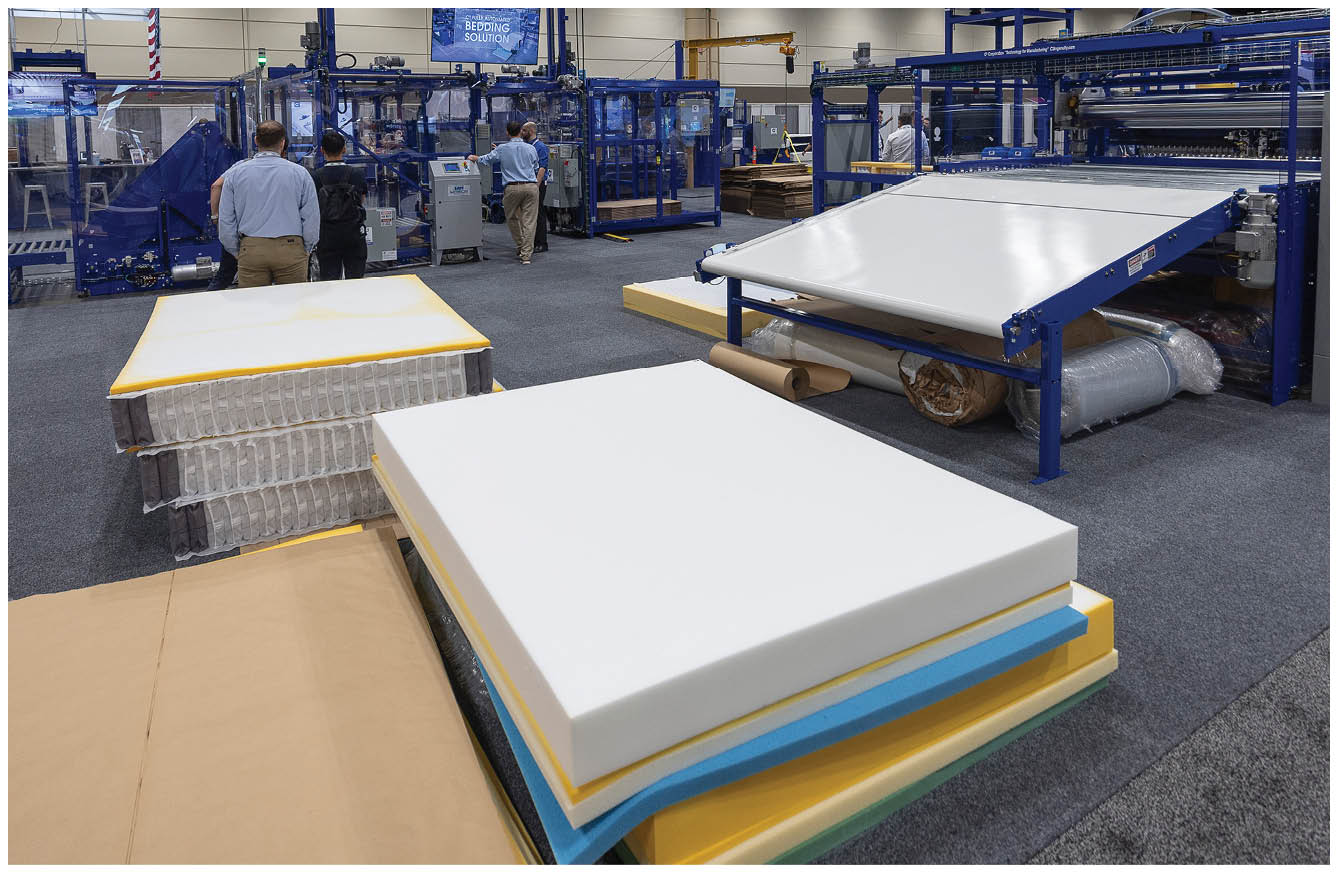
That dynamic is changing how automation is being framed. It is not just about efficiency in the abstract. It is about maintaining consistency, managing complexity, and keeping production viable as labor becomes harder to source and retain.
Rosien of Leggett & Platt raises a related concern: “How do we get the next generation … to cut their teeth? I don’t know that there’s an answer yet.”
That uncertainty matters. Automation is not only changing how factories run; it is also reshaping how skills are developed and how new workers enter the industry.
The factory floor as reality check
No matter how compelling a product concept sounds in theory, it eventually has to survive manufacturing. That simple fact gives the machinery side of ISPA EXPO a different kind of authority. It strips away abstraction and forces a more practical question: Can this item actually be made well, repeatedly, and at scale?
What becomes clear, even before you get into specific examples, is that the pressure is not coming from a single direction. It is coming from everywhere at once: more complex products, tighter labor conditions, higher expectations around consistency, and the need to maintain throughput without introducing instability.
There is another kind of signal on the floor. Not about what the industry is definitively becoming, but about what some companies still think is worth testing.
That is where a category can reveal its range.
The value of the fringe
Mature industries rarely reinvent themselves all at once. They refine. They optimize. They consolidate around what works. That is one reason it is worth paying attention when someone is trying something less familiar.
Not because those efforts are meant to become standard, but because they show where people still see room to think differently.
Some of the most useful signals at ISPA EXPO don’t come from the booths at all. They show up in the spaces around them.
A Closer Look: Beyond Foam and Springs — Rethinking the Mattress Core
While much of the category continues to refine familiar constructions, a smaller group of companies is experimenting with more fundamental alternatives.
Under the Coraire brand, Formosa Saint Jose Corp/3D Mats presented a core idea built around a structured air-channel system intended to function less like a traditional air mattress and more like premium support architecture. The system is designed to move air through defined channels rather than simply inflating as a single chamber, positioning it as a different approach to support rather than a variation on existing air-based designs. That distinction matters because it frames the product not as a novelty, but as an alternative answer to a familiar problem. The use cases—urban living, portability, transport constraints, flexible setups—suggest that the value proposition is not just comfort, but logistics and adaptability.
Geli approaches reinvention from another direction. The company’s gel-based system treats gel not as a secondary insert or marketing flourish, but as a structural element capable of delivering both support and pressure relief. The historical thread behind it is too good to ignore: Co-founder Todd Youngblood is the nephew of Charles Hall, inventor of the modern waterbed. But the point of that lineage is not nostalgia. It is continuity of inquiry. Old questions about pressure relief, fluid-like support, and transportability are being asked again with tighter engineering and different materials.
These approaches do not sit at the center of the category today, but they do expand the range of what the category is willing to explore. Even inside a stable, highly optimized industry, there remains room for ideas that sit outside the dominant pattern—and for companies willing to test how far those ideas can go.
The industry between the meetings
Not everything happens under fluorescent lights among machines and product displays. The work begins before the floor opens and continues well after it closes.
Across the event, there are moments that operate at a different level—less about products and processes, more about context, connection, and direction. Some widen the lens, offering a clearer view of the market conditions shaping the category. Others create space for conversations that are harder to have on the floor—conversations about careers, relationships, and how the industry evolves over time. Still others surface ideas that sit just ahead of the main production flow, raising questions that may not yet be central but are beginning to influence it.
Taken together, those moments expand the picture of what the industry is—and how it operates. The industry is technical. It is transactional. But it is also relational—and ISPA EXPO reflects all of it.
In the end, the clearest way to understand what this year’s ISPA EXPO offers is to see it as a system. Not a single verdict. Not one clean trend line. Not a tidy declaration of where bedding is headed next.
What it offers instead is a more demanding and more accurate picture: an industry balancing multiple forms of change at once, trying to keep innovation, performance, manufacturability, cost, and sustainability in workable alignment.
That is not the kind of story that resolves cleanly. It is the kind that makes the category worth watching.
If the floor this year proved anything, it is that the mattress is no longer just a finished product with a comfort story attached. It is a system. And nearly every part of that system is under pressure to get smarter at the same time.

A Closer Look: Beyond the Booths — Where connections Happen
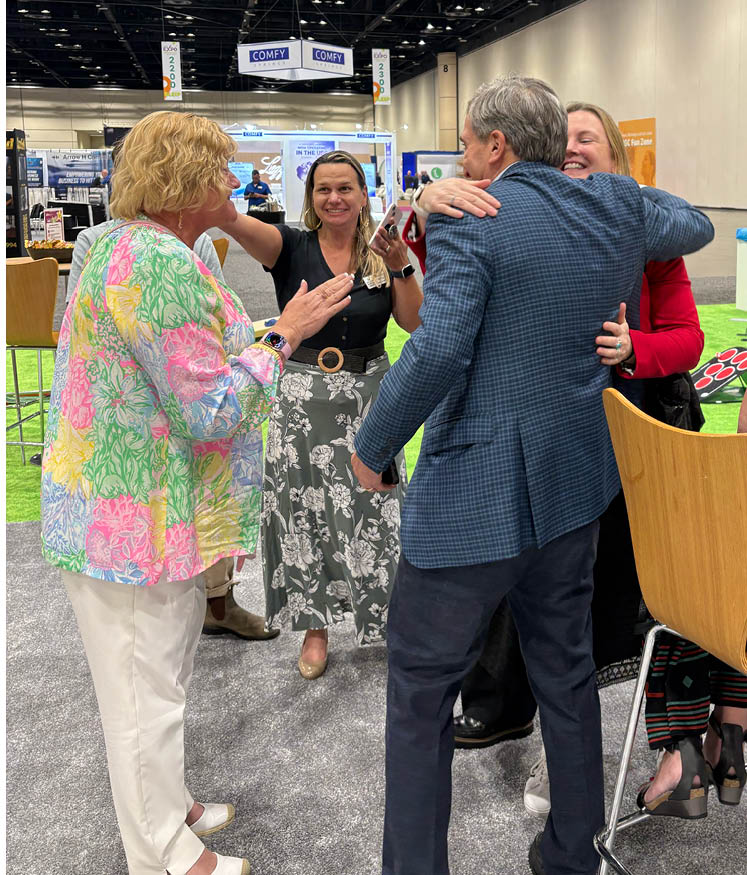
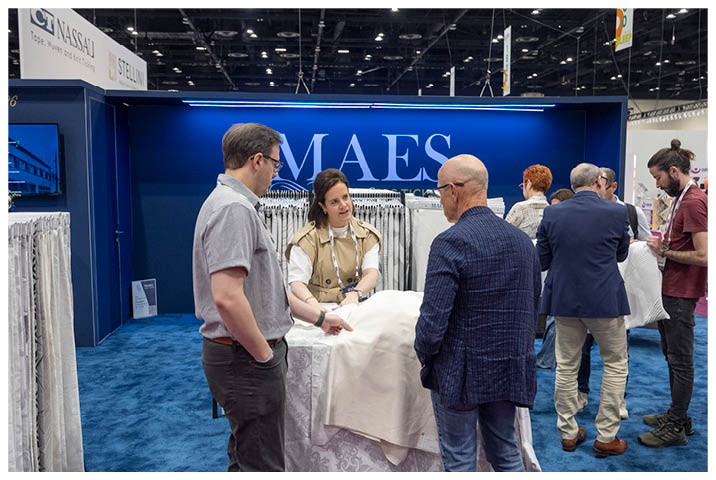
Even before the exhibit hall fully comes to life, it is a place for connection.
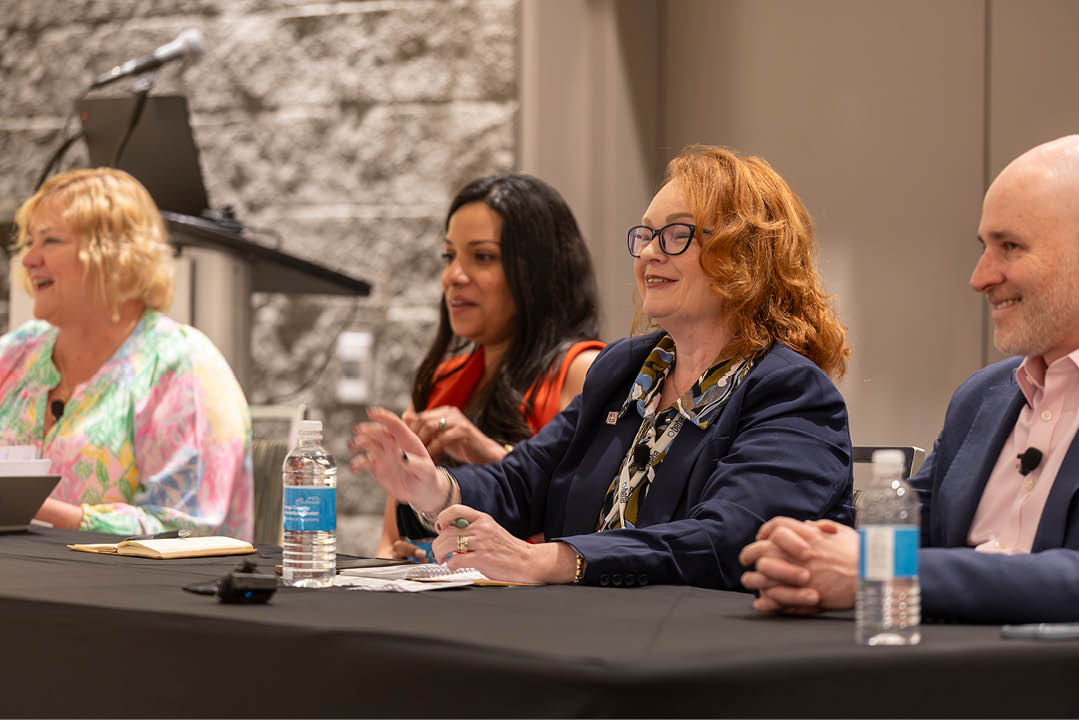
The ISPA Women’s Network event on Monday evening creates a smaller, more focused space for connection, one that feels distinct from the broader reception later that evening. It is not just a social gathering. It is a professional one, shaped by conversations around visibility, development, and the experience of building a career within an industry that continues to evolve.
That evening continues with the ISPA Chair’s Reception, widening the circle and bringing a broader cross-section of the industry into the conversation.

Tuesday shifts the focus outward, with “Policy, Advocacy, and Action: ISPA Leads Government Relations for the Mattress Industry” providing insight into how the industry is represented beyond the show floor and how those efforts shape the environment in which manufacturers and suppliers operate.
By Tuesday night, the tone changes again. The Around the World reception—with its mariachi music, strong turnout, and easy movement between conversations—brings a different kind of energy. The work does not stop. It just changes register.
On Wednesday, attention turns forward. The Innovation Stage creates space for ideas across the category—approaches to materials, recovery, and process that are already in use or still evolving, and that are shaping how products are designed and made.
The State of the Industry session widens the lens one final time. Where the floor is immediate and granular, this view is structured and analytical, placing the week’s conversations inside a broader economic and market context, and making clear that those forces are shaping what the industry can do next.
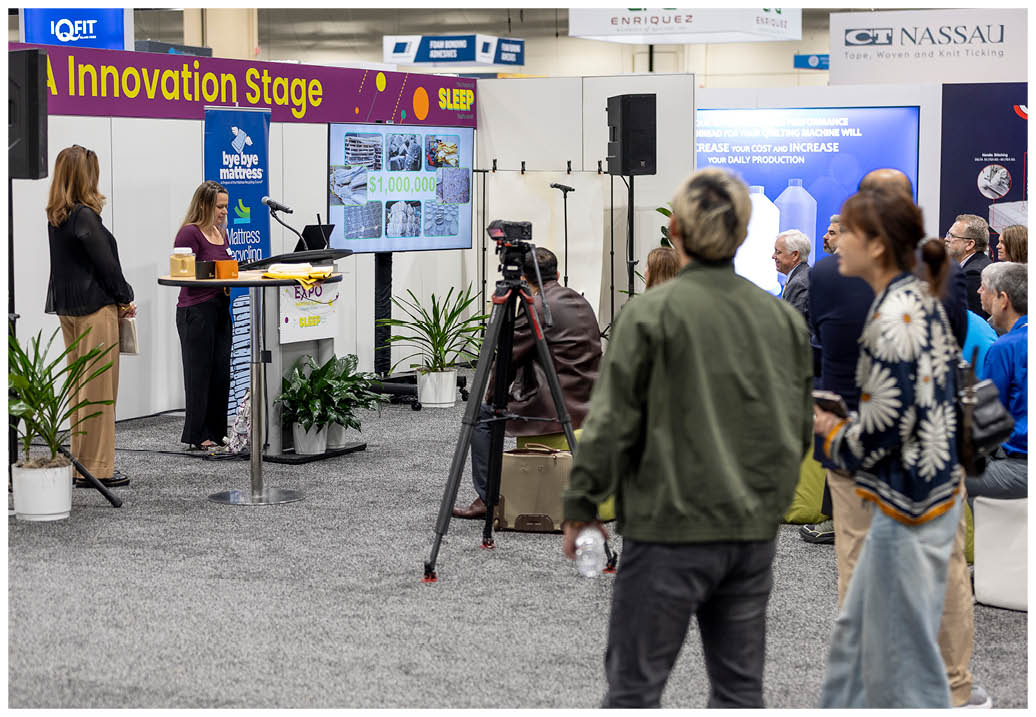
In an industry where relationships often outlast product cycles, those moments matter. They do not sit outside the business. They are part of how the business gets done.
The State of the Industry: Context Beyond the Floor
If the show floor is where the industry reveals how products are made, the State of the Industry session offers a clearer view of the conditions those products are being asked to succeed within.
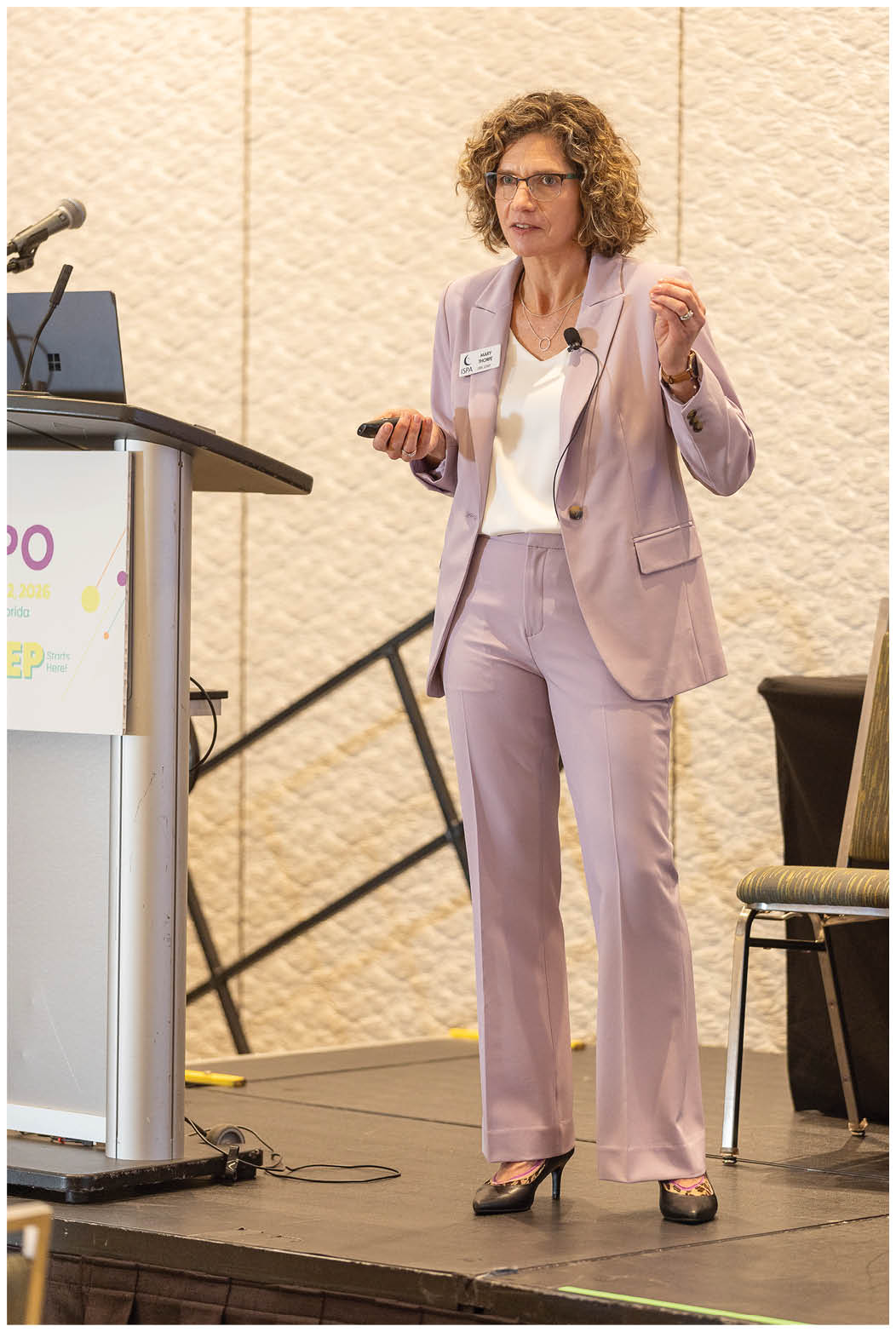
Presented by Mary Thorpe, ISPA director of industry research and analytics, and Scott Hackworth, CPA, president of Industry Insights Inc., the session widened the frame beyond the booth-level view.
A large industry, unevenly structured
“This is not a small industry,” Thorpe noted in opening remarks, pointing to roughly $18 billion in economic activity and hundreds of companies across the U.S.
But that scale is uneven. A relatively small number of companies drive most of the production, while roughly 93% of firms operate at a regional or single-plant level. That imbalance creates a competitive environment with multiple paths to success, through specialization, vertical integration, or control of materials and supply chains.
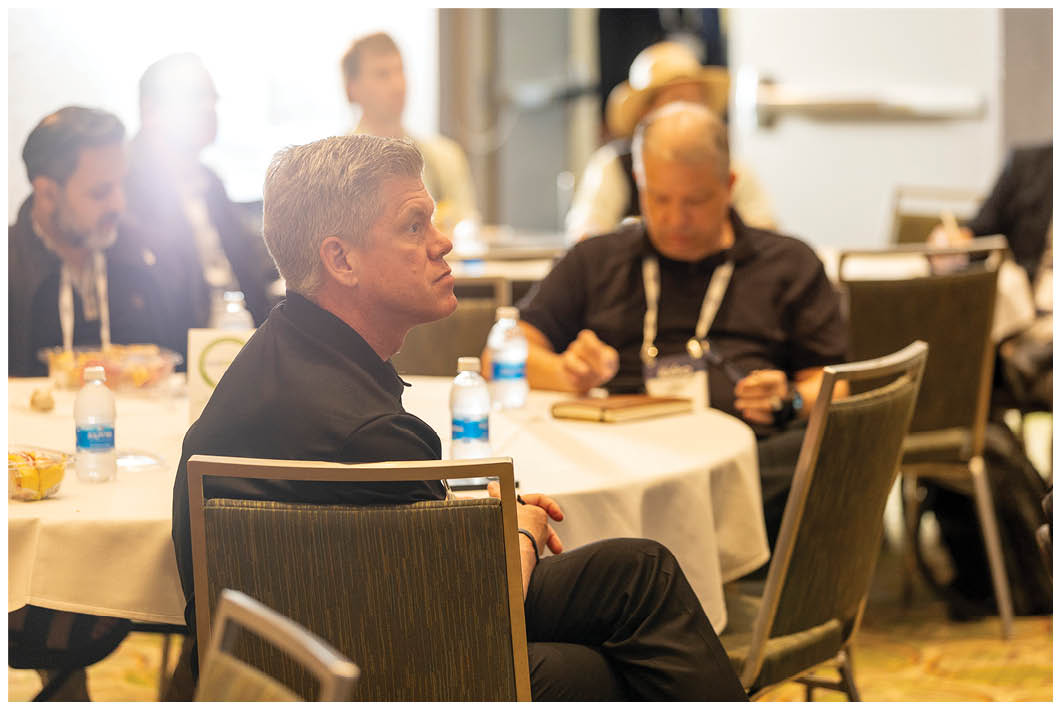
A consumer under pressure—but still spending
From a macroeconomic perspective, the consumer remains active but more cautious.
“We are consistently shocked by the ability … of consumers to spend,” Hackworth said. “Americans spend.”
But the conditions around that spending are shifting. Savings rates are declining. Debt levels are rising. Sentiment around major purchases is subdued, with many consumers indicating that now is not an ideal time to buy.
That tension—between willingness and hesitation—defines much of the current environment.
Housing as the clearest signal
One of the most consistent relationships in the data remains the link between housing activity and mattress demand.
When home sales and housing starts increase, mattress sales tend to follow. That connection remains strong enough to serve as one of the most reliable indicators for where demand may return.
As housing begins to show signs of improvement, it offers a measure of stability within an otherwise uneven landscape.
A market adjusting, not collapsing
Recent performance has trended below historical levels, in part due to demand pulled forward during the COVID-19 pandemic.
But the outlook is not defined by decline.
“We are cautiously optimistic,” Hackworth said, pointing to forecasts that show a market stabilizing, with modest growth returning gradually over the next several years rather than through a sharp rebound.
That outlook may not be dramatic. But it is clarifying. It suggests that the challenge for companies is not whether demand will return, but how to operate effectively while conditions remain constrained.