
At a Glance
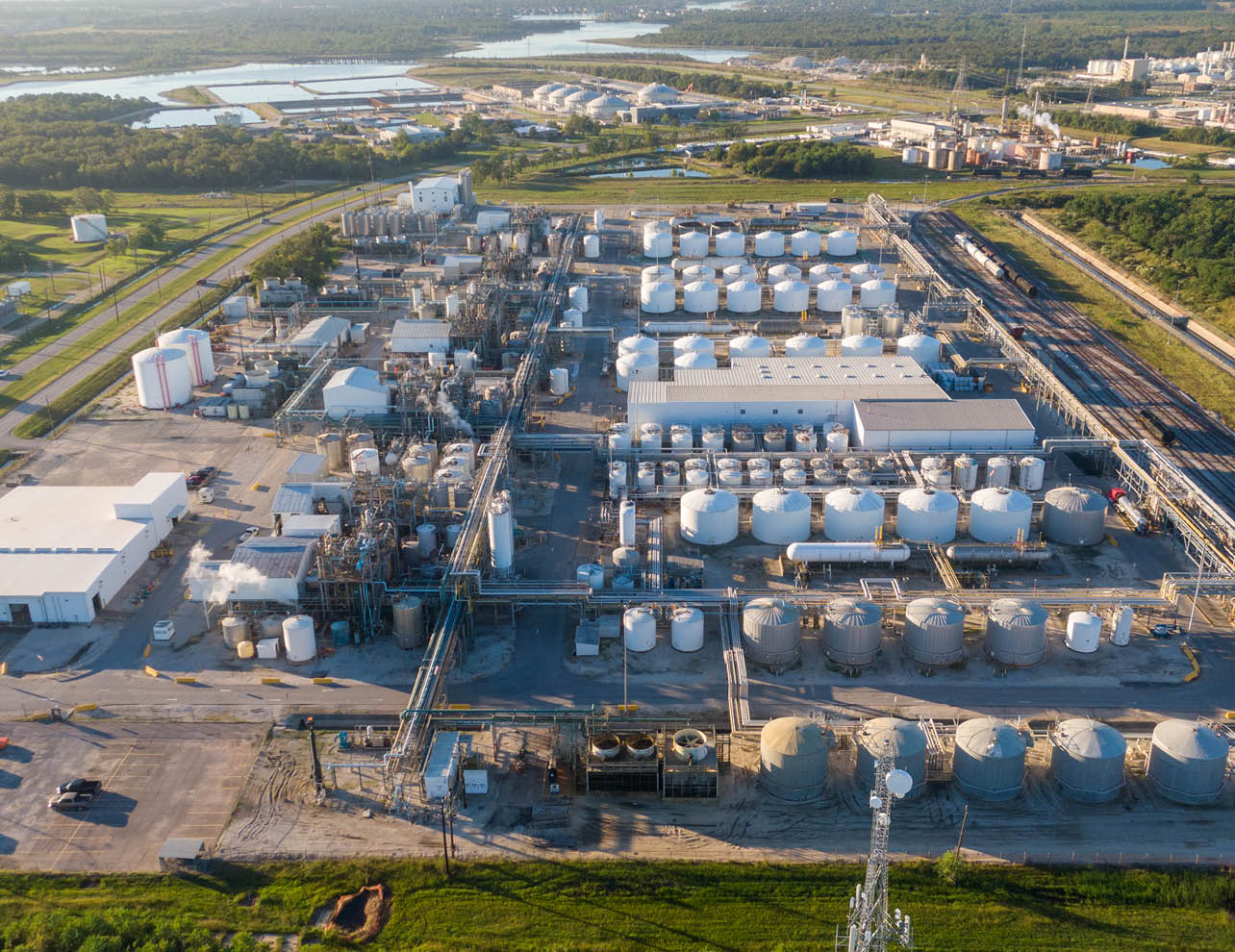
Company Carpenter Co.
Headquarters Richmond, Virginia
Founded 1950 by E. Rhodes Carpenter
Ownership Privately held
Employees 6,500-plus
Production locations 60-plus, across North America, Europe, the Middle East, Africa, and Asia
Specialty World’s largest vertically integrated manufacturer of polyurethane foam; also produces polyester fiber and polyurethane chemical solutions
Key brands Casper, BedInABox, Serene foam, ZIPR mattress, Podz Mini Foam Springs, Qualux foam, Active Air Technology, ProTech
R&D Reinhart Technical Center, Richmond, Virginia, and a Wetteren, Belgium, facility
Learn more carpenter.com
On any given weekday in Richmond, Virginia, the scientists and engineers working inside Carpenter Co.’ s M.H. Reinhart Technical Center might be stress-testing a new foam formulation, running flammability protocols on a prototype mattress barrier, or sitting across a conference table with customers to brainstorm new products.
That collaborative approach to innovation, says Michael Faus, Carpenter’s senior vice president of sales and marketing, has been a significant contributor to Carpenter’s success within the foam and mattress/bedding marketplace. “Customers really value this,” he says. “I think this sets us apart from our competition and sets us apart in the industry.”
From latex to legacy
Carpenter was founded in 1950 by Edward Rhodes Carpenter. Manufacturing, it seems, was in his blood. As a young man, Carpenter worked for Richmond’s Crawford Manufacturing Co., a leading producer of vinyl‐covered hassocks, decorative pillows, furniture cushions, and even life preservers. After serving in World War II, he returned home to Virginia and, in 1950, was ready to start a company of his own: E.R. Carpenter Co., a latex foam distributor based in Richmond’s Manchester neighborhood.
The timing was right. The company took off, and by 1956, it was manufacturing its own flexible urethane foam. In 1961, manufacturing relocated to its current site in Richmond and soon began running the first continuous foam-pouring line in the state. By the end of the decade, Carpenter had opened additional plants in Kentucky and Texas.
The 1970s and 1980s were a time of significant development for the company. One of the challenges for any manufacturer is managing the supply chain. So, Carpenter established Choate Chemical Co. in 1972 to provide a stable, ongoing supply of raw materials for its foam production. The next year, the new Roger W. Powell Plant in Bayport, Texas, began manufacturing polyether polyols. Today, that plant has seven reactors producing polyether and polyester polyols.
Carpenter was growing, and so was demand for foam. The company added bonded carpet cushion to its product line and opened new production facilities in North Carolina, Mississippi, Indiana, and two Canadian locations.
Fortuitously for a young Michael Faus, a new facility also opened in Riverside, California.
“I saw a newspaper ad that there was a company building a big new plant in Riverside, where I grew up, 60 miles east of Los Angeles,” Faus says. “I remember actually going out to the building site, because I was working part-time for W.K. Equipment while in college, and we were providing machines at the site. I could tell it was going to have significant scale.”
Faus was impressed enough to ask around about the company. “At the time, my dad worked for a huge furniture company called Schnadig International, which was one of the top producers of furniture in the ’60s and ’70s. I asked him if he had ever heard of E.R. Carpenter. He put me in touch with the buyer at Schnadig, who told me they had a great reputation. ‘They produce extraordinary, great product for the industry,’ he said. ‘And I think it would be a great company to work for.’ That was the beginning. I typed up my résumé, put in an application, and got hired in June 1982.”
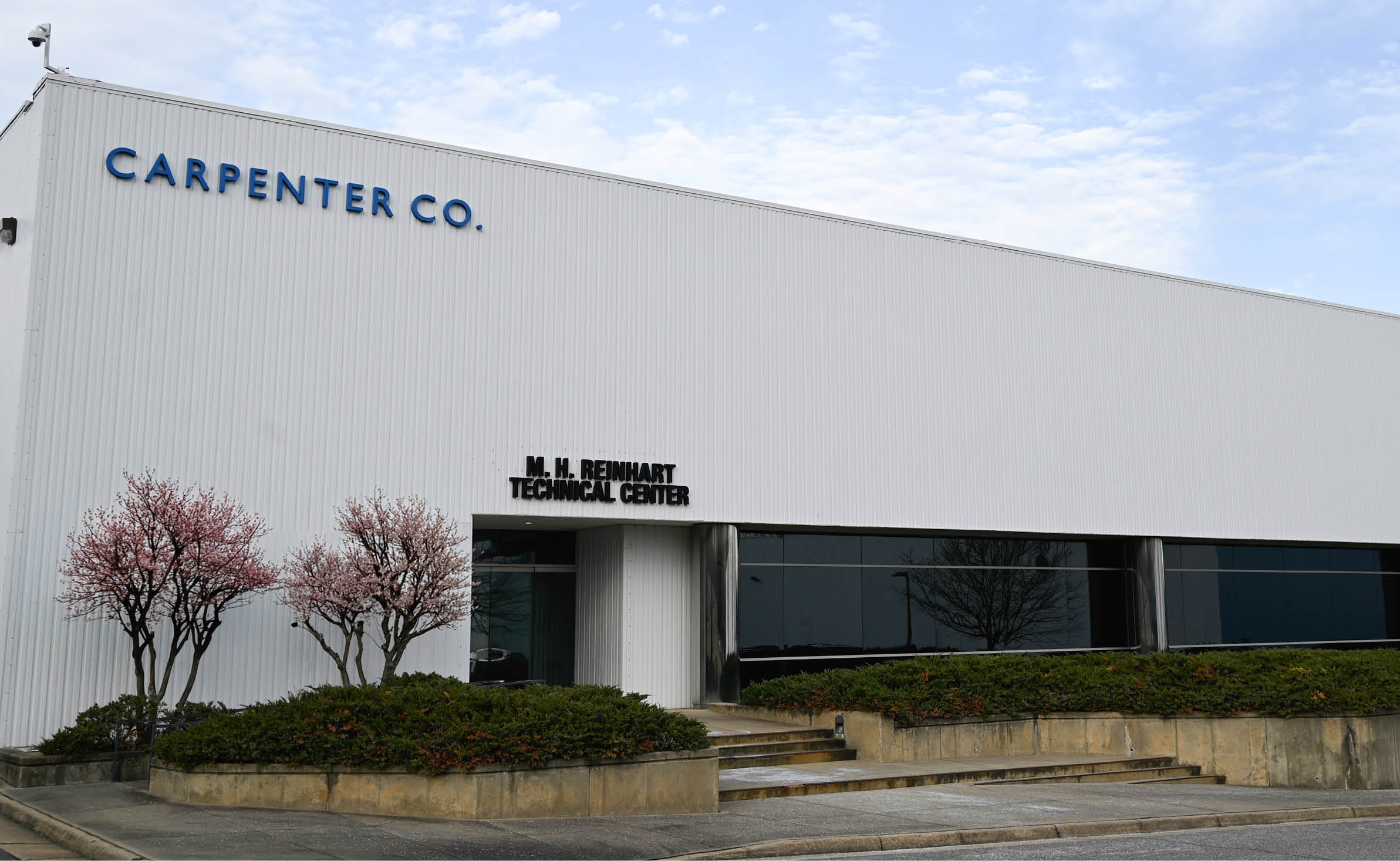
It was a key period for the company. While remaining Richmond-based, Carpenter moved to new corporate headquarters in 1984 and, in 1989, created a state-of-the-art research and development facility: The M.H. Reinhart Technical Center is named for Bud Reinhart, who established Carpenter’s continuous foam-pouring operations and developed the popular Richlux high-resilience foam in the 1960s. “It’s a 50,000-square-foot research and innovation center,” Faus says. “We have a very experienced, talented team there, experimenting and developing products for the future.” (Wetteren, Belgium, is home to a second, similar facility.)
The 1990s saw the acquisition of Hyman PLC, which gave the company foam-manufacturing plants in France and the United Kingdom, as well as the construction of a new production facility in Germany. More European acquisitions followed, including Cirrus AB and Dumo N.V. Domestically, foam production sites opened in Florida and Pennsylvania, while other plants expanded. (Around this time, the company name began to slowly transition away from “E.R. Carpenter” to simply “Carpenter.”)

In June 2023, Carpenter acquired Recticel N.V.’s Engineered Foams Division, increasing the company’s production footprint in Europe and opening new business channels into Africa and Asia. The deal made Carpenter the world’s largest vertically integrated manufacturer of flexible foam.
“We’ve never really emphasized marketing or advertising or wrapping the product in a really nice package and putting a
colorful bow on it. That’s not who we are. Carpenter has always been a manufacturing company.”— Michael Faus
The vertical advantage
So, how does an independent, private foam company get this big? Carpenter started by focusing on manufacturing.
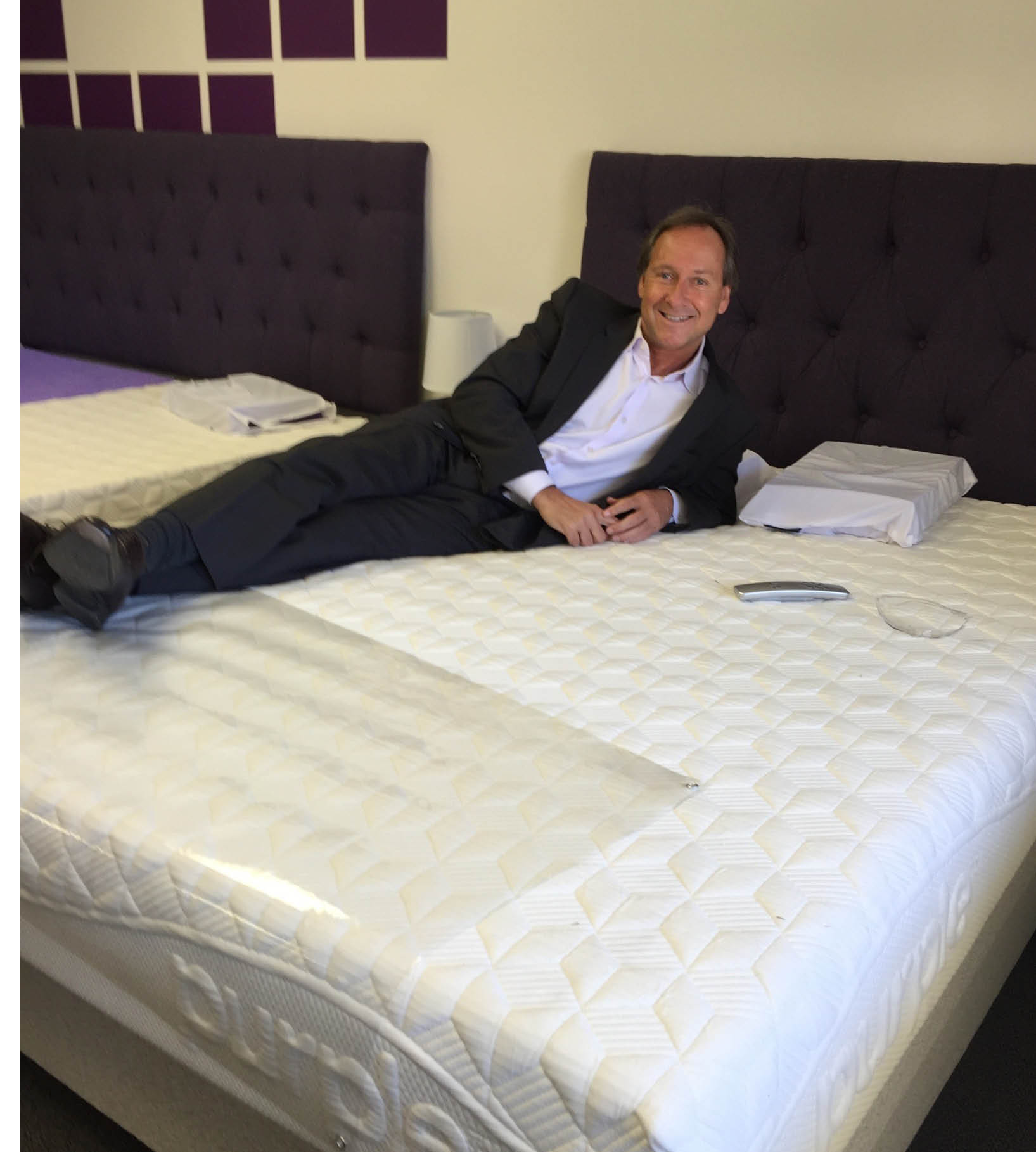
polyurethane foam and the leading processor of polyester fiber for the bedding industry.
“We’ve never really emphasized marketing or advertising or wrapping the product in a really nice package and putting a colorful bow on it,” Faus says. “That’s not who we are. Carpenter has always been a manufacturing company. We’ve invested our resources into equipment and putting money back into the company, being the low-cost producer and the efficient supplier. That’s made us who we are. And it’s given us this great infrastructure we use to supply the industry—domestically and globally.”
That infrastructure has been able to develop thanks to the company’s financial flexibility. In addition to being privately held, Carpenter carries no debt, according to Faus. “The acquisitions we’ve made, we paid for with cash,” he says. That includes the recent acquisitions of NCFI’s consumer products division, such as the well-known BedInABox brand and Casper Sleep Inc., pioneers in the direct-to-consumer market.
“That financial piece has been an important part of why I’ve been with Carpenter so long,” Faus says. “I feel good knowing that I work for a company that has no debt and continues to expand and reinvest into the company, which means reinvesting in the employees. I’ve always respected that.”
The science of comfort
Carpenter’s approach seems to continue paying off in products that have maintained high levels of quality and impact in the marketplace. When asked about the products that he believes best represent Carpenter’s vision, Faus starts with one of its stalwarts.
“The big workhorse for us over the years has been Qualux foam,” he says. “We introduced it decades ago, and it’s been a workhorse for high-end seating applications in the industry ever since.”
The company’s financial discipline also is enabling Carpenter to continue pushing forward into new technologies and new markets. Faus singles out two newer product lines that are resonating with customers.
“The ZIPR mattress has interlocking layers that allow users to curate their comfort and provides superior edge support from corner to corner,” he says. “Plus, the comfort layer can be replaced, instead of the entire mattress, leading to a longer lifespan and reducing the materials sent to landfill. We can see it being used in the mattress industry as well as the furniture industry.”
Faus also points to the company’s Serene foam. Serene foam is unique, he says, due to its “vast delta of densities. It has a very silky, rubbery feel to it, but it’s wide open. There is very little, if any, compression set. So, your indentation force deflection, your loss of density, is minimal. It retains its shape and remains cool.”
The technology was in development for several years, and when it launched in 2017, it was used exclusively within the mattress industry. Three years ago, Carpenter introduced it to the furniture industry. “Now, some of the major furniture customers we supply are using it in concert with another high-end-quality foam for seat materials for high-end, luxury seating,” Faus says. “Serene foam is probably the best and most diverse polyurethane foam product we’ve launched in the last two decades. And that’s saying a lot.”
Other notable innovations include Active Air Technology for cooling and Podz Mini Foam Springs, which are designed to replace metal coils.
A commitment to collaboration means new ideas will continue to flow—from the researchers at RTC as well as the customers who consult with them. Faus says, “We recently had a customer in, a high-end furniture company that supplies to luxury retail stores. They were here with their R&D team to meet with our team to develop new product for the High Point Market.”
In 2026, it is impossible to discuss new technologies on the horizon without mentioning artificial intelligence. “We’re seeing a lot of momentum in our industry with AI,” Faus says, “and we want to be at the forefront taking advantage of that.”
What that will look like remains to be seen. Currently, Carpenter has an AI team in place to explore applications within the corporate side of the company. “That could lead to empowering our employees and opportunities to expand and improve our customer experience,” he says. “We’re looking at every possibility to see where that technology takes us.”
Navigating the now
In the meantime, Carpenter is working to make the most of every opportunity in a changing and unpredictable marketplace.
“Tariffs, obviously, are what people in the industry are talking most about right now,” says Faus. “Because of tariffs, I do think we’re seeing some uptick in business among those U.S.-based companies that don’t rely so much on exporting product. But at this point, there are so many uncertainties about tariffs—which countries are being hit and how best to navigate that—it’s impossible to know what the future will bring.”
Going forward, Faus says, he would like to see Carpenter continue to be at the forefront of sustainability, to continue innovating, and to continue growing—“not just organically, but through the right acquisitions that will complement our business. We’re looking at expanding our presence around the world.”

With a diverse brand portfolio, a lineage of innovative products, and a global presence, Carpenter today is in many ways far removed from the company E. R. Carpenter founded 76 years ago. Similarly, Michael Faus is far removed from the eager college student who saw an opportunity with Carpenter back in 1982, growing along with the industry in which he has built a career.
“I get to do something new every single day,” Faus says. “I get to do all these amazing things, travel the world and work with very talented people. I love the connection with our people, my colleagues and our customers.”
Born to Lead
It is safe to say that few adolescents dream of a career in management. Michael Faus was one of the few. “From the time I was a teenager, I was talking about wanting to be a senior executive for a company!” he recalls.
He doesn’t know where the idea came from—it wasn’t modeled by his parents—but it never left. While still in high school, he worked a part-time job just so he could learn. “I watched how people supervise and manage people. I knew, even as a teenager, that I could be good
at that.”
While studying for a degree in marketing management from UC Riverside and newly married, Faus joined E.R. Carpenter as a management trainee. “I was working full time, taking classes either during the day or at night, depending on what shift I was working, and the company was paying for my education.”
Looking back, Faus recalls it as a grueling but rewarding experience. Within six months, he was promoted to branch manager, overseeing 50 employees working in a tough Riverside, California, neighborhood. He was 21.
“I had to grow up pretty quickly,” he says. “What I needed to know, they did not teach in college. But I stayed there for three years, and that plant became one of our most successful internal operations.”
In 1985, the company moved him to San Lorenzo, California, in the Bay Area. By 2005, he was a vice president overseeing multiple locations. In 2010, Carpenter’s new president, Ed Malechek, asked him to come to Richmond, Virginia, and be a senior executive.
The job was appealing. The location was not. “I said, ‘I don’t think I’m your guy. I don’t feel ready to make a big move like that from the West Coast to the East Coast.’ But over lunch at an ISPA event, he encouraged me to rethink my decision. ‘You were made for this role,’ he said.”
Faus moved to Virginia in June 2010. But even 16 years later, he still might not be a “real” East Coaster yet: A foam surfboard, made for him for his birthday by Carpenter’s Expanded Polystyrene division, stands in his office as a welcome reminder of home.
Like his love for California, the desire that he felt as a teenager—to work with people—has not dimmed.
“I love what I do,” Faus says. “As long as I’m enjoying what I’m doing, and I’m engaged and having fun, I am going to continue doing what I’m doing.”