For years, the conversation in a mattress showroom began and ended the same way: A customer walked in looking for a mattress, lay down on a few options, and walked out with the one that felt best. That transaction, once the industry’s bedrock, is rapidly evolving into something far more complex and valuable.
Today’s sleep consumer is arriving with a checklist of wants and needs: relief from back pain, a cooler sleeping surface, separate firmness zones for each side of the bed, a base that elevates at the touch of a button, sheets that complement the mattress’s natural fibers, and, increasingly, an app that tracks it all. The industry has a name for this convergence of products and services: the sleep ecosystem, or sleep system for short.
The numbers behind the trend are striking. The global sleep aid technology market stood at roughly $103.5 billion in 2025 and is projected to reach $136 billion by 2030, according to a February 2026 report from ResearchAndMarkets.com. The smart mattress segment alone is expected to grow at a compound annual rate of 19.23% through 2033, according to SNS Insider, driven by artificial intelligence-led sleep optimization and the integration of smart-home connectivity.
Meanwhile, the Centers for Disease Control and Prevention has long documented the stakes: More than one-third of American adults do not get sufficient sleep on a regular basis, and insufficient sleep is linked to increased risk of obesity, diabetes, heart disease, and other chronic conditions.
/image
For mattress manufacturers, these numbers represent both a crisis and an opportunity.
Wellness meets the bedroom
Industry leaders are nearly unanimous on what is driving the shift toward personalized sleep solutions: Consumers are finally connecting the dots between sleep quality and overall health.
According to Certified Clinical Sleep Health Educator Terry Cralle, MS, RN, “For too long, sleep has been viewed in isolation from the rest of health and daily functioning. Research now makes it clear: Sleep is foundational—it serves as the gateway to physical health, mental well-being, and optimal performance. It’s time to reframe how we view sleep and elevate it to a top priority in everyday life.”
That reframing is echoed by organizations like the Better Sleep Council (bettersleep.org), whose mission centers on helping people understand the critical role sleep plays in overall wellness and empowering them to make more informed choices about their sleep environments.
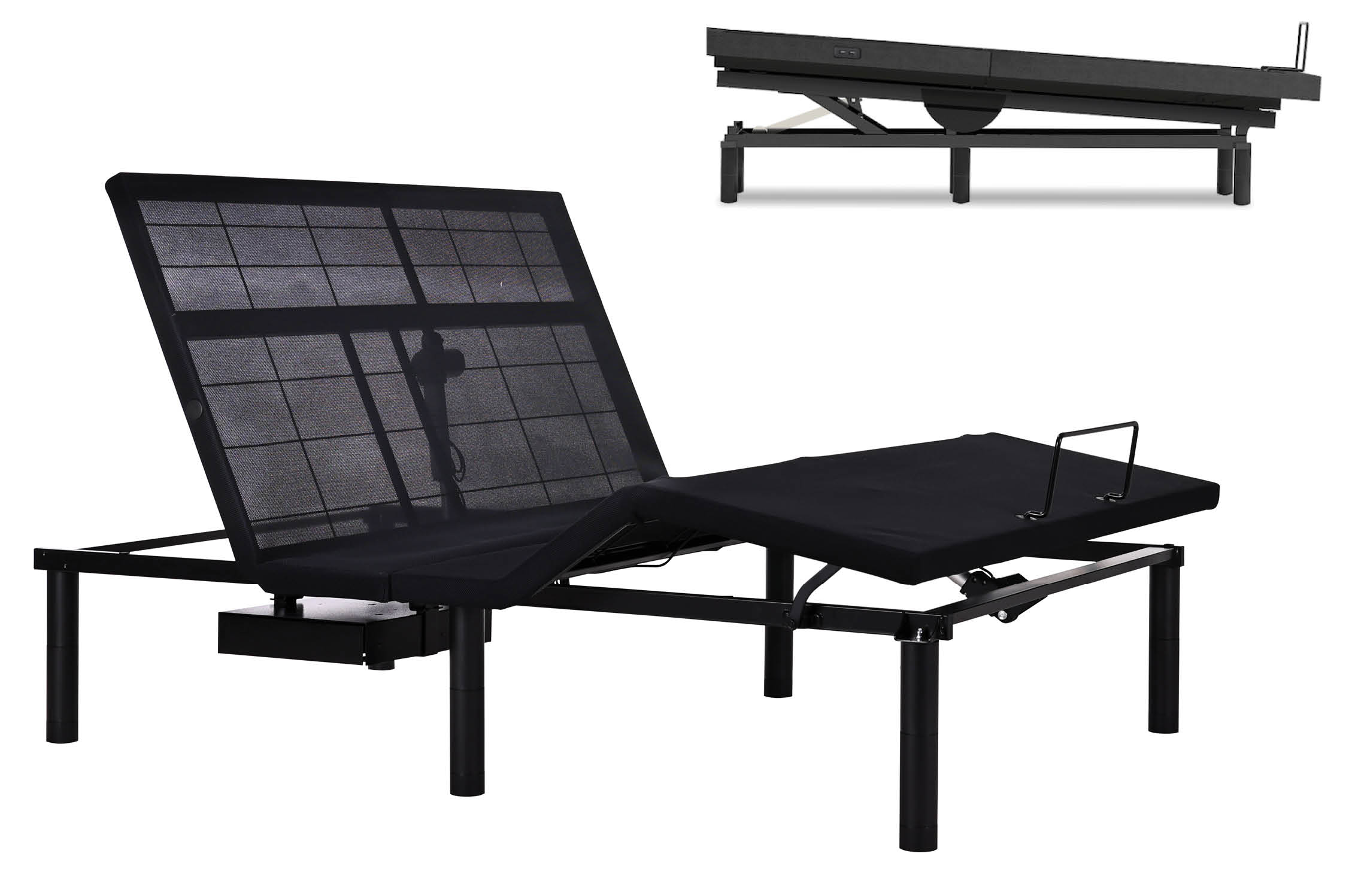
“People are finally ‘waking up’ to how impactful sleep is to your general well-being,” says Nicole Slinger, vice president, product marketing, Ergomotion. “It helps with everything from pain and energy to health and mood. They want real fixes.”
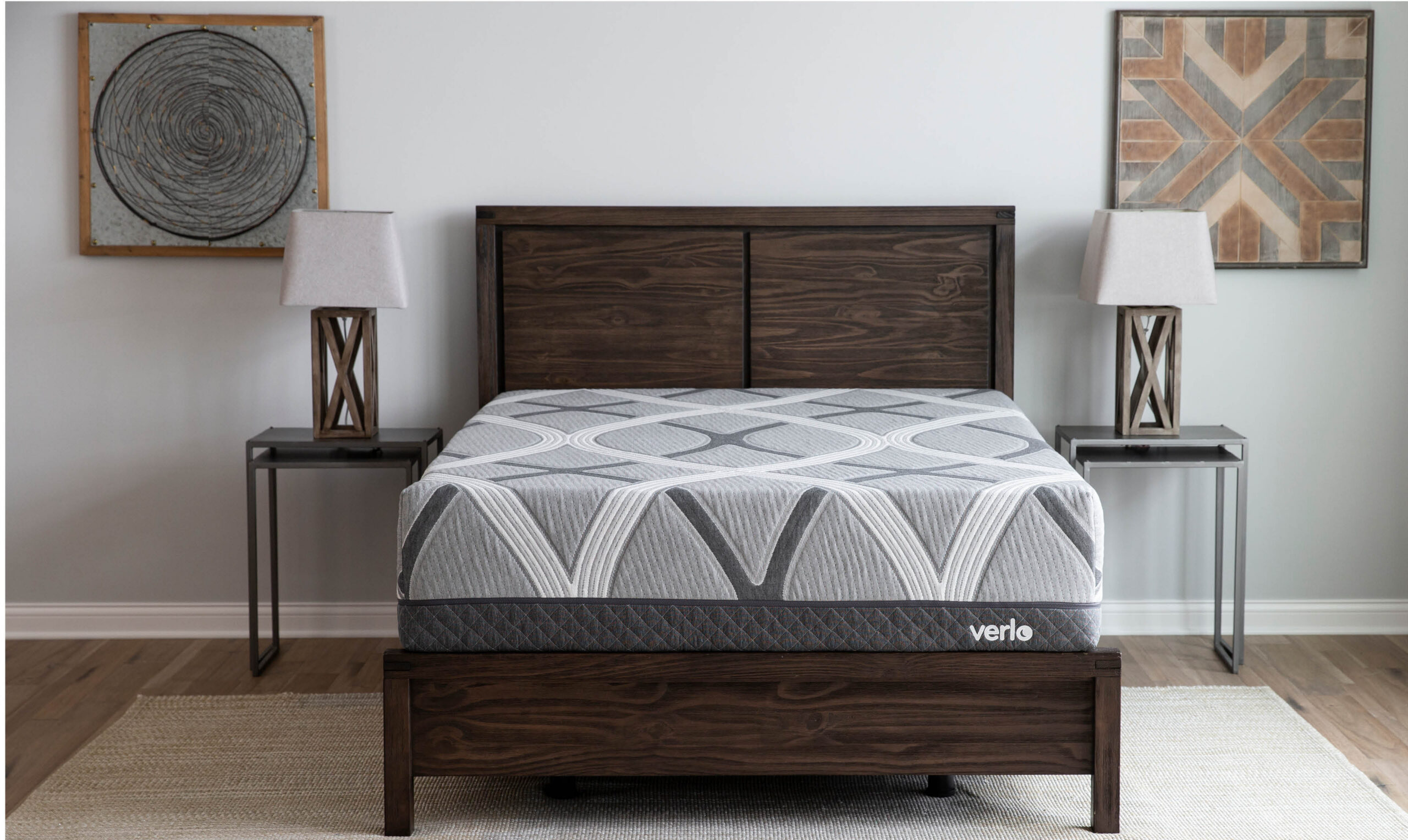
Bobby Cleveland, president of Verlo Mattress, agrees. “They’re not just investing in a mattress—they’re investing in their health,” he says.
He references a book, Why We Sleep by Dr. Matthew Walker, a neuroscientist. Walker identifies sleep as the most critical of the three pillars of health. (The other two are diet and exercise.) Walker’s argument is pointed, says Cleveland: “We can do all right with a bad diet for a while and not so much exercise, but without sleep, it all falls apart.”
Cleveland also points to the personalization trend that has swept virtually every other consumer category. “People have become so used to customized items and personalized experiences,” he says, drawing a parallel to smartphone culture. “While many people have iPhones, they all have them customized to create a personalized experience. … Think about the old wall phones and then the shift to the cordless and now the smartphone—mattresses are following suit.”
Redefining the sleep system
Jay Orders, president of Engineered Sleep, describes sleep as part of a broader wellness revolution and overall cultural shift. Cleveland agrees: “Our culture has shifted away from short-term pleasures to long-term investments.”
Once consumers experience the customizable difference, it’s tough to go back. At the same time, the term “sleep system” means different things to different manufacturers, reflecting the breadth of the category.
At Engineered Sleep, says Orders, “A sleep system involves all the elements you see in the bedroom. We try to focus on limiting light, limiting technology, controlling room temperature, and making sure you are comfortable with your sheets and pillows. Many times, the mattress takes the blame for a poor night’s sleep when the main culprit could be other factors.”
In practice, the modern sleep system might encompass a customizable mattress with dual-sided firmness, a smart adjustable base with programmable positions, a topper with cooling gel or infused copper or collagen for beauty benefits, sheets engineered to complement the mattress’s temperature regulation, and pillows calibrated to sleep position—with an app unifying the data.
The Global Wellness Institute has even noted a parallel trend in hospitality, with hotels developing dedicated sleep programs and premium bedding experiences as sleep tourism expands. A 2024 GWI survey found that 91% of frequent travelers were willing to pay a premium for sleep-enhancing accommodations—a signal of how deeply consumer priorities around rest have shifted.
“A lot of times the conversation does start with, ‘I need a
mattress,’ and through that
process, people realize they
need more than just a mattress to get where they want to be.”— Jay Orders, Engineered Sleep
The adjustable base: Centerpiece of the system
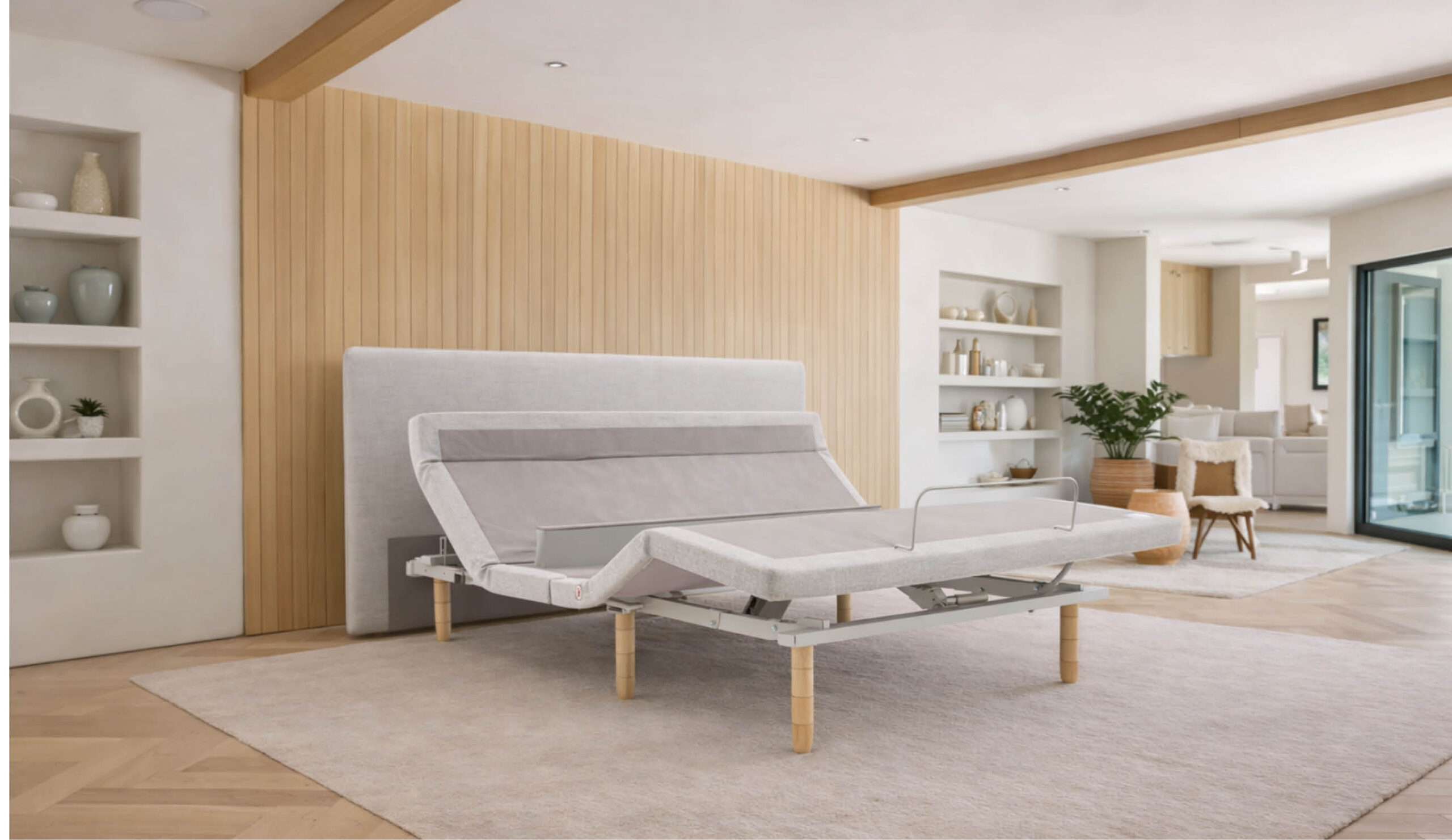
If there is a single product category that has done the most to transform the mattress into a sleep system, it may be the adjustable base. Industry executives see it as a critical driver of the personalization trend and average transaction values.
Slinger outlines the range of consumer motivations that adjustable bases address.
“Younger folks treat the bed like a command center for work, relaxation, and entertainment,” she says. “Senior users with changing needs need easier in-and-out. It’s not hype; it’s demand for something that actually helps night after night.”
Cleveland is equally direct about where he sees the market heading. “More adjustable bases,” he says simply. “It will become the standard.”
Specific applications resonate strongly with consumers seeking relief: zero-gravity positioning to ease back pain or acid reflux, anti-snore presets that automatically adjust head elevation, and programmable positions for reading or watching television. As Slinger describes it, these are “real fixes” rather than features.
Alongside adjustable bases, the mattress itself is becoming increasingly customizable at the individual sleeper level. “We often have couples who cannot agree on feel,” Orders says. “Our system allows customization for the left and right side of the mattress to give each individual what they want.”
Selling the system: The retail transformation
As the product has grown more complex, so too has the selling process. The shift from mattress transaction to sleep system consultation requires a fundamental change in how retailers engage customers and how manufacturers support this process.
Verlo’s approach begins with diagnostics rather than product. “We look at the problems people want to solve,” Cleveland says. “Hip pain? Hot at night? Then we tell them about cooling features, comfort layers, and top-of-bed products that will all help to solve these problems.”
The consultation becomes holistic by necessity: Solving a heat problem with a cooling mattress only to pair it with poly-blend sheets undermines the entire investment.
Orders notes that even when customers arrive thinking they simply need a mattress, the discovery process often reveals a broader need. “A lot of times the conversation does start with, ‘I need a mattress,’ and through that process, people realize they need more than just a mattress to get where they want to be,” he says.
For Ergomotion, the retail relationship centers on equipping brand partners with the tools to tell a more complete story. “Our goal is to use this system to add value to our offerings to our main partners,” Slinger says, referring to the company’s new Sleep Assist app as a differentiator that helps mattress brands justify premium price points. The app, which doesn’t require a subscription, works with all compatible Ergomotion smart and adjustable beds and has built-in sensors so users can track total sleep, heart rate, respiratory rate, movement, and snoring, helping them better understand their individual sleep patterns and behaviors over time.
While generational thinking about mattresses is gradually shifting, Cleveland’s message to retailers is that customer education remains one of the most significant opportunities to encourage wider adoption. He offers this compelling reframe for the value conversation: “Justify the cost to people—they’ll spend thousands on a vacation for one week or drop a hundred for dinner. The cost of a good mattress over 10 years is about $200 per year.”
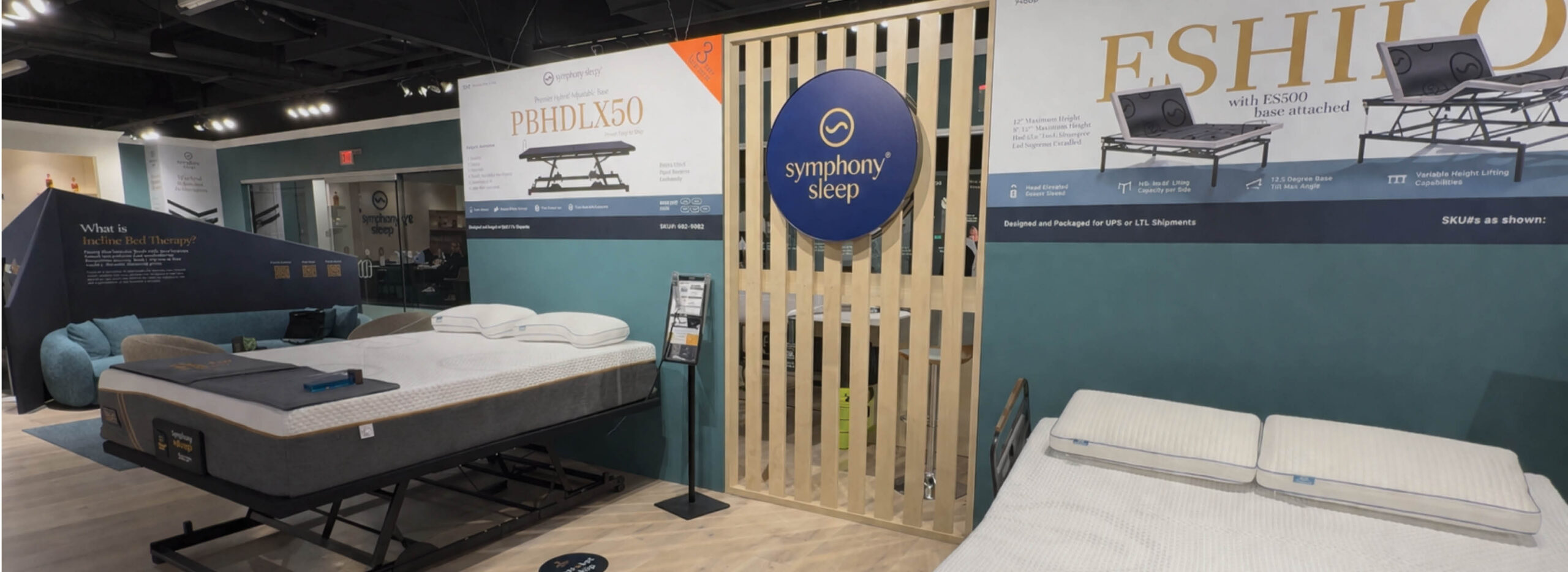
At the recent Las Vegas Market, Symphony Sleep gained valuable insight into the retail mindset through strategic discussions with key customers and prospects. According to company President John Schulte, retailers are shifting how they evaluate purchases—focusing less on simple cost comparisons and more on total profit potential.
In a news release, Schulte said: “Retailers are no longer buying strictly on price. Instead, they’re looking at the total gross profit margin that can be generated by selling a complete system of products—one that expands ticket value during the end-user transaction.”
For example, Symphony Sleep offers its Hybrid platform frame in every available configuration, each paired with its leading accessories: SleepSafe, the Elevation Kit, and the Hi-Low Lift Kit. This accessory-driven merchandising strategy has generated strong interest from retailers of varying sizes and regions, says the company. The takeaway is that when manufacturers offer add-on components, retailers can then showcase multiple floor models tailored to different customer demographics, overcome promotional pricing pressures, and drive higher gross profit margins through product attachment.
Such add-ons, which at Symphony Sleep include its expanded pillow assortment, also align with an increasing push toward vendor consolidation as retailers look to boost freight efficiency and streamline operations. “Retailers are looking for opportunities to consolidate purchases wherever they can,” Schulte says. “We’re enabling partners to optimize freight spend and source multiple product categories from a single supplier.”
The road ahead
The trajectory of the sleep system trend appears clear: broader adoption, higher baselines, and continued innovation at the premium tier. The question is not whether personalized sleep systems will become mainstream, but how quickly.
Orders sees a democratization underway. “It’s nice to see peers in our industry pushing more meaningful advancements with some of the sleep systems out there,” he says. “I think the floor will be raised with sleep systems becoming more standardized; however, there will always be premium versions out there.”
Cleveland continues to put the adjustable base at the center of the standardization story, projecting it will become table stakes for the category rather than an upgrade. Slinger agrees, framing the evolution in terms of consumer expectations: Once someone has experienced zero-gravity positioning or automated anti-snore adjustment, returning to a static mattress and fixed base feels like a step backward.
The market data backs the optimism. According to SNS Insider, specialty stores—the channel best positioned to deliver the consultative sleep system—are projected to record the fastest growth rate in sleep tech distribution as consumers seek expert guidance and hands-on demonstrations that online retail cannot replicate.
For manufacturers and retailers willing to make the investment in learning, training, and integrated product strategy, the personalized sleep system represents one of the most significant opportunities the bedding industry has seen in decades. As manufacturers have said, customers are no longer buying a place to sleep; they are investing in their health. The industry just has to help them understand the difference.