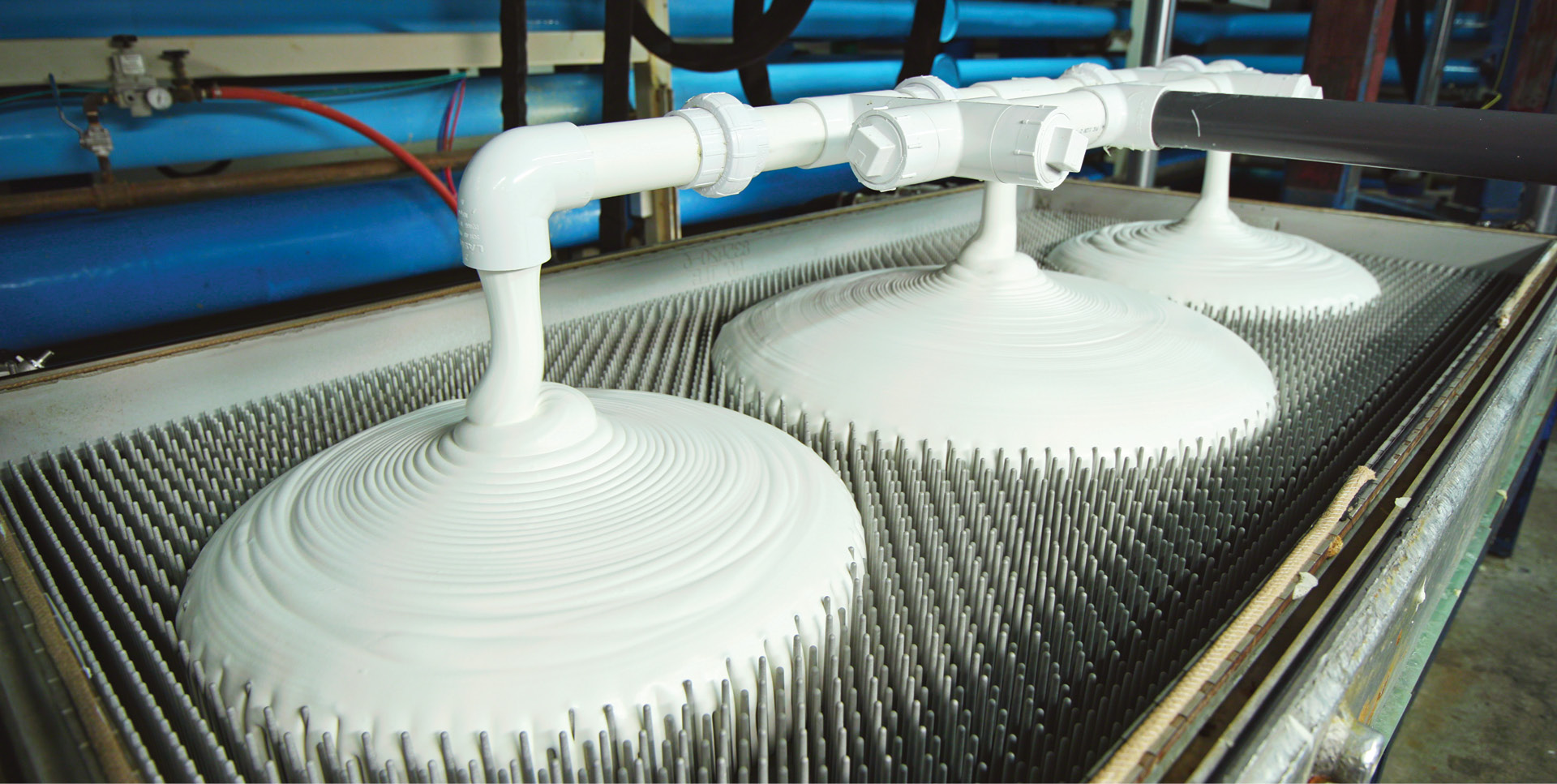
Natural latex—prized for its durability, elasticity, pressure relief, and breathability—has long occupied a premium niche within the mattress industry. But now, something bigger is happening.
As consumers increasingly prioritize sustainability, transparency, and long-term product performance, latex is moving beyond its traditional role as a specialty foam component and is becoming central to broader sleep-system strategies.
Manufacturers and suppliers are refining how latex is produced, sourced, certified, marketed, and integrated—not just into mattresses, but into toppers, pillows, adjustable sleep systems, and even furniture cushioning. Those changes are reshaping product performance and forcing mattress brands to rethink how they communicate value to an increasingly educated consumer base. As Christian Klose, CEO of Grupo Fortaleza’s NüWAVE division, puts it: “Latex is becoming the foundation material of the modern sleep system—not just a niche component inside a premium mattress, but something that shows up across the whole category.”
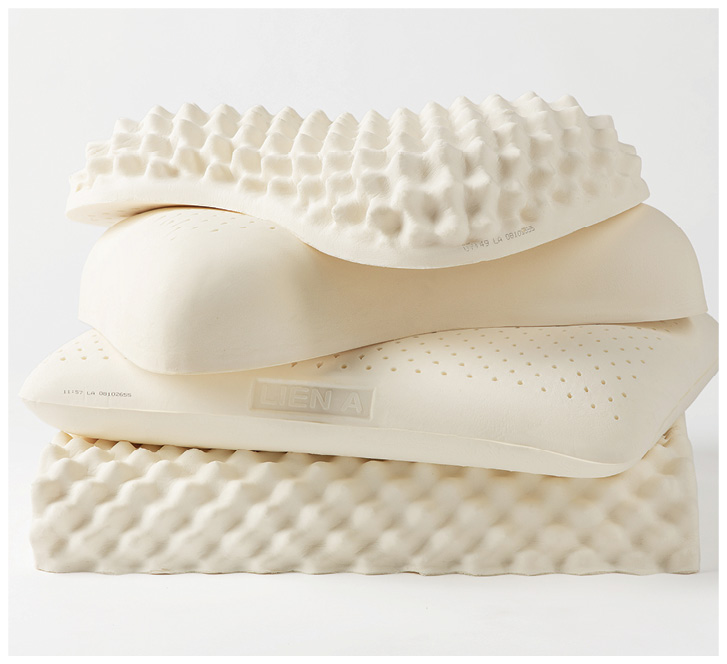
Performance through precision
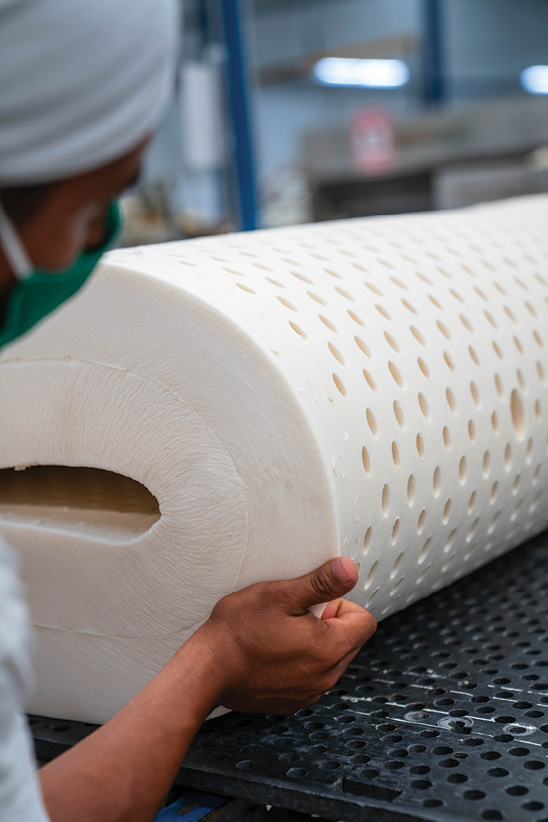
Latex itself is not new, but suppliers say meaningful improvements in consistency, precision manufacturing, airflow engineering, and process control are quietly raising the bar on product quality. One of the oldest complaints about latex has been inconsistency—two blocks from the same production batch could perform differently. NüWAVE addresses this through radiofrequency vulcanization, which cures foam from the inside out using electromagnetic energy rather than traditional surface-applied heat. “The result is a block that’s uniform all the way through,” Klose says. “Same feel, same support, same performance—every single time.”
Airflow and temperature regulation have become the focus at Talalay Global, where recent third-party testing quantified what the company had long believed about its manufacturing process. The unique open-cell structure created by Talalay processing delivers roughly twice the airflow of Dunlop latex and up to five times the airflow of polyfoam and memory foam. “This is a great benefit for the consumer to maintain a proper sleep temperature,” says Mike Tilki, director of sales–East at Talalay Global. He notes that while mineral infusions like graphite and copper continue to gain traction, breathability remains one of Talalay’s most compelling differentiators as temperature regulation becomes a growing consumer priority.
At Earthfoam, co-founder and CEO Januka Karunasena takes a different view of where innovation really lives. Rather than reinventing the Dunlop process itself, the company focuses on controlling variables throughout the supply chain.
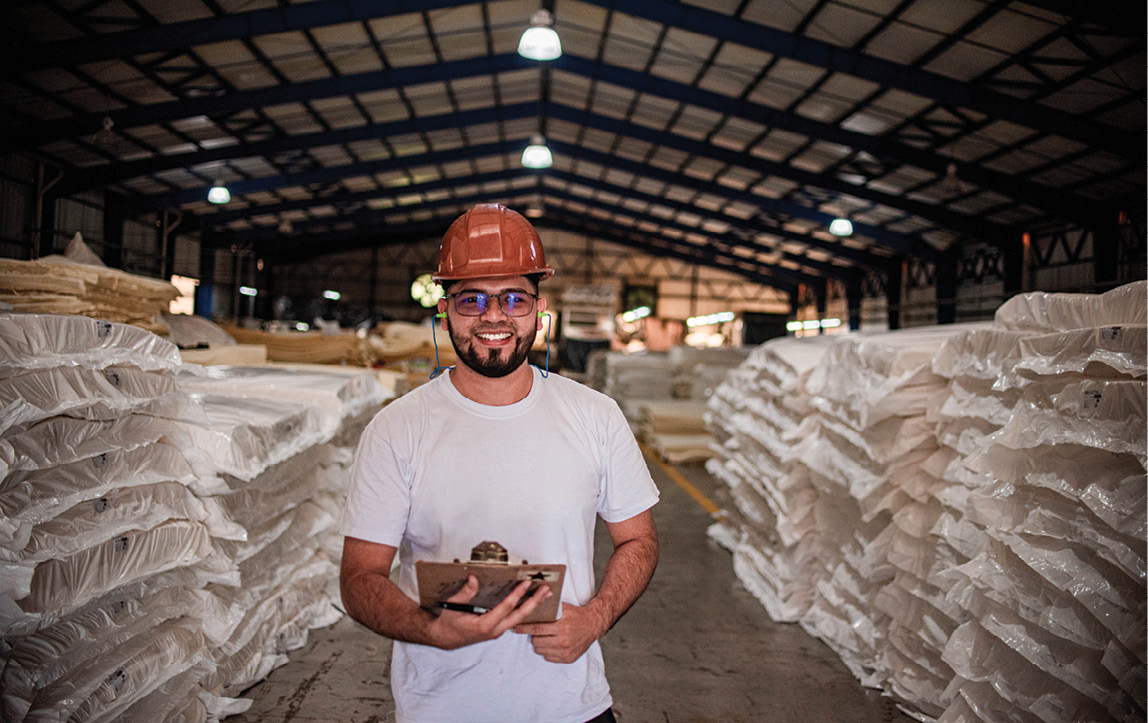
“Today’s advances are in precision and purity,” he says. “By controlling the supply chain from plantation to raw material processing, we achieve more consistent liquid latex and a more uniform mattress core with reduced settling or softening.” That vertical integration also gives Earthfoam the ability to develop softer Dunlop formulations without blending in synthetic rubber—something that’s historically been difficult to achieve.
For Vietnam-based manufacturer Lien’A, process optimization and stringent quality control are equally central to meeting expanding demand across North America and in direct-to-consumer channels. The company uses a proprietary production process designed to optimize costs without sacrificing consistency, backed by strict sourcing regulations and continuous improvement in manufacturing technique.
Talalay Global is also investing heavily in capacity and new technologies. The company’s ownership group has put resources into rubber tree plantations to vertically integrate raw material sourcing and have greater control on quality and sustainability of the supply. “We are also in the process of building a second state-of-the-art factory in North Carolina that will be operational by the end of Q1 2027,” Tilki says. “This will allow us to keep up with the growing demand for our products as well as introduce new and more efficient technologies.”
The transparency challenge
As latex grows in popularity, so too does confusion among consumers about what they are actually buying. The labels “natural,” “organic,” and “blended” are applied inconsistently across the market, and industry executives say that’s becoming a serious problem.
The core issue is fairly straightforward: If a product isn’t made with 100% natural rubber latex, consumers deserve to know exactly what the remaining percentage consists of. Karunasena advocates for what he calls a “clean-label” approach—treating latex the way the food industry treats organic ingredients, with clear, verifiable disclosure at every level.
Part of the confusion stems from a widespread misconception about how formulation and manufacturing processes relate to one another. Natural versus blended latex is a formulation question, while Talalay versus Dunlop is a process question—and the two are entirely independent.
“I think the most important thing is not to confuse the formulation [of] natural or blended with the process [of] Talalay or Dunlop,” Tilki says. “Both the Talalay and the Dunlop processes are able to produce 100% natural or blended products.”
Blended latex typically offers slightly longer durability at a lower price point, while fully natural formulations tend to deliver a more buoyant feel at a premium. Either way, Tilki says, the consumer ends up with a product that outperforms conventional polyfoams or memory foams, but they should know what they’re getting.
Certification standards are supposed to help navigate this, but enforcement is uneven. Global Organic Latex Standard, or GOLS, certification requires a minimum of 95% latex content, yet some manufacturers market products as “100% natural” despite incorporating significant synthetic content. Vincent Nguyen, international business director at Lien’A, notes that such claims may not be technically incorrect under certain interpretations, but they don’t meaningfully support consumer transparency. Klose is more pointed: “‘Natural’ has become a marketing word applied to products that don’t deserve it. The consumer is getting smarter.”

Sustainability under the microscope
Latex’s renewable origins remain one of its strongest selling points, particularly as environmental concerns become more important in purchasing decisions. But sustainability claims are receiving more scrutiny than ever—and greenwashing has become a genuine concern within the category.
The gold standard, according to Karunasena, is third-party verification that’s holistic rather than surface-level. “GOLS and Fair Trade certifications are the gold standard because they audit the soil, the tree, and the treatment of the worker,” he says. Certifications that only address one part of that equation leave too much room for misleading claims.
The regulatory environment is also shifting, particularly in Europe, where broad environmental marketing claims are increasingly restricted. Rather than leaning on sweeping language about being “natural” or “eco-friendly,” suppliers expect the most credible future messaging to focus on traceability and responsible sourcing. Tilki points to Moreganic—a certification focused on biodiverse farming practices and long-term sustainability—as an example of where the category is heading. Talalay Global plans to launch Moreganic-certified products before the end of the year.
Beyond certifications, suppliers are reframing durability itself as a sustainability argument. A latex mattress that lasts 20 years effectively replaces the three or four foam mattresses needed over the same period—a compounding environmental benefit that’s difficult for any certification to match. Grupo Fortaleza’s Guatemala-based operations add another dimension to this, significantly reducing shipping distances compared to Asian suppliers.
“Nearshoring isn’t just good business,” Klose says. “It’s good for the environment.”
“Latex is becoming the foundation material of the modern sleep system—not just a niche component inside a premium mattress, but something that shows up across the whole category.”
—Christian Klose, CEO, NüWAVE
Recycling challenges remain
Although latex is biodegradable in raw form and highly durable in finished products, end-of-use recyclability remains a persistent industry challenge. The very properties that make latex so resilient during use make it difficult to break down and repurpose efficiently. “Latex foam is stubborn at end of use precisely because it’s so good during it,” says Klose.
Most current recycling efforts involve grinding latex scrap material into secondary applications such as carpet underlay, automotive insulation, or bonded-foam products. For example, Talalay Global routes most of its engineered scrap to sister facilities in Europe and Indonesia for repurposing, while Lien’A blends latex scraps with kapok fiber to produce shredded-latex pillows for U.S. customers. Karunasena identifies logistics as the biggest obstacle to scaling these efforts more broadly—mattresses are large, bulky, and expensive to collect and transport in reverse supply chains, which limits the economics of any comprehensive take-back program.
Still, suppliers consistently return to durability as latex’s most fundamental environmental advantage. As Klose says, “The most sustainable thing you can do is make something that doesn’t need to be replaced.”
Beyond the mattress core
Latex is no longer a story about mattress cores alone. Toppers, pillows, furniture cushioning, adjustable beds, and smart sleep systems are all becoming meaningful growth categories—and suppliers say the momentum is accelerating.
Toppers in particular have emerged as a critical entry point. Many consumers encounter latex for the first time through a topper purchase, which then opens the door to a broader relationship with the material. “The topper is the introduction. The mattress is the relationship,” Klose says.
Talalay pillows have developed a devoted following of their own, with Tilki noting that “the unique feel and support characteristics of Talalay in a pillow have created a cult-like following from those who have slept on one”—the kind of loyalty that’s difficult to manufacture through marketing alone.
Furniture manufacturers are also taking notice. As the industry searches for more sustainable alternatives to conventional polyfoams, Talalay latex is gaining traction as a cushioning material that delivers both environmental credentials and a superior tactile experience. Meanwhile, latex’s high durability and flexibility make it well-suited for adjustable-bed applications, where materials must repeatedly conform to changing positions without breaking down. Lien’A recently demonstrated this compatibility at the China International Furniture Fair, testing latex mattresses alongside smart mattress technologies, with results showing strong adaptability and compatibility with health-monitoring functions.
Collaboration reshapes product development
The supplier-manufacturer relationship in the latex category has also undergone a quiet transformation. What was once largely transactional—a company buying foam from a vendor—has evolved into something closer to genuine co-development. “The industry has undergone a fundamental shift from a vendor-customer dynamic to a co-developer partnership,” Karunasena says.
Earthfoam, for example, works directly with brands to engineer proprietary sleep surfaces, using its vertically integrated infrastructure and North American fulfillment capabilities to shorten product-development timelines. Brands partnering with Earthfoam aren’t just purchasing foam—they’re inheriting a verified supply chain.
Talalay Global has built a similar collaborative model, supporting customers from initial design through retail launch with training and education. The company regularly hosts “build-a-bed” sessions during which retail partners can experiment with firmness levels and constructions before committing to a final product. Internal research found that retailers who received Talalay training outperformed untrained counterparts by more than 70% in sell-through—a striking illustration of how much product knowledge matters at the point of sale.
For Klose, modern supplier relationships are fundamentally about customization, rapid prototyping, and differentiation. “We’re in the room when the product is still being figured out,” he says—a shift that gives suppliers both more responsibility and more influence over where the category goes next.
Messaging matters
Material innovation only goes so far if the story around it falls apart at retail. Suppliers are increasingly vocal about the gap between what’s promised in latex marketing and what consumers actually experience, and they say closing that gap is as urgent as any product development priority.
The trust problem is real. “The consumer is getting smarter,” Klose says. “They wake up hot on a mattress that was sold to them as ‘natural’ and wonder why. They replace a mattress in four years that was supposed to last decades. That gap between what’s promised and what’s delivered—that’s the trust crisis this industry is facing.” Consumers who feel misled aren’t just disappointed—they become skeptical of the entire category.
Rebuilding that trust requires clear, accurate communication about latex composition, certifications, sourcing, and realistic performance expectations. The emphasis, suppliers agree, should be on specifics: percentages, certifications, and verifiable claims rather than broad, feel-good language. “If a product isn’t made with 100% natural rubber latex, the consumer should know exactly what the other percentage is,” Karunasena says.
Education at the retail level remains essential to sustaining category growth, and as more consumers learn that latex sleep products offer both environmental benefits and measurable performance advantages, demand will likely continue growing, but only if the information consumers receive is accurate enough to set the right expectations.
On the horizon
Looking ahead, suppliers expect supply chain restructuring, certification consolidation, bio-based innovation, cooling technologies, and rising consumer interest in healthier sleep materials to define latex’s next chapter.
Talalay Global is preparing to launch a new formulation featuring what Tilki describes as the highest concentration of phase change material ever incorporated into a foam product—a significant step forward in active temperature regulation. More broadly, “friendly shoring” and traceable sourcing are expected to become increasingly important as brands reassess global supply chain risks and consumers demand greater visibility into where and how their products are made.
Even amid the excitement surrounding smart beds and connected sleep technology, suppliers are careful to keep the focus on what latex does best. A mattress that keeps its promise for 20 years, Klose argues, is more valuable to a real family than one loaded with sensors. For his part, Karunasena sees a future where natural latex shifts from being perceived as simply a high-quality mattress material to being a critical element that—combined with advanced monitoring and customizable comfort layers—defines what a modern sleep system looks like.
Latex has been around for a long time. What’s changing is everything built around it. As Karunasena says: “We expect the role of natural latex will shift—from being seen as a premium component to becoming the essential foundation for high-quality sleep technology.”