
In our current economic climate, partnerships within the selling process are crucial.
While the primary relationships may be supplier to manufacturer to retailer to consumer, another subset of partnerships makes a significant impact in bedding sales growth, namely, those that manufacturers and retailers may have with independent industry representatives, distributors, and buying groups.
These last three groups provide another layer of support across the mattress value chain, helping to ensure that the right materials get into bedding products and that independent retailers—who make up a significant portion of the market—can compete effectively.
So, how do they work? Independent industry reps serve supplier clients and work closely with bedding manufacturers to meet their supply chain needs—and may go further, serving as marketing and business development consultants. Distributors play a related role by providing manufacturers with immediate access to inventory when production demands shift or forecasts change. Meanwhile, buying groups build partnerships between manufacturers and independent retailers, ensuring that this important market segment can compete against big-box stores.
The enormous impact of these relationships can be explained through one simple, but very important differentiator: data.

Independent thinking
Manufacturing is just one continuous problem to solve, says Scott Charest, president of CJN Sales Associates, which represents several companies, including Lampe Textiles, Lalan Eco Latex, Milliken, and Oddello Industries.
“I’ve been self-employed my whole life,” says Charest, who owned a manufacturing company before becoming an industry rep. “So, when I rep for a company, I understand the challenges they face and the many different steps they must take to ensure they’re supplying their customers to the best of their ability. Thanks to my manufacturing background, I understand their side of it and the balancing act they have to maintain, in terms of having plenty of raw material to manufacture their product, but not too much that it ties up their cash in inventory.”
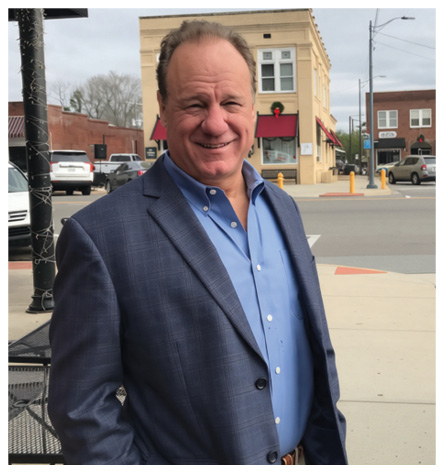
While selling is perhaps the primary responsibility of an independent industry representative, “being a rep is not just selling,” he adds. “Otherwise, it would just be somebody in a data center taking orders. Being a rep is solving problems, and there are always problems, whether it’s not enough inventory or an actual problem with the product that was delivered. The value of an industry rep is offering multiple solutions for multiple problems.”
Evi Brilleman is a case in point. As the founder of BELLA Home & Living BV and a fractional marketing and business development executive in the home furnishings industry, she helps international suppliers translate specialized materials, natural components, and textile biotechnologies into commercially relevant solutions that address real market and consumer needs through ongoing or project-based marketing and business development engagements.
Brilleman says the foundation for this niche developed during her formative years in business-to-business marketing, when she was naturally drawn to working closely with sales teams to better understand the customers she served.
“Many international suppliers have exceptional products, technical expertise, and compelling stories,” she says. “However, they do not necessarily have the internal resources, market knowledge, or established industry relationships needed to connect technical innovation with market strategy and hands-on business development.”
That’s where Brilleman steps in, helping to translate complex technical solutions into clear, accessible language—with data and business intelligence serving as the foundation. When working with her clients, Brilleman says she looks closely at sales performance, customer- and product-level growth, development pipelines, market segments, pricing, test results, and other available market data, including industry and consumer reports from the International Sleep Products Association and the Better Sleep Council.
But it’s not all about reports. “A significant part of my role involves gathering qualitative market insights through conversations with manufacturers, brands, retailers, suppliers, and other industry partners, as well as through firsthand retail research,” she says, adding that she recently completed a retail study in Paris to examine how luxury brands communicate natural materials to consumers.

Charest agrees. In his role, in order to fully understand the challenges and opportunities, he says he mines for data from manufacturer customers, which allows him to work in their best interest and in the best interest of his supplier clients. “It’s questions like, ‘What were your sales last year? What did you use last year? And what did you use in the last three months? Do you have any promotions coming up?’” he says. “Obviously, the best way to solve a problem is to prevent a problem.”
Charest also typically asks his customers for data on forecast sales, gross sales for specific products in units (not dollars), and any trends—whether sales are going up or down. Even the negative numbers are important for reps to know, as difficult as those may be for companies to share. “People don’t like to talk about negative numbers, but you still have to have numbers to deal with,” he says.
For Brilleman, her approach after gathering information begins with understanding the problem a customer or partner is trying to solve for the end consumer, whether that’s creating a cooler or more comfortable sleep environment, reducing exposure to allergens, or finding a credible way to differentiate a product collection.
“Once I understand that need, I can identify a material, technology, or combination of capabilities that could provide a meaningful solution,” she says—not just introducing a product but turning a capability into a commercially viable program. “Because I work across the value chain, I can often identify gaps between what a supplier has developed, what a manufacturer can practically implement, what a brand can communicate, and what a consumer will understand.”
Charest takes a similar approach. He’s often invited to product development meetings where his knowledge and input regarding latex, fire-resistant fabrics, weight restrictions on rollpack, and more enable him to offer specific guidance that can save a manufacturer headaches down the line. He adds, “I think the easiest way to get a customer and keep a customer is to make their life easy. When they’re not picking up the phone, having to solve problems involving your product, that’s a good thing, and they’ll remember that. Then, with data, I can make it even easier for them.”
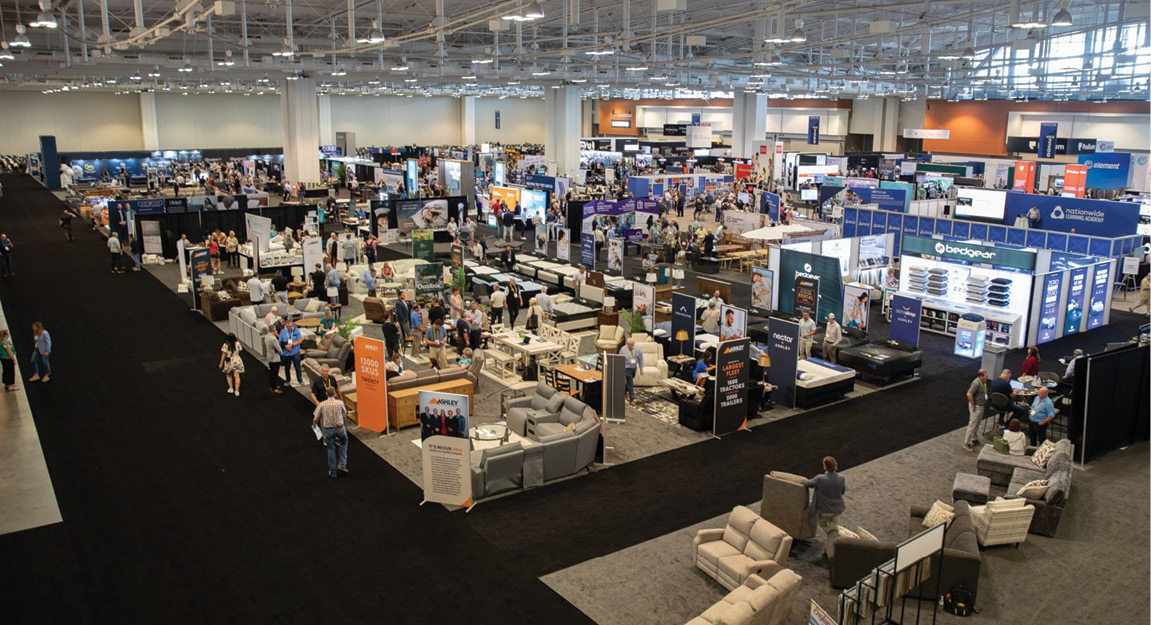
However, Charest says, the most difficult task for a rep isn’t “just fulfilling the business that’s here today, but we have to take some kind of a guess of where it’s going. They don’t want to be focusing on 2026. They want to be focusing on 2027.”
With the downturn in the market plus pressure from international bedding companies selling inexpensive options on Amazon, he adds, “It’s hard to plan for the future when you’re just trying to survive in the present.”
That’s where the time invested on all sides to build trust pays off. “Long-term partnerships are built through consistency, transparency, and follow-through,” says Brilleman. “Even when an opportunity does not lead to immediate business, understanding the customer’s goals, planting seeds, and staying engaged can create value over time.”
“The best way to have good business, no matter what industry you’re in, is to plan your work and work your plan,” adds Charest. “And the only way to plan your work is through good data mining. That’s one of the things we have to do as industry reps.”
A buying group evolution
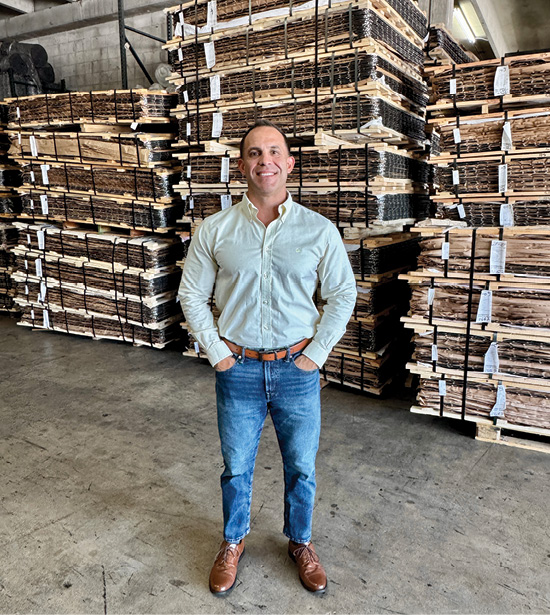
Jeff Rose, vice president of furniture, bedding, and outdoor for Nationwide Marketing Group, says he got into the furniture and bedding industry right after college, when a friend asked him to help out at High Point Furniture Market in North Carolina. “It was the first time I was ever introduced to the furniture and bedding industry, and I just fell in love with the people and the interactions.”
He worked as a sales representative for a furniture manufacturer, selling to independent retailers in the South, when he was recruited by NMG. “Ten minutes into the interview, I was hooked,” he says. “It was all about helping the independent retailer thrive on their own terms and providing value that you know can save them time and money.”
Historically, buying groups like NMG, BrandSource, and others have brought together thousands of independent retailers to multiply their buying power from a specially selected and curated list of manufacturer vendors. That has been the core model for years. But that model has evolved alongside changes in how consumers shop and rapid growth in the role of online research.
“The biggest change is that buying groups have evolved from purchasing organizations into full-service business partners,” says Luke Larsen, director of merchandising, home furnishings, for AVB, the parent company of buying group BrandSource. “Twenty years ago, success was measured primarily by negotiated pricing. Today, pricing is only one piece of the equation.”
Both Rose and Larsen point out that while buying groups’ focus is on serving independent retailers—from Top 100 furniture and bedding retailers to family-owned single or multistore models—it really is about creating that connection between manufacturers and retailers in order to deliver on the consumer journey. “When it works well, everyone benefits,” says Rose. “The retailers have access to competitive products, programs, and resources. And on the vendor [manufacturer] side, vendors have strong and engaged retail partners within our membership.”
Manufacturers are increasingly expecting buying groups to help drive retail sell-through—not just place purchase orders, adds Larsen. “That means collaborating on product strategy, training, merchandising, digital marketing, consumer financing, and technology solutions,” he says. “Retailers also expect more than discounts; they rely on buying groups for [customer relationship management] platforms, e-commerce, inventory management, financing, and education to remain competitive with national chains.”
Over the past decade, NMG says it has “pivoted hard” into marketing and digital solutions—including technology platforms, data, and business intelligence—“to really help these retailers remain viable and continue to strengthen what they’re doing in their local markets,” Rose says.
Today, NMG offers proprietary platforms and exclusive programming to assist its retailer members with everything from inventory management, exclusive product offerings, consumer financing, and actionable business intelligence to training, networking with other retailers, and marketing services that range from strategic guidance to full-service marketing execution.
NMG also designs and hosts retail websites for members across the country. Paired with other services like digital advertising, this translates into mounds of consumer data that NMG can use to help continue to improve retailers’ online presence and drive consumers to the independent channel. “Think of all that data that we’re able to get and look at and break apart and actually see how websites should be functioning with true real-time, real-life consumer data,” says Rose.
Likewise, Larsen says that BrandSource’s mission is to “Do whatever it takes to keep our members profitably in business.”
Along with volume rebates, exclusive discount opportunities, and consumer financing programs, BrandSource provides its members with a full suite of traditional business services plus AVB Marketing, its not-for-profit, member-owned agency. AVB provides a seamless, integrated technology stack—spanning dynamic websites to advanced point-of-sale software—designed to eliminate friction across all business operations and elevate the end-to-end customer experience.
Relationships are becoming more data-driven as well, says Larsen, with retailers and manufacturers leaning on sales trends, inventory analytics, and consumer behavior to make smarter merchandising decisions “instead of relying solely on intuition.”
The emphasis has shifted to true partnerships instead of merely transactional relationships. “Manufacturers want retailers to represent their brands effectively, retailers seek strategic guidance and operational support, and buying groups like BrandSource are increasingly positioned as the facilitator that aligns these interests,” Larsen says.
“Our biggest strength is our community,” adds Rose. “Scale matters when you’re talking about buying groups. Our community is truly involved with us, and the networking among them—it’s really awesome to see retailers helping retailers. We are here to help the independent channel stay healthy and stay in business.”
“While competitive pricing is always important, I believe challenging times are when strong relationships provide the greatest value.”
—Daniel Vazquez, president,
Costa International
Distributing value
For the distributor sector of the industry, thriving relationships that are not just transactional also develop through data.
Daniel Vazquez is vice president of Costa International, which distributes for manufacturers across the entire bedding industry, from small independent shops and regional producers to large-scale manufacturers and major licensed brands. Vazquez’s stint in the family business was supposed to be temporary but has now become a nearly 20-year career.
His firsthand experience with nearly every role in the company has helped Vazquez and Costa be a trusted supply chain partner to the bedding industry, providing a comprehensive range of components, materials, and manufacturing essentials for every stage of bedding production. His vendor relationships span decades—built, he says, “not through one transaction, but through years of delivering on commitments, maintaining open communication, and creating value for both sides.”
A typical relationship might begin with placing orders but becomes a partnership through discussing market pricing, forecasting industry trends, troubleshooting urgent supply issues, and expediting critical shipments. “Over time, these relationships are built on trust, so it’s not uncommon to simply call each other to exchange industry insights or catch up,” says Vazquez. “That’s what I value most—building relationships that extend beyond transactions.”
Because the industry is always evolving, new materials, technologies, and market trends create new challenges and opportunities every year, Vazquez adds. “Economic conditions can influence how relationships evolve, particularly during slower market cycles when pricing becomes an even greater priority for manufacturers,” he says.
By stocking a comprehensive range of components under one roof, distributors help manufacturers reduce inventory carrying costs, preserve cash flow, and simplify procurement. Additionally, the ability to consolidate multiple products into a single pallet, truckload, or container improves logistics efficiency, reduces freight costs, and ensures a more reliable supply chain. And with many small and medium-sized businesses facing challenges—or even closing—over the past decade, distributors can help support businesses’ vital role in creating jobs, strengthening the economy, and supporting families and communities.
“At the end of the day, people will always need a quality mattress to sleep on, and my role is to ensure manufacturers have access to the products, inventory, and support they need to succeed,” says Vazquez. “Providing competitive pricing, reliable service, and being a trusted resource for my customers has been the foundation of my career. While competitive pricing is always important, I believe challenging times are when strong relationships provide the greatest value.”